This Is a Movie Review: Loving

Leave a comment

loving-movie-ruth-negga-joel-edgerton

This review was originally published on News Cult in November 2016.

Starring: Joel Edgerton, Ruth Negga, Nick Kroll

Director: Jeff Nichols

Running Time: 123 Minutes

Rating: PG-13 for Prejudice and the Paranoia That Goes with It

Release Date: November 4, 2016 (Limited)

Director Jeff Nichols is known for including a tinge of the supernatural in his films, especially the apocalyptic Take Shelter and the little-kid-with-mysterious-powers thriller Midnight Special. But even in his ostensibly more realistic pics, like the Southern McConaissance drama Mud, there is a spiritually arousing sense of magic in the air. His latest, Loving, which tells the true-life story behind the 1967 Supreme Court case that struck down the last of this country’s anti-miscegenation laws, achieves that same miraculous sense of wonder by keeping the focus on the day-to-day realities of committed romance under siege.

As Richard (Joel Edgerton) and Mildred (Ruth Negga) Loving’s case makes it way from the local county court to the Virginia Supreme Court all the way to the highest court in the land, there are surprisingly few scenes that actually take place inside a courtroom. The message effectively becomes: love speaks for itself. The film does not see the need for showstopping dramatic speeches, because who needs to be convinced about the rightness of what those speeches would say? Instead, the story mostly sticks with the Lovings’ domestic life, which is constantly under siege, but resolutely tender.

Despite Loving’s lack of interest in legal jargon or courtroom clichés, it does make time for a mini-arc for the titular couple’s main lawyer. When we meet him, Bernard Cohen (Nick Kroll) has little experience with civil rights cases, but he is ambitious enough, or foolhardy enough, to plow right ahead to a potential meeting with the Supreme Court. The casting of Kroll, as much of a novice to high-profile drama as Cohen is to precedent-setting litigation, proves surprisingly apt.

As essential as Kroll’s performance is, it is (like the rest of the movie, and as it should be) all in service to the Lovings. The key line comes when Cohen asks Richard, who has declined to appear during the Supreme Court hearing, if he would like him to tell the justices anything. “Tell the judge I love my wife,” he declares softly but demonstrably.

Edgerton plays Richard as a man who just wants to get on with making a good life for his wife and children. He is uncomfortable with the media attention his marriage receives and flummoxed by the prejudice it engenders. This is in sharp contrast to Negga, who plays Mildred with fragile expressions that belie her steely emotions. Their complementary approaches to overcoming the ordeal of their life are inspiring. It feels like they were destined to be the couple to break down barriers. The poetic perfection of their last name also contributes to that sense. If they were not already called the Lovings, supernaturally inclined Jeff Nichols would have had to christen them thus.

Loving is Recommended If You Like: To Kill a Mockingbird, That feeling you got when the Supreme Court ruled gay marriage constitutional, Actors who look just like the real people they’re portraying

Grade: 4 out of 5 Loves That Conquer All


This Is a Movie Review: Doctor Strange

Leave a comment

doctor-strange-close-up-with-buildings-in-background

This review was originally published on News Cult in October 2016.

Starring: Benedict Cumberbatch, Chiwetel Ejiofor, Tilda Swinton, Mads Mikkelsen, Rachel McAdams

Directors: Scott Derrickson

Running Time: 115 Minutes

Rating: PG-13 for fantastical bumps and bruises and a gruesome accident

Release Date: November 4, 2016

Now at 14 films strong, the Marvel Cinematic Universe shows no signs of abandoning its (consistently profitable) template: initial humbling, transformative origin, world-threatening climax. Doctor Strange is not interested in (or prohibited from) straying from that template, but it does mess with the rules in ways that do right by its protagonist.

That transgressive attitude is there right from the start. Stephen Strange is a highly respected and highly arrogant neurosurgeon whose superheroic path is catalyzed by a car wreck that is as horrific and as indulgent as a PG-13 rating allows. The comic book model often begins with these intense powder kegs, but they are rarely this visceral, unless they are making a show of being “adult,” which is not what this entry is all about.

With his hands left stubbornly tremorous, Strange is enticed by the promise of an alternative treatment in the mountains of Nepal. While initially prone to skepticism about the sorcery he encounters, he hears out the pitch, perhaps because all characters played by Chiwetel Ejiofor or Tilda Swinton exude confidence. Convincing Strange could have been drawn out, but that likely would have been tiresome, so instead he is soundly convinced by a cosmic trip that achieves cinematic psychedelia unheard of for decades.

Of course, this all leads to a grand climactic battle – this time, a traitorous rebellion led by a former pupil (Mads Mikkelsen). As usual, the entire planet is at threat, but Dr. Strange is sly about how this comes to pass. With much of the action taking place in the “Mirror Dimension” or “astral planes,” the world at large generally has no idea what is going on.

Basically, while Doctor Strange must work within constraints, it has no intention of dialing back the pizzazz. And why should it, considering that so many of its characters can bend the very nature of reality? The film’s most striking visuals – rolling skyscrapers, warped cityscapes – are obviously reminiscent of Inception. That earlier dreamscape flick famously utilized primarily practical effects, while Strange quite obviously employs CGI. That is not a knock – this is perhaps the most artful use of impractical effects of all time. As Stephen Strange learns in his hero’s journey, it’s all about playing to your strengths.

Doctor Strange is Recommended If You Like: Inception But Wish It Had Been More Maniacal, 2001, a Healthy Helping of Looney Tunes

Grade: 4 out of 5 Astral Bodies


This Is a Movie Review: Keeping Up with the Joneses

Leave a comment

DF-13591_R2 - It’s been a rough day for suburban couple Jeff and Karen Gaffney (Zach Galifianakis, Isla Fisher) and their neighbors, the covert spies Mr. and Mrs. Jones (Gal Gadot, Jon Hamm). Photo Credit: Bob Mahoney.

There is a deep well of kindness to all the characters that Zach Galifianakis plays. As an HR manager in the suburbanites-caught-up-in-spy-intrigue action comedy Keeping Up with the Joneses, this quality is more relevant than usual. He listens and keeps an open mind, which new neighbor Jon Hamm appreciates even as he is pressing him to divulge information that is sensitive to national security. The film utilizes that empathetic quality, but it feels accidental or noncommittal about it. The climax features the cartoonishly high stakes typical of mediocre action comedies, but with a game cast adept at offbeat line readings, it could have aimed for something more eccentric.

I give Keeping Up with the Joneses 11 Moments of Genuine Connection out of 20 Subterfuges.

This Is a Movie Review: Ouija: Origin of Evil

1 Comment

ouija-origin-of-evil

A bit of fanfare has been made director Mike Flanagan’s use of split diopter shots and insistence on inserting cigarette burns in the corner of the screen in Ouija: Origin of Evil. These techniques work with the retro vibe in this ’60s-set horror prequel, but this is more than just aesthetic fetishism. They speak to the great care given to constructing the whole film. You’ll see the denizens of the spirit world lurking around the corners, and occasionally bursting into the foreground, but only when you are damn well supposed to.

The fact that Ouija: Origin of Evil is so thorough might lead viewers to make some faulty conclusions and connections, which may just be intentional, and even if they are not, they are still disorienting in a way that great horror often is. One of the main girls is played by Annalise Basso, who was previously in the underrated Oculus, also directed by Flanagan. As Ouija becomes increasingly trippier, it almost feels like Basso is playing the same character she did in (the very trippy) Oculus. Of course, Origin of Evil is actually a prequel to another Ouija movie, but not very many people saw that and I imagine those who did promptly forgot about it.

Much of the success of Origin of Evil rests on the little shoulders of Lulu Wilson, who plays the younger and more possessed of the two main girls. She continues a long and vaunted tradition of creepy horror kids, establishing her own place in this hall of fame by adding hints of nonchalance and ace comic timing. There is one moment when she replaces the second half of an oft-repeated mantra with “blah blah blah,” which is liable to floor viewers with an unexpected chuckle. This film does not reinvent the supernatural genre, but it never lets you take it easy.

I give Ouija: Origin of Evil 8 Skeletons out of 10 Crawlspaces.

This Is a Movie Review: The Girl on the Train

Leave a comment

girl-on-the-train-looking-out-the-window

We’re not going to hold The Girl on the Train to the same standard as Gone Girl, are we? No, because individual films are their own things, but still, comparisons can be illuminating. And these two female-led/female-titled page-to-screen sensations go together more than just superficially. Both films have plenty to say about being pegged into gender roles, and how unreliable narrators can obscure the truth of those messages, but on the Train gives itself much less room to explore those ideas than Gone does. It either thinks they will stand clearly enough on their own or does not realize how much they are there in the first place. So what we are left with is an excellent lead performance in an adequately pulpy, but mostly disposable thriller.

I give The Girl on the Train 70 Vodka Swills out of 100 Truth Revelations.

Movie Review: Shin Godzilla

Leave a comment

shin-godzilla

This review was originally published on News Cult in October 2016.

Starring: Hiroki Hasegawa, Yutaka Takenouchi, Satomi Ishihara

Directors: Hideaki Anno and Shinji Higuchi

Running Time: 120 Minutes

Release Date: October 11, 2016

If you are in the mood for some giant reptile action but are a little wary of subtitles, it may be time to conquer your fears. Because if you waiting for the good ol’ U.S. of A. to get Godzilla right, it might be a while. The latest attempt barely even featured the title lizard and killed off its only interesting human character in the first ten minutes. Meanwhile, the franchise keeps stomping along in its native Japan, and the 31st entry, Shin Godzilla, is set for a limited Stateside release October 11-18.

Shin Godzilla wastes no time in setting the danger loose on Tokyo. A frenetically edited opening sequence of roadside carnage, government officials deliberating, and blood pouring into a tunnel paves the way for the big guy’s first appearance about 15 minutes in, and … it’s kind of disappointing. However, it eventually becomes clear that that is kind of the point, as Godzilla’s monstrousness starts out (relatively) silly but gradually grows more imposing. There is no such luck keeping up that go-for-broke pace indefinitely, but there is fun to be had beyond the destruction.

There are three main draws to Shin Godzilla: the aforementioned fast pace of Godzilla’s initial attack, the dark humor, and the (perhaps meta?) examination of political relations between Japan and the United States. The second and third points are tied up with each other: there is a defeatist tinge to much of the jokes in which the officials and scientists despair that so much is beyond their control. That also applies to their ally across the Pacific, which is a frequent source of frustration for forcing policy decisions upon them. These moments are too unmoored from any real situation to work as specific satire, but that lack of a clear analogue allows for a mythic quality that keeps these monster stories afloat as they are told over and over again.

Shin Godzilla is Recommended If You Like: Godzilla movies that actually feature Godzilla, a random joke about soggy noodles, and Japan-U.S. relations

Grade: 3 out of 5 Nuclear Fission Reactions

This Is a Movie Review: Masterminds

1 Comment

masterminds-zach-galifianakis-kristen-wiig

The end credits of Masterminds reveal the real David Ghantt (portrayed by Zach Galifianakis) as a consultant on the film. This of course leads to the question, “What did Ghantt, one of the perpetrators of one of the biggest heists in history, mean to get out of consulting?” The final product hardly papers over his guilt, though it does make him out to be a fairly nice guy. In a way, this is emblematic of the work of director Jared Hess (Napoleon Dynamite, Gentlemen Broncos): oddballs are treated with matter-of-fact respect and only receive true comeuppance if they are cruel to other oddballs.

Masterminds is basically a collection of lunacy in search of a moral, or defiantly devoid of one. Or maybe it just never occurred to anybody that a lesson might be a good idea. Weirdly, the armored car robbery is more or less a victimless crime, as most of the heisted cash belongs to the banks. But this is not a Bonnie and Clyde or Robin Hood situation where capitalism is the enemy. Instead, it is more like the opening of Pandora’s Box, in which a surplus of surprises explodes in everyone’s faces. Quite literally, in fact: there are multiple scenes with explosions, and the m.o. of Masterminds is such that the most notable damage is clothes getting ruined. It’s a weird movie about the endurance of weirdness in moral degradation.

I give Masterminds my approval of its existence.

This Is a Movie Review: The Magnificent Seven

Leave a comment

magnificent-seven-2016-cast

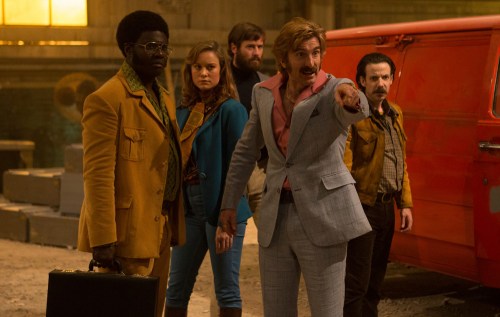
If you’re looking for some sustenance from the new Magnificent Seven beyond good ol’ horse-riding, pistol-wielding fun, then you’ll probably find it in the motivation of the villains and the diversity of the title crew. Ruthless industrialist Bartholomew Bogue is high on the drug of capitalism; indeed Peter Sarsgaard plays him like he’s perpetually intoxicated. Taking a last stand against him is a team that includes a black warrant officer (Denzel Washington), an Asian cowboy assassin (Byung-hun Lee), a Comanche warrior (Martin Sensmeier), a Mexican outlaw (Manuel Garcia-Rulfo), and some other nuts (Chris Pratt, Ethan Hawke, Vincent D’Onofrio).

The Magnificent Seven does not explicitly underscore the angle of a melting pot of heroes defending decent hardworking Americans from a rapacious white man. But if you are sensitive to that theme, it’s hard to miss. This film hardly attempts to be the definitive voice on the subject, though it is nice enough that it is there to chew on. Instead, it focuses on what it does best, which is “a fun time at the movies.” As it rouses itself to the climax of the final siege and defense, it demonstrates crisply edited classic Western-style action, the consistent movie-star appeal of Denzel, and some kooky performances from Sarsgaard and an unstoppable D’Onofrio.

I give The Magnificent Seven 7 Horses Out of 10 Explosions.

This Is a Movie Review: Kubo and the Two Strings

1 Comment

kubo-and-the-two-strings

Kubo and the Two Strings makes no bones about its belief in its title character’s storytelling prowess. That is a mighty promise to make, one that would be deadly if reneged upon. Thankfully Kubo, with his oft-repeated mantra of “If you must blink, do it now,” can weave quite the tale. The film puts that quality to fine use in the beginning (as it sets the adventurous tone) and at the end (as the adventure is over and the tone for moving forward is set), but in between is less buoyed by that oomph. Not all is lost, as the body of the film features some intricately devised reveals and the idiosyncratic designs of Laika’s stop-motion animation, but the middle lacks that demonstrableness that says, “you had better pay attention.”

My rating for Kubo and the Two Strings is: I Blinked Only 10 Times in the 102-Minute Runtime.

This Is a Movie Review: Sully

1 Comment

sully-tom-hanks-2016

The main conflict driving Sully is the National Transportation Safety Board’s investigation into US Airways Flight 1549. The implicit question seems to be: Was Chesley “Sully” Sullenberger really a hero? To which presumably every viewer would respond, “Of course!” I suppose the NTSB must do their due diligence to determine if an emergency runway landing was possible, but at a certain point (i.e., right away), you can’t help but ask, “These people do realize that both engines failed and yet everyone survived, don’t they?”

The easy criticism would be to say that Sully should have just focused on the actual Hudson River landing (by far its strongest feature in both technical and dramatic heft). The trouble, though, is that wouldn’t make for a very long movie. The birds fly into the engines almost immediately, there are then only a few minutes to decide what to do, and rescue crews are right on the scene. If this were all shown in real time, it would last about 30 minutes. The entire flight is basically presented twice over, and that is mostly a good decision.

Eventually, everyone decides that indeed this was heroism of the highest order (and not just from Sully, but from everybody involved), and somehow, instead of saying, “Took you long enough,” I instead was roused (and relieved by a zinger of a final line). That is due mostly to high-class acting – of course Tom Hanks as Sully, with Aaron Eckhart right by his side, and also Mike O’Malley, Anna Gunn, and Jamey Sheridan too awesome to hate as the NTSB crew. (Laura Linney does what she can with the cliché role of “hero’s wife on phone,” which is to say: she’s Laura Linney.) The ultimate results of the investigation declare: this rescue was even more amazing than we could have ever imagined. We were already pretty sure about that, but now we’re sure enough to last two lifetimes.

I give Sully 8 Happy Endings out of 10 Frantic Phone Calls, but I must take away 2 Canadian Geese for the Probably Unfair Treatment of the NTSB.

Older Entries Newer Entries