Movie Review: ‘Arctic’ Strands Mads Mikkelsen in a Survival Story Stripped to Its Barest Essence

Leave a comment

CREDIT: Helen Sloan SMPSP/Bleecker Street

Starring: Mads Mikkelsen, María Thelma Smáradóttir

Director: Joe Penna

Running Time: 97 Minutes

Rating: PG-13 for Bloody Accident Images and the Effects of Extreme Cold

Release Date: February 1, 2019 (Limited)

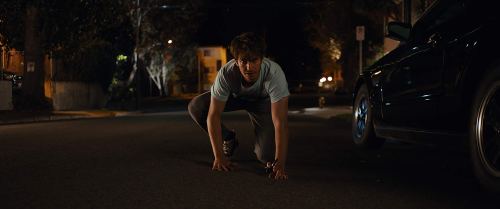
Arctic is like a cinematic version of The Oregon Trail, that old computer game standby, insofar as it’s all about getting from point A to point B, with lots of deadly peril along the way. It also resembles many-generations-ago gaming in its decidedly no-frills nature. Mads Mikkelsen plays Overgård, a man who has been stranded alone in the title tundra for an unspecified period of time. There is hardly any dialogue because the only other credited character is a woman (María Thelma Smáradóttir) in a helicopter crash who is barely, if at all, conscious for most of the running time. The video game comparison does not track completely, as you never really got to know anyone in your Oregon Trail party, beyond all the diseases and snake bites they succumbed to. Arctic, on the other hand, does allow you to spend plenty of time getting up close and personal with Mikkelsen, but in fact you don’t get to know him that well, because he’s too busy just surviving.

Your appreciation of Arctic will depend a great deal on whether or not you believe minimalism is the best approach for this type of story. It certainly has its advantages, as the sheer imposing scope of the setting ensures that director and co-writer Joe Penna does not have to do anything fancy to convey the truth of Overgård’s situation. I enjoyed watching Arctic about as much as an afternoon spent playing The Oregon Trail. But I appreciated it much more deeply for its technical astuteness and efficiency. And it’s also now perfectly clear, if it wasn’t already, that Mads Mikkelsen is ideal company no matter what the occasion.

Arctic is Recommended If You Like: Survival Stories, Snow, Minimalism

Grade: 3 out of 5 SOS’s

This Is a Movie Review: A Dog’s Way Home

1 Comment

CREDIT: James Dittiger/Sony Pictures

A Dog Way’s Home is about a mutt who would probably make it home a lot faster if she would just slow down and let someone help her. In fairness, not everyone Bella (voiced by Bryce Dallas Howard) encounters is particularly helpful, but she has a stubborn streak that ensures she is going to finish her journey on her own terms. But when she causes multiple accidents and gets herself hurt while trotting across six lanes of highway traffic, and then just walks off without anyone chasing after her (or is somehow able to outrun everybody), it starts to strain a little credulity. When movies like this slightly anthropomorphize dogs by giving them a human narrator, they come off as a mix of highly capable but also pitiable that feels somewhat uncanny valley-ish. That can be offset by leaning into goofiness, but A Dog’s Way Home is so earnest that it leaves me in a weird and unsettled emotional state, as opposed to a preferable combo of relieved and heartwarmed.

I give A Dog’s Way Home 2.5 Missing Dog Tags out of 5 Questionable Pit Bull Classifications.

Movie Review: ‘The Image Book’ is Jean-Luc Godard as Unclassifiable as Ever

Leave a comment

CREDIT: Kino Lorber

Director: Jean-Luc Godard

Running Time: 84 Minutes

Rating: Unrated, But I Would Peg it at PG-13, Mostly Because I Don’t Think Young Kids Would Know What to Make of It

Release Date: January 25, 2019 (New York)/February 15, 2019 (Los Angeles)

At 88 years old, Jean-Luc Godard is still hard at work redefining what constitutes a film. His latest experiment is The Image Book, which can prosaically be described as an avant-garde cinematic essay that ties together various pre-existing films, paintings, and some original footage into one feature-length montage. But a more truth-seeking, poetic way to put it is that this is probably Godard’s attempt to capture his dreams on screen. That’s probably what he’s been doing his whole career, really. I think that’s what most, if not all, directors are doing, in fact. Godard is just more conscious about it than most. The question now is: was it worth it for Godard to share this particular dream with us? I certainly won’t complain about the time I spent watching it, but I doubt that it will have much of a lasting imprint on my subconscious, or my waking life for that matter.

One of the most useful pieces of film criticism I have ever heard (courtesy of Roger Ebert, I think) is that a good film teaches you how to watch it. With something as nontraditional as The Image Book, one would very much hope that is the case. But unfortunately, it is not successful, or at least the lesson did not take with me. Maybe Godard had a very clear purpose in mind when assembling his pieces, but it did not hit me with an overall strong punch. There is a mix of disorientation, cleverness, and inscrutability to the whole montage. The volume spikes up and down, or drops out entirely, and the cuts between various footage make perfect sense or no sense at all. I can imagine that it is pretty much the same experience whether you pay perfectly close attention or slip in and out, but it’s fun enough if you know what you’re getting into.

The Image Book is Recommended If You Like: Koyaanisqatsi, maybe?, Godard Completism

Grade: 3 out of 5 Trains

This Is a Movie Review: Replicas

Leave a comment

CREDIT: Replicas Holdings, LLC

As Replicas moves closer and closer to its climax, it becomes more and more aware that it must grapple with the consequences of its premise, or else there will be hell to pay. Keanu Reeves is attempting to clone his recently deceased wife and kids, and he’s pretty good at it, too. But he doesn’t want them to know that they’re clones, which presents problems upon problems upon problems. If he attempts to keep up the charade, that would make his character not just hubristic, but also profoundly cruel, and maybe even a little evil. So instead he chooses to be honest, and that’s when Replicas starts to click into gear. It all leads to a surprisingly happy ending that maybe does not grapple with bioethics as carefully as it should, but you know what? It’s a relief that a speculative sci-fi film like this one can offer some hope instead of total despair. If only the rest of Replica were not weighed down by a generic score and too many shots of Keanu wearing a funny helmet and waving his hands around a floating screen.

I give Replicas 3 Cloning Pods out of 5 Corporately Owned Subjects.

This Is a Movie Review: ‘Glass’ is an Off-Kilter But Rewarding Examination of Superpowered Beings

Leave a comment

CREDIT: Jessica Kourkounis/Universal Pictures

This review was originally published on News Cult in January 2019.

Starring: James McAvoy, Bruce Willis, Samuel L. Jackson, Sarah Paulson, Anya Taylor-Joy, Spencer Treat Clark, Charlayne Woodard, Luke Kirby, Adam David Thompson

Director: M. Night Shyamalan

Running Time: 128 Minutes

Rating: PG-13 for Popping Veins, Sharp Objects, and Bodies Thrown Violently

Release Date: January 18, 2019

With Glass, M. Night Shyamalan is attempting a sort of Grand Unified Theory of Superheroes. According to this particular model, the stories told in comic books are based on the exploits of real people. We only think they are myths because they have had to live in the shadows. I’m pretty sure that Shyamalan does not actually believe that there are superheroes and supervillains in the real world, but the wonder that infuses those stories is very real. It is what drives us to understand the unbelievable. It is also what drives Shyamalan to deconstruct the entire superhero genre at its most atomic level.

Picking up nearly two decades after the events of Unbreakable and soon after those of Split, Glass kicks off with Bruce Willis’ super-strong guardian David Dunn tracking down James McAvoy’s ravenous multi-personality villain Kevin Wendell Crumb. They are both subdued by Dr. Ellie Staple (Sarah Paulson), a psychiatrist who specializes in patients with delusions that they are superpowered, a condition that she assures us many people are suffering from. They end up at the same institution that has been housing Sam Jackson’s Elijah Price, a.k.a. Mr. Glass, the man who engineered a series of terrorist attacks to uncover a superhuman like David. Also returning are Spencer Treat Clark as David’s son Joseph, Charlayne Woodard as Elijah’s mother, and Anya Taylor-Joy as Casey, Kevin’s surviving kidnapped victim. Oddly enough, most of the film takes place within the institution, making this mainly a battle of wits between Dr. Ellie and her charges. It is a surprisingly talky approach to what is ostensibly an action film, but it is profoundly part and parcel of what Shyamalan is doing.

As Glass reveals what it is all about, much of the dialogue turns into language that only ever appears in comic books. That is to say, it is the language of comic book narration, of the variety that goes “the bad guys are teaming up” and “this is an origin story, but not for the character you thought.” Not only do real people not talk like this, neither do movie characters, and neither do comic book characters. The only actor who manages to deliver any of it with any gravitas is Jackson. Clark, Woodard, and Taylor-Joy, on the other hand, sound as unnatural as possible. However, as disorienting as all that is, I am not eager to write this element off as a failure.

The film’s structure also leads me to question some things, particularly the revelation of Dr. Ellie’s true nature. I did not find it to be a huge shock, and I wonder if Shyamalan would have benefited from revealing it to the audience earlier to really explore the consequences of what her character represents. But even with the reveal at the end, that point can retroactively click into gear. And as for all the unnatural acting, I could say that maybe that is the point, and that this is a highly affected world, or at least these are highly affected people. That would be generous, though, especially considering that Clark, Woodard, and Taylor-Joy sounded like much more typical humans in Unbreakable and Split. But even if I choose to have the least generous interpretation of every questionable element, I remain utterly fascinated by Glass. This is not Shyamalan at his most straightforwardly powerful, but it is also not him at his most insufferable. He is on a cloud of thinking that most people would never think to go to, but he has found insights there that I am very happy we now have.

Glass is Recommended If You Like: The Village, The Happening, Valerian and the City of a Thousand Planets

Grade: 4 out of 5 Origin Stories

This Is a Movie Review: ‘The Kid Who Would Be King’ is a Goofy and Honorable Rendition of the King Arthur Legend

Leave a comment

CREDIT: Kerry Brown/Twentieth Century Fox

This review was originally published on News Cult in January 2019.

Starring: Louis Ashbourne Serkis, Dean Chaumoo, Angus Imrie, Patrick Stewart, Rebecca Ferguson, Tom Taylor, Rhianna Doris, Denise Gough

Director: Joe Cornish

Running Time: 132 Minutes

Rating: PG for Some Creepy Dark Magic and Middle School Bullying

Release Date: January 25, 2019

In the course of human history, it is always the children’s time to inherit the Earth. Thus, if all is right, then every generation gets the re-telling of the Arthurian legend it deserves. Not only does The Kid Who Would Be King deliver on this front as entertainment, but it is also about how young people, however modest their origins, can rise up to prove themselves and be upright, inspiring leaders. Middle schooler Alex (Louis Ashbourne Serkis) randomly stumbles upon a sword at a construction site, so he pulls it out of a stone and takes it home, totally unaware that it is the legendary Excalibur. He soon finds himself embroiled in a generations-long fight against Arthur’s sister Morgana le Fay (Rebecca Ferguson) as she uses dark magic to take over the world. He teams up with his best friend Bedders (Dean Chaumoo) and converts some school bullies into allies, rendering the whole affair a lot more noble than you might expect a kid-friendly version of this story to be.

The biggest, and certainly showiest, highlight (as is the case in so many King Arthur stories) is Merlin (Angus Imrie), who here takes the form of a skinny young lad, as he is a wizard with a bit of a reputation for aging backwards. (Patrick Stewart occasionally pops in to play his older version, partly to look the part to anyone who doubts he is an actual ancient wizard.) There are some fish-out-of-water gags that really hit the spot, as Merlin disguises himself as a new schoolmate of Alex’s, declaring himself a “normal, contemporary British schoolboy.” Then there is the mesmerizing way he conjures spells, which is a basically a series of combinations of jazz hands and finger snaps. Imrie must be some sort of champion finger-snapper. Basically, if you like your Excalibur stories to feature jokes about how fast food consists of beetle blood, crushed animal bones, and beaver urine as well as lessons about living according to a code of honor, decency, and bravery, then The Kid Who Would Be King is just what you need.

The Kid Who Would Be King is Recommended If You Like: A Kid in King Arthur’s Court, The Goonies, Thor

Grade: 3 out of 5 Finger Snaps


This Is a Movie Review: Mexican Remake ‘Perfect Strangers’ is a Tricky Mix of Farce and Intense Drama

Leave a comment

CREDIT: Noc Noc Films courtesy of Pantelion Films

This review was originally published on News Cult in January 2019.

Starring: Cecilia Suárez, Manuel García-Rulfo, Mariana Treviño, Miguel Rodarte, Bruno Bichir, Ana Claudia Talancon, Franky Martin

Director: Manolo Caro

Running Time: 104 Minutes

Rating: R for Inhibitions Being Lifted

Release Date: January 11, 2019 (Limited)

Honesty is always the best policy, but that does not mean that you need to be completely open all the time about your secrets. It is stunning that in 2019 humanity is still learning that lesson. But alas, sometimes we act foolishly when we should know better, and people alive today keep re-learning the lessons that our ancestors already learned the past several thousand years. Thus, while the premise of the Mexican film Perfectos Desconocidos (Perfect Strangers in English) sounds like fun (and there are some amusing moments), its participants ought to realize that it is an easy recipe for disaster.

A group of seven best friends are gathered for a dinner party on the night of a lunar eclipse, and they all agree to participate in a game: their cell phones will remain on the table throughout the meal, and any calls must be placed on speaker and any messages received must be read aloud. This is a remake of the 2016 Italian film Perfetti Sconosciuti, which has already been redone multiple times throughout much of Europe and Asia. This is actually the second Perfectos Desconocidos, with Spain’s version having arrived in 2017. It goes to show you that the fear of being found out as a fraud or discovering that those closest to you are frauds is universal.

That insight may not be the most astounding revelation, but its relatability potentially provides the opportunity for a meaningful dramatization. On that score, director Manolo Caro and his ensemble have plenty worthwhile to say, but their approach is a little scattered. There are moments of heavy farce, heartwarming familial bonding, and social commentary that tend to gracelessly crash against each other instead of flowing into each other naturally. Each individual element works on its own merit to a certain extent, at least. One scene of a father offering sage advice to his teenage daughter while she is unaware that everyone else can hear her is especially heartwarming.

Overall, there is a sense that Perfectos Desconocidos has bitten off more than it can chew. Its approach to tackling discrimination is the clearest example (although it is possible that this storyline plays better south of the border). As one character struggles with inadvertently coming out of the closet, there is panic about how gay teachers might influence their students, among other worries. It makes me wonder if mainstream Mexican culture is about ten or twenty years behind the United States on this issue. Indeed, one character even evokes Seinfeld by uttering, “Not that there’s anything wrong with that.” Ultimately, this mix of lowbrow and surprising ambition is enough to give you indigestion, due to ingredients that are not quite compatible or not quite fully cooked. Let’s just chalk up any inconsistencies to the moon making people do crazy things and choose to remember from this night only what we want to remember.

Perfect Strangers is Recommended If You Like: Domestic farce, playing Truth or Dare at any age

Grade: 2.5 out of 5 Incoming Messages


This Is a Movie Review: Mary Poppins Returns

Leave a comment

CREDIT: Jay Maidment/Disney

Mary Poppins is fun and all, but before she showed up again, little Annabel, John, and Georgie could have already turned to their Aunt Jane to take care of all the practical matters that their dad is struggling with. Mary Poppins Returns has magic, or at least attempted magic, in its presentation. Whether or not that magic will hit you squarely in your heart and imagination depends a great deal on your mood, I think. Emily Blunt is acceptably grand in fulfilling her Poppins-y duties, but she’s not as singularly ineffable as Julie Andrews. That’s a tough comparison, sure, but even when considered in isolation, Returns is not much more than a perfectly pleasant passing diversion. And anyway, I’m more interested in Jane’s labor organizing. Not every villain is as sniveling as Colin Firth’s bank manager, which is one reason why unions are so important.

I give Mary Poppins Returns 5 Animated Detours out of 8 Misplaced Documents.

This Is a Movie Review: ‘Escape Room’ Makes Immersive Puzzles Fun and Unsettling

1 Comment

CREDIT: David Bloomer/Sony Pictures Entertainment

This review was originally published on News Cult in January 2019.

Starring: Taylor Russell, Logan Miller, Deborah Ann Woll, Tyler Labine, Jay Ellis, Nik Dodani

Director: Adam Robitel

Running Time: 109 Minutes

Rating: PG-13 for Disorientingly Perilous Action, Traumatic Flashbacks, and Inadvertent Drug Use

Release Date: January 4, 2019

Depending on where you’re coming from, Escape Room is arriving either ten years too late or right on schedule. The real-life escape room craze is still going strong, if TV shows as diverse as Conan and Crazy Ex-Girlfriend are to be believed. From that perspective, Escape Room the film is cannily capitalizing on a current trend. But considered from a cinematic context, the Saw series already set the template a decade ago (and now even exists in its own escape room form). But that is not exactly the highest standard. Thus, Escape Room, which renders immersive puzzle spaces actually deadly, has plenty of space to make its mark as a solid piece of entertainment for those who do not have the stomach for torture porn.

That is not to say that Escape Room is a pleasant watch, especially for anyone claustrophobic enough to find the entire concept of escape rooms frightening enough in the first place. It has a cruel streak, though it is tempered by a consistent preference for hope (or at least the illusion of it). Where Saw was often gross and off-putting while occasionally trying to say something about human nature, Escape Room is tightly engineered but also unsettling in just how random it ultimately is. The six people who have been chosen for this challenge all have a past as the lone survivors of deadly accidents, including drunk driving, an IED blast, and carbon monoxide poisoning. While the escape room has been designed with their histories in mind, that concept may have everything or nothing to do with who makes it out alive. The (possibly sequel teeing-up) ending is effective as a gut punch saying that this whole game is actually a “no escape” room. But the whole movie has a feeling of meaninglessness that is somewhat frightening but also the sign of a screenplay with limited subtext.

That said, while Escape Room‘s themes and motivations are never fully clear, it was successful at holding my attention, and I suspect that many audiences will feel the same. The designs of each section of the escape room are ingenious feats of engineering, from a lobby that turns into an oven to an upside-down pool bar. It also helps that each of the characters generally act to the top of their intelligences, making this an engaging battle of wits. We also get at least two different kinds of comic relief, with Tyler Labine as the goofy uncle type and Nik Dodani (best known as Murphy Brown’s new social media director) as the escape room enthusiast who realizes too late how real the threat is. The whole thing is fluffy, but enough to make you think twice about playing any more interactive games.

Escape Room is Recommended If You Like: Actual escape rooms probably, plus the Saw and Final Destination series

Grade: 3 out of 5 Unlocked Doors


This Is a Movie Review: Steve Coogan and John C. Reilly’s High Regard for a Couple of Screen Legends Makes ‘Stan & Ollie’ a Gently Heartwarming Affair

1 Comment

CREDIT: Sony Pictures Classics

This review was originally published on News Cult in December 2018.

Starring: Steve Coogan, John C. Reilly, Shirley Henderson, Nina Arianda, Danny Huston

Director: Jon S. Baird

Running Time: 97 Minutes

Rating: PG for A Few Adult Arguments

Release Date: December 28, 2018 (Limited)

If you’ve ever thought that Steve Coogan and John C. Reilly should team up to play legendary screen duo Stan Laurel and Oliver Hardy, then you must be their biggest fans or their close friends. Stan & Ollie very much feels like a passion project, and it also has the vibe of a secret present, because who in 2018 would have ever thought to ask if anyone wanted to make this movie? Coogan and Reilly have their subjects’ signature gestures down pat, and various real life scenes play out with a charming blend of misanthropic physical comedy in the vein of heavy luggage sliding down a staircase. The year is 1953, and Laurel and Hardy’s cinematic glory days are well over and never to re-emerge, though Stan is hard at work writing a screenplay about Robin Hood and incessantly tracking down a producer. But to actually make some dough and earn some new laughs, they head out on a tour of live shows in Britain and Ireland.

The primary, low-key charm of Stan & Ollie is the culmination of two longtime companions realizing the depth of their connection. The pressures of the road lead to simmering resentments being aired out, but those blowouts clear the way for these two to reaffirm that they are more than just partners but are in fact true and loyal friends who might as well put on one more show for as long it can last. Their relationship is mirrored by that between their wives, who are often at odds with each other as they stand firmly in their husbands’ corners. It is the third marriage for both of them, but it appears that the third time’s the charm. Stan’s wife Ida (Nina Arianda) is a bit of a brassy steamroller, while Ollie’s wife Lucille (Shirley Henderson) is mousy but just as formidable. There is one especially heartwarming moment in the middle of a show when Ollie’s health troubles look like they will incapacitate him, but he looks at Stan for support and they are able to carry on; meanwhile in the audience, Ida and Lucille become a unified front as they lock hands. That is the sort of unity of spirit you hope to find in any major personal endeavor.

Stan & Ollie is Recommended If You Like: The real Laurel and Hardy presumably, Low-key showbiz biopics

Grade: 3 out of 5 Top Hats

Older Entries Newer Entries