Community Episode Review: 5.5 “Geothermal Escapism”

Leave a comment

Community - Geothermal Escapism
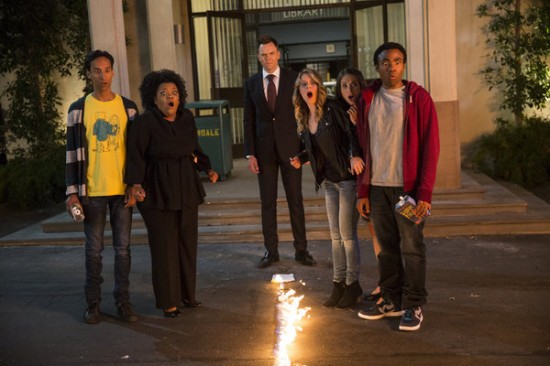
“Geothermal Escapism” started out as a paintball episode in every way except paintball.  But “The Floor is Lava” was close enough to paintball anyway, as it also proved to have the capacity to destroy the entire campus, with thanks also once again to a disproportionately enticing prize.  The possibility that something like this could happen on Community was never in doubt.  Of course Abed would want to give Troy an appropriately massive, campus-wide send-off.  And no surprise that it would call back to their past great adventures.  But for the first half of this episode, I was a little wary.  It wasn’t just that Lava was so similar to paintball (the post-apocalyptic angle was new, but really just a subgenre of the action genre so fully covered in “Modern Warfare”), it was that the character stakes didn’t seem that high.  “Modern Warfare” took place in light of Jeff and Britta’s sexual tension boiling over, and the Season 2  2-part finale was precipitated by the possibility of Pierce being kicked out of the group.  It feels like at this point in the show’s run, these people are too comfortable with each other to have conflicts on those scales.

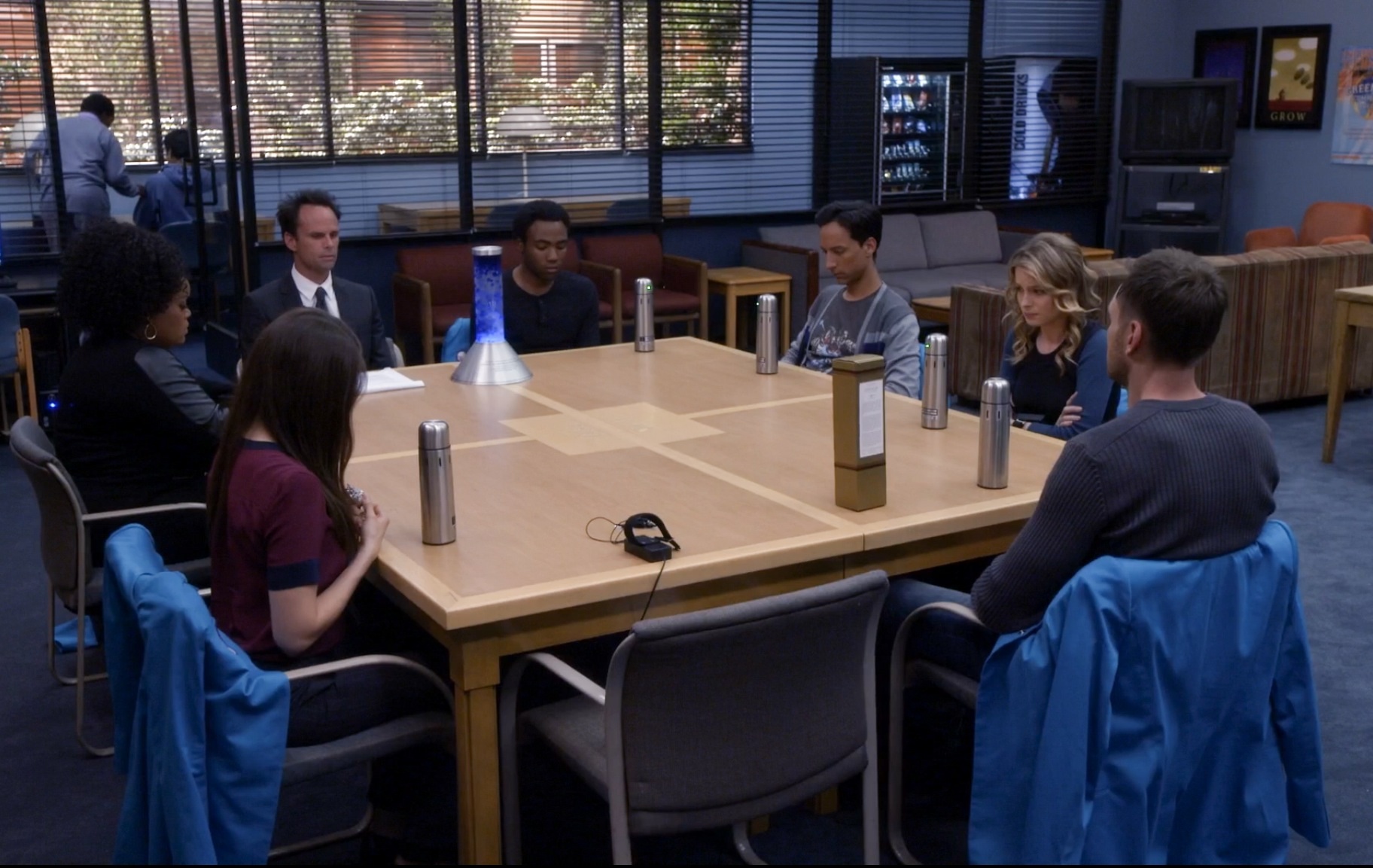
This is why I kept my eye on Britta, who insisted on everyone having a chance to grieve.  This really seemed unnecessary; nobody wanted Troy to go, sure, but not everyone needs to go through the same grieving process when a friend leaves.  Jeff, Shirley, and Annie at least all seemed perfectly capable of seeing Troy off without too much fuss.  But there was somebody missing from that opening study room scene.  Abed’s absence served both a narrative and a thematic purpose, and this was ultimately all brought together by the end.

It wasn’t just that the creators of Community wanted to re-capture the glory of the paintball episodes.  Abed was the one who orchestrated The Floor is Lava.  He was the one who really wanted to go back to those good times.  Britta may have applied her grief psychology too broadly at first, but she was right to have that mindset.  If genre-savvy Abed – who knows to be wary of sequels – was so focused on making something like a sequel (a spinoff, perhaps), then something had to have been be up.  When the game comes down to Troy, Britta, and Abed, everything is brought into perspective.  Abed knows intellectually that Troy won’t be here forever, but his unique emotional state affects his perception so strongly that he can’t help but see the floor as lava.  This episode had to be so similar to what had come before so that the change of the status quo that came at the end could be felt so strongly.

So I had no trouble feeling the ending of this episode, but it took me some mental aerobics that I more or less just explained to really get on the first half’s wavelength.  Ultimately, I do think it succeeded from start to finish.  It helped that the action was so well-directed.  You really got a sense of how painful some of those falls were.  Annie’s drop especially looked like it hurt.  There was also no shortage of laughs, with highlights including Duncan’s complaint that everyone besides the British cheats, Garrett’s storytelling about Shirley Island, “the reverse Danny Thomas” (whatever the hell that is), Gillian Jacobs’ delivery of “I understand. I lived in New York”, and “Cirque Du so long, you high-stepping acro-bastards,” which was perhaps as funny as it was only because Leonard said it.

For Troy’s last episode, “Geothermal Escapism” didn’t focus as much as one might have expected on Mr. Barnes.  But as I talked about in my review of “Cooperative Polygraphy,” Troy has clearly matured enough to take on this next stage of his life.  It wasn’t necessary to show him preparing, as it was clear that it was time for him to move on.  And so this episode focused more on those saying goodbye, particularly Abed, and here was just the latest example of how much of a classic all-time TV character he is.  It has never been confirmed one way or the other that Abed has Asperger syndrome, or something similar, and I think that has been for the best.  He understands his limitations, and he consistently attempts to work around him, so it is fascinating to see him actually debilitated by his condition.  It is a fitting cap to one of the great friendships in TV history to see Abed be able to be so honest with Troy in that moment.

As Troy is about to set sail, he gets the perfect goodbye from each of his friends.  His moment with Britta interestingly – and poignantly – calls back to their relationship from last season.  Annie eloquently expresses her amazement that someone she could barely talk to at first is now the easiest person for her to open up to.  Shirley is rightly denoted as the badass of the group.  Jeff, who in previous seasons looked to have been threatened by Troy’s heroic rise, is now genuinely impressed by how his protégée of sorts is now more awesome than he is.  And Troy and Abed – Clone Troy and Clone Abed, that is – don’t shake hands.  They hug.

Community Episode Review: 5.4 “Cooperative Polygraphy”

1 Comment

community-cooperative-polygraphy

“Cooperative Polygraphy” is an epic episode of Community, insofar as it is chock full of references to past episodes.  Many thanks to other Community fans on the Internet for pointing out the ones I did not pick up on right away.  A LOT of people noted that part of the freeze-frame epilogue from “The Art of Discourse” came true, as Britta became the (presumably proud) owner of a used iPod nano.  (Others noted that if this means this episode takes place in 2014, then that 3-year-gap that has been cited existing between Seasons 4 and 5 is making less and less sense.)  The reveal that Annie drugged the whole group in preparation for the Anthropology final is especially hilarious if that is in reference to the final from “Applied Anthropology and Culinary Arts,” the most farcical moment from a patently farcical class.  Going even deeper, Troy’s attempt to inhale Pierce’s life vapor perhaps fulfills his wish to “eat a ghost,” which he made in “The Psychology of Letting Go” – the episode that introduced the post-death rituals of Pierce’s religion.

But the episodes that “Cooperative Polygraphy” responds to the most are “Cooperative Calligraphy,” “Intermediate Documentary Filmmaking,” and “Intro to Felt Surrogacy.”  “Calligraphy” is the obvious antecedent here, what with the rhyming titles and shared study room setting.  But “Polygraphy” is more low-key (or less high-key, as it were).  It doesn’t call attention to itself as a bottle episode, unlike the former “Cooperative” episode.  For my money, a pure bottle episode is one that not only takes place in one location, but also one in which the characters are trapped.  In “Polygraphy,” the study group was bound by circumstance to remain in the study room, but not to the degree that they were in “Calligraphy” – one character leaves and then comes back, after all.  The tensions do run high in “Polygraphy” (as they typically do typical Community), but not to the ripping-off-clothes degree of “Calligraphy,” perhaps the most tension-filled episode of the series.

“Intermediate Documentary Filmmaking” is the closest narrative parallel, as that Season 2 classic also saw Pierce playing head games with the specter of his death hanging over.  Between these two, there is a clear progression of significant difference.  Pierce’s premature bequeathals were mostly meant to punish his friends.  His actual bequeathals were genuine and thoughtful, though preceded by head games that he still could not resist.  Pierce never became the kindest friend to any of these people, but he did become a friend whose friendship ultimately could never be in doubt.

The closest thematic parallel is “Intro to Felt Surrogacy,” an episode I enjoyed more than most fans; I even declared it the best of the season – though I have since backed off that opinion.  The major problem with “Felt Surrogacy” was its sense of incompleteness.  Because the study group’s secrets from that episode were all revealed in the final act, there was no chance to resolve the problems presented by them or come to terms with them in any meaningful way.  It feels like Dan Harmon had a similar reaction upon watching this Season 4 episode.

I do not know what Harmon’s exact thought process about Season 4 has been, but I know he has not dismissed it outright, and watching “Cooperative Polygraphy” makes me feel like I kind of do know what he was thinking in this case, because it episode basically directly solves the problem of “Felt Surrogacy.”  The revelation of secrets is the whole narrative thrust of “Polygraphy.”  Community demonstrates the wisdom of caution by showing friends that even when they are perfectly comfortable in their friendship, it is important to consider that there still might be secrets lurking that could deeply hurt their friends.  This is not to say that they might as well end their friendships, but rather, something along the lines of, perfect is the enemy of the good.  That is, if you have already accepted your friends with all their imperfections, you should be able to also accept any previously unknown imperfections.

And oh my God, Troy is leaving.  The circumstances that are drawing him away are random, but also ultimately perfectly appropriate.  Once again, I must extend credit to the rest of the Community fandom for providing examples of how Troy does indeed have the heart of a hero: he was the one who took charge in “For a Few Paintballs More,” and he risked his life by going back among the infected in “Epidemiology.”  Troy’s life did not look as bad as everyone else’s in “Repilot,” so he would be spinning his wheels more than anyone else if he were to remain at Greendale.  No doubt there will be something missing in the heart of the show after the next episode, but at least there will be a way to check up on him occasionally, now that we know about Abed’s tracking devices.

Community Episode Review: 5.3 “Basic Intergluteal Numismatics”

1 Comment

Community_BIN
By my estimation, the best analogue to “Basic Intergluteal Numismatics” is “Basic Lupine Urology” – an intricately well-done, but unnecessary, homage.  (Also, the titles follow the same format: with BLU, it’s “ha-ha, fancy way of saying ‘Dick Wolf'” and with BIN, – it’s “ha-ha, fancy way of saying ‘dropping coins into butts.'”)  I responded better to “Intergluteal,” not necessarily because it was better, but because I am more familiar with David Fincher’s filmography than I am with
Law & Order.  I don’t think I’ve ever seen an episode of L&O straight through, whereas I have seen every Fincher-directed film besides Alien Cubed and Panic Room, and I’ve liked them all (well, Benjamin Button was okay, but kind of weird – but I don’t think it was referenced here anyway).  There were some touches on TV crime procedurals as well, a genre I did not think I was that big a fan of, but I guess I am watching the right ones, because I appreciated the nods to Hannibal (right down to Duncan’s Lecter-esque wardrobe) as well as Abed pointing out the overdone trope of a “special” investigator with the ability to recreate the crime in his head (even though that trope is done perfectly on Hannibal).  Typically, Abed will jump at any chance to recreate fictional tropes in real life, so it was an entertaining change of pace to see him start to act out the Dean’s patronizing request, but ultimately point out how disgusted he was by it, by means of just leaving the room.

Generally, I prefer it when Community‘s homages arise naturally out of the plot machinations and the character dynamics, as opposed to being imposed from the outside.  Now, if it is the latter, I can enjoy it if it is well-done, though it probably will not quite be at the top tier of episodes.  And so it goes for “Intergluteal.”  The dark green tint was fine either way, and I was perfectly happy with it because I loved seeing an episode of Community that looked like Se7en.  Annie and Jeff have teamed up together plenty of times before, so it was certainly believable that they would do so again, and the fact that they so easily slipped into roles typical of Fincher-ian investigators – a mix between the opposing styles of Se7en and the sexual tension of The Girl with the Dragon Tattoo – was more a function of the editing than either of the two of them acting out of character.  And it certainly was not atypical of Abed to give Troy warm beverages and blankets, just like how trauma victims are treated in movies.  Troy committing to the trauma victim bit may have been silly, but it is also something he would do.  Then there was the Dean snapping at Rhonda to trace the call – my pick for biggest laugh of the night (give or take Jeff’s moment with Leonard) – which is something the Dean would absolutely do: emulating a trope in a way that doesn’t quite work.  So, really, it wasn’t so much that this homage felt imposed from above, as much as this whole episode just came out of nowhere.  It was hard to get your bearings regarding what it was trying to do, but that also seemed to be the point – so I guess what I’m saying is, the the justification for this homage was the homage itself.

One element that did not come out of nowhere but felt oddly unattached to continuity was the Jeff and Annie of it all.  I was actually surprised to see these two team up again right after last episode, considering this show has rarely been sure exactly how it wants to treat these two.  It wasn’t exactly sure here, either, though it did seem to start to be saying something, but that something got cut off (like everything else at the end of this episode).  When there has been a mystery to be solved at Greendale in the past – “Conspiracy Theories and Interior Design,” “Basic Lupine Urology” – Jeff and Annie have always teamed up for the investigation, so it made sense that they would do so again.  And it made sense that they have now teamed up often enough that people would start noticing and point it out.  I’m not sure why the Dean referred to it as creepy, though.  I’m not even sure what exactly was “this creepiness” was referring to.  Their age difference wasn’t brought up; it seemed more like the point was that it was weird that the two of them apparently feel the need to justify their spending time together by getting involved with a caper.

The state of their relationship seems to be that they are fine with referring to themselves as just friends.  They are still attracted to each other, but not necessarily enough that they feel a burning desire to act on it.  But that doesn’t quite add up, because in Season 4, their attraction still was clearly present.  There was never really a decisive moment when they said to each other or themselves that they were just friends.  How much time passed between the end of Season 4 and the start of Season 5, again?  Long enough for all the changes in the group dynamic to make sense?  Okay, that sounds about right.  (Looking over comments from around the Internet, it seems like the tension may have been played up and called attention to for the sake of emulating the sexual tension in TV and movie mystery-solving duos – I’ve already mentioned Girl with the Dragon Tattoo, and of course there’s Mulder and Scully, and also probably The Killing [which I’ve never watched].)

Oh, and Pierce died.  This may have struck some as rushed, or not dealt with properly.  The latter should not be too much of a concern, because the next episode will be dealing with it directly.  As for the former, unexpected deaths tend to feel like that.  Did it feel oddly shoehorned into an homage episode, which was also – homage or no homage – exceedingly silly?  Yes.  Was that necessarily a bad thing?  It may have rubbed some the wrong way; for me, it was weird, but in a way that I thought weirdly fit with the weirdness of the whole episode.  The case was closed, but never fully solved, because there are more important things to focus on, but there is still a lingering feeling of “Could it be…”

Oh, and I’ve barely been able to talk about the return of Ian Duncan.  It felt a little strange to have to explain his return, instead of just letting him be there.  Ultimately, though, by episode’s end, he was essentially just there, back in the Greendale swing of things.  His interactions with Britta were charmingly creepy.  There might have been a bit of overkill with the fake Britishisms, but his delivery was spot-on (“Oh, American high-five” was probably my favorite of the bunch).  The scene with him and Annie in his office also delivered the tension, and apparently it was a perfect homage to a scene in Zodiac that I don’t remember all the details of, but people who have seen Zodiac more recently than I have sound confident that it hit the mark.

I know I liked this episode, but

Community Episode Reviews: 5.1 “Repilot” and 5.2 “Introduction to Teaching”

1 Comment

CommunityRepilot

“Repilot”
“Francis Ford Repo Man” – so this is the first joke of Dan Harmon Community 2.0.  It’s irrelevant to everything else going on in that scene, and it’s not even a very good pun (unless I’m missing something).  But it works – because it is not lingered upon.  I constantly argued that the major problem with Season 4 wasn’t the What, but the How.  There were plenty of good ideas, but too many of them were not executed well.  This falls to the editing, an area that Dan Harmon-run Community was strong in, and Harmon-less Community so clearly was not.  Last season, shots were cut away from too fast, there were awkward lingering stretches, and overall episodes (and the whole season) just weren’t that well-constructed.  It is immediately clear that that has been rectified, and that makes jokes that aren’t very good actually kind of work.

I have a bone to pick with a few TV critics (but maybe it’s not their fault, because there appears to be some confusion): in some of the pre-show reviews, they said this season was taking place three years later.  I assumed that that meant there was a time jump between the end of Season 4 and the beginning of 5, but that is clearly not the case.  Jeff mentions that the rest of the study group “just” got sprung from Greendale, and last year is referred to as the “gas leak” year.  I guess the “three years after” actually refers to three years after the beginning of the show – but that doesn’t work either, because then it would be four years.  This three-year figure just doesn’t seem to work at all, and I don’t know where it came from.  It does seem like a lot has happened to everybody, more than would be expected over the course of just a few months, but all references to events of Season 4 make it seem fairly recent.  Umm… I guess it’s not that important.

To continue this review on a technical standpoint, this episode was dark – one of the most dimly lit of the series.  It was hard to get comfortable with, but it was on purpose.  The past four seasons have seen these people bettering themselves, but apparently it has not been enough.  Jeff is able to be manipulated by his skeevy former partner, and the study group is still able to be manipulated by Jeff at his most manipulative.  But, there is a sense of righteousness to the destructive decisions everyone is making.  In the pilot, we saw a Jeff Winger making the right choices for the wrong reasons, and in “Repilot,” we see him making the wrong choices for the right reasons – but he ultimately comes around to the right choices for the right reasons thanks to the support group he has cultivated.  When he confronts Dean Pelton about his indecency, what he is so angry about is that the people he cares most about could be so easily taken advantage of.  He does not really want to destroy Greendale; he is just screaming about how unfair it is that he and his friends aren’t succeeding.

It was wise for this season to be a revamping year, not just because last year was a relative disappointment, but also because it is a general rule of thumb that sitcoms need a major shakeup here and there to remain worthwhile as they get older.  With its multiple callbacks to the pilot, “Repilot” made it clear that it was a new beginning but also not as much of a clean break as I thought it was going to be.  Is Greendale like the Lost island in that the study groupers cannot leave it (until they are truly ready)?  Or maybe it is a Möbius strip, in that every exit is also an entrance.  This is all to say, Abed repeating “I see your value now” and Jeff repeating “It’s the coolest” underscored how much this episode did not have the shiny newness of the very first episode.  The repeated lines were said by changed people, though.  So there was a changed tint to it all.  I need help reacting to it because it is a just bit uncanny – so familiar, yet so not the same.

Ultimately, “Repilot” portends greatness to come but struggles with dusting off stray plot points that were left dangling unresolved last season.  It was the right decision to make Season 4 canon, but that led to some awkward moments here.  When Annie asked, straight-faced, “Chang was faking Changnesia?”, was that supposed to be a joke?  And if so, what was the joke?  Anyway, a big Season 4 issue was that, even though it had plenty of great individual moments, it was never clear that the writers knew where they were heading towards.  Right now, I only have a vague sense of where this season is headed, but that is fine because I feel like the creative team has figured out where it is headed.

I also feel compelled to mention the surprise cameos: first off, a recycled J.D. voice-over from Scrubs takes the place of a wrap-up Winger speech, and it was looped in so perfectly that I almost thought Joel McHale was doing a Zach Braff impression.  Also, it added to Troy’s slam on Zach and made that crack funnier retroactively.  Also … Pierce appeared?  While watching, I was thinking, “Okay, sure, Pierce left Greendale, but he can still appear as a hologram.”  It didn’t hit me until later that Chevy Chase – you know, the actor who plays Pierce – had left the show, and thus no appearances should have been expected, and certainly not in the first episode.

CommunityIntroToTeachingAnnie

“Introduction to Teaching”
When friends become lovers, the dynamic of the relationship changes in some ways, but my gut instinct tells me that the way they interact stays a great deal the same and that it is a less awkward transition than some movies and TV would have us believe.  Why am I bringing this up while discussing an episode in which no romantic relationship is begun, ended, or really addressed in any way?  Because should Jeff Winger and Annie Edison ever make the transition from friends to lovers, then their interactions with each other should remain as they are in an episode like this one.  This was not a romantic storyline (at least not directly), but I have seen positive reactions to it from everybody – shippers, non-shippers, and neutrals alike.  This is the Annie Edison that so many Community fans fell in love with – the go-getter who admires Jeff Winger but won’t put up with any of his bullshit.  And this is why Jeff is such good friends with Annie: she challenges him when just about everyone else lets him slide by, and he throws those challenges right back at her.  The scene in which Jeff causes Annie to lose an argument with herself is a thing of beauty.  It is a prime example of how they are such a dynamic duo: they constantly criticize each other, but not to put each other down – they are both so right, and they are both doing it because they know the other can be better.  It can hurt a little bit, and they both hurt each other enough to lead to the other storming out of the classroom, but it hurts so good.  So, let me get a little personal with this analysis, and mention that I am rooting for Jeff and Annie to end up together, and this episode affirmed my faith in their relationship, despite the lack of romance (but certainly not lack of chemistry).  Let me be clear that if they do happen, I want formidable Annie to survive.  (And really, friends or more, that’s what Jeff wants, too: that much was clear by his smile when he saw the newspaper in the trophy case for the debate championship, probably my favorite moment of these two episodes.)

As for the rest of the teaching plot, Jonathan Banks is a rare breed among the Greendale faculty as criminology professor Buzz Hickey.  I mean, who’s mean to Leonard?  Sure, everybody makes fun of him, but that’s always after he gets a dig in at them, and he’s never been embarrassed by it.  But Hickey not only wants to humiliate Leonard, he wants there to be no confusion as to his intentions.  I saw some reactions from people who were profoundly disturbed that Leonard was treated so harshly.  And, true, it was a little rough to watch, but it made it clear that Professor Hickey is for real, like him or not.  And then he settled down at the study room table as a member of the student-teacher Save Greendale Alliance, and he fit right in, despite not being like Pierce at all, except for the oldness part.  I suppose he also plays a similar mentor-to-Jeff role, in which he gives good advice mixed with words that should definitely be avoided.  But this is a personality this crew is not used to, and it looks exciting.

As for the B-story, there were plenty of wonderful words of wisdom, as there tends to be with discussions of Nicolas Cage.  Highlights included Shirley hypothesizing that she might also “accidentally win an Oscar” if she were in 70 movies in 30 years and spoke at random volumes, Shirley, again, figuring out that it is Nic Cage’s role in life to work in mysterious ways, and Abed’s explanation of the different kinds of good and bad regarding Robert Downey, Jr., Jim Belushi (man, that guy is still taking a beating), JCVD, and Johnny Depp.  Danny Pudi’s Nic Cage impression was also excellent (especially “I’m a sexy cat”), but I’m not sure this storyline said that much about Nic Cage that the Internet hasn’t already figured out.  Call me crazy (please do), but I think this storyline could have been an entire episode.  It would have had more room to truly be inspired by Cage at his Cagiest.  Like a Nic Cage movie at his best, it could have made no sense and the most sense.

It is always nice to see Kevin Corrigan.  His appearance here certainly was not as memorable as “Conspiracy Theories and Interior Design,” but it didn’t need to be to work.  With his encouragement to just let the craziness play out – but also his warning to be careful – he may just be the best Greendale professor of them all.  With Jeff’s status as a teacher apparently making the faculty a stronger emphasis, it would be nice if we saw Garrity (and others) just hanging out occasionally.

As this new era moves forward, let’s take stock of where these characters are.  Jeff and Abed both look great, but they’ve never had more than minor problems.  Annie looks more promising than she has since Season 2 (and I thought she was pretty damn good in Season 3).  Britta hasn’t done much yet, but her defiance and her overeagerness (which sometimes resembles ditziness) have been harmonized quite nicely.  Shirley hasn’t had a major plot of her own yet, though she did play an interesting key part in the Nic Cage storyline.  Craig not quite fitting into the student world or the teacher world is being intriguingly emphasized.  Most worrisome, though, is Troy, who probably did the least of anybody these two episodes, and will only be appearing in three more!  I won’t get overly worried, though, because there is a strong sense of directionality, so I don’t think the short shrift will be dealt to anyone for too long.

An Analysis of the Characters of Community According to the Personality Types of Dr. Helen Fisher

4 Comments

I recently came across the theories of Dr. Helen Fisher, an anthropologist who believes that there are four broad personality styles and that each of these styles corresponds to a particular organic chemical. Fisher has primarily applied this research to romantic love, or interpersonal attraction more generally. She has worked as the scientific adviser to Chemistry.com, for which she developed a personality test to determine individuals’ unique mix of these personality styles. Dr. Fisher emphasizes that everyone has some elements of each style, but that individuals’ personalities are primarily determined by the two styles (the primary and the secondary) that they display more of than the others. I am somewhat wary of any personality theory that attempts to explain everyone and everything, but I find myself attracted to Dr. Fisher’s research because it does not purport to fully explain individuals and it allows for the fact that people are a mix of personality types, even if they have one type that is most prevalent. After reading her book Why Him? Why Her? Finding Real Love By Understanding Your Personality Type, I have found myself analyzing everyone I know according to Fisher’s personality styles.  So, I thought, why not do an analysis of the characters of Community, one of my favorite TV shows of all time?

Here are the four personality styles and the chemicals that they correspond to (all quotes are from Fisher, Dr. Helen, Why Him? Why Her? Finding Real Love By Understanding Your Personality Type, Holt Paperbacks: 2009):

EXPLORER (Corresponding Chemical: Dopamine) – “Explorers express a constellation of related traits. They are intensely curious and unusually creative. They are restless, energetic and spontaneous, often impulsive. They are willing to risk a great deal to pursue their many interests, and they get bored easily when not absorbed in something that intrigues them. They tend to be optimistic, irreverent and autonomous. Explorers are adaptable; they can play many different roles. Most are liberal in their political views, flexible in their personal lives and generous with their money, time and ideas. And Explorers crave novelty.” (Pgs. 44-45) Explorers tend to be attracted to other Explorers.

BUILDER (Corresponding Chemical: Serotonin) – “Builders tend to be loyal and conscientious; duty, respectability and proper moral conduct are particularly important to them.  Builders are also conventional; they admire and follow social norms and customs.  They respect authority, follow rules and enjoy making plans and keeping schedules.  They think concretely; Builders are often literal, detail-oriented and orderly, as well as cautious but not fearful.  They tend to be social.  And Builders are generally superb at managing people – at work, in the family and in their various social circles.” (Pg. 65) Builders tend to be attracted to other Builders.

DIRECTOR (Corresponding Chemical: Testosterone) – “These men and women speak their mind.  They are direct, tough-minded and decisive.  Yet before they make a decision, they examine their choices thoroughly and unemotionally.  Directors admire self-control; they are analytical, skeptical and exacting.  Directors are independent, too.  And they must achieve.  Indeed, they enjoy competing to get to the top.  Therefore, many are pragmatic, focused and daring.  Directors can also be inventive, as well as mechanically or mathematically skilled.  Oddly, many are musical, particularly adept at understanding the structure of music.  Others are highly skilled at spatial games, from football to chess.  And many Directors have a heroic side; they are the men and women who dash into a burning building to save a stranger.” (Pg. 84) Directors tend to be attracted to Negotiators.

NEGOTIATOR (Corresponding Chemical: Estrogen) – “[Negotiators are] imaginative and theoretical.  [They are] also unassuming, agreeable, and intuitive.  [They feel] deep compassion for … family and friends, and for the less fortunate …  [They are] talented at handling people, too, as well as emotionally expressive; [they share their] feelings.  [They are] good with words … [Negotiators see] the big picture: [thinking] contextually, holistically, synthetically.” (Pg. 104) Negotiators tend to be attracted to Directors.

So if you have ever heard that opposites attract but also that like attracts like and wondered which one it is, well, when it comes to Dr. Fisher’s personality styles, the answer is both – it just depends on who you are talking about.  If it is Directors and Negotiators, then opposites tend to attract; with Explorers and Builders, like tends to attract like.

So, finally let’s consider the characters of Community and see what Dr. Fisher’s research can tell us about the personalities and relationships of our favorite Greendale Human Beings:

Jeff – NEGOTIATOR/Director

jefftextingxmas
Jeff Winger is a leader who can rouse a small army (a Director quality), but what is his default mode?  Silent and brooding and/or composing text messages.  That is to say, he is most likely to be found lost in thought or figuring out the perfect way to put his words together – qualities typical of the Negotiator.  Jeff’s once and future career as a trial lawyer is an ideal Negotiator profession, as it requires strong oratorical skills.  A way with words can be used for ambition (and Jeff does use it that way to a degree, corresponding with his secondary Director style), but most Winger speeches are utilized to make people feel better and find a solution that works for everyone – a “for the greater good” strategy typical of Negotiators.  Even when Jeff’s speeches are used for bullshit purposes, they are made up of meaningful, useful truths – a pattern that was established right from the pilot (“you are all better than you think you are,” “I hereby pronounce you a community”).  Jeff may be ambitious like a Director (he has a reservation for one at Morty’s Steakhouse), but his more prominent Negotiator qualities (feeling a connection to everyone [it’s called chemistry – he has it with everybody]) has led to friendship sticking itself in the path of his ambitions.

Annie – DIRECTOR/Negotiator
Annie
Annie is the most direct and the most obviously ambitious of the group – classic Director.  She also tends to be the most emotional, and emotion is typically associated with the Negotiator – but it is not so much that Negotiators are more emotional as much as they are more emotionally nuanced.  Annie can have nuanced reactions to emotionally heightened situations, but she is more likely to scream, or scream and run through a glass door.  Annie’s secondary Negotiator side is more noticeable in her hopeless romanticism.  You may think that that romantic quality is prominent enough to make Negotiator her primary style, but these styles are determined by ratios within the individual as opposed to compared to others.  I.e., Annie might be more of a Negotiator than a lot of other people, but she is more of a Director than a Negotiator.  You always know where you stand with Annie, and she demands the same of everyone else, a bluntness that not everyone is always able to reciprocate, as when Jeff can’t give her a straight answer when she demands, “Either you want me or you don’t.  What’s it gonna be?”  Interestingly enough, this difference is actually what has attracted Annie and Jeff to each other.  She admires his coolness, he admires her drive, and they bring out those qualities in each other – that’s basically the premise of the debate prep scene in “Debate 109.”

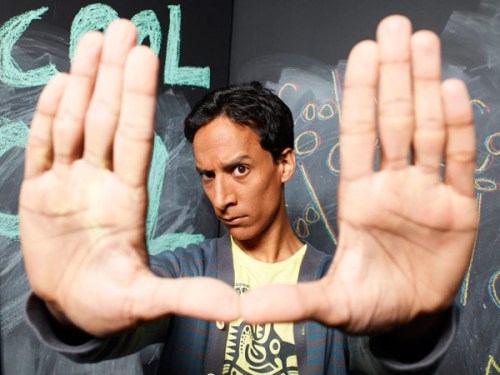
Abed – DIRECTOR/Negotiator
danny-pudi-community-abed-600
It has been speculated, though never confirmed, that Abed is somewhere on the autism spectrum, likely on the Asperger’s end.  Whether or not he is diagnosable, he does display several traits of spectrum, traits that are also related to being a Director.  He has a singular way of living that he does not budge from.  He filters everything through the lens of movie and TV, which is for him a lot easier to understand than the messiness of real people, as he makes clear when he zings Jeff in “Anthropology 101.”  But despite his disadvantages, he has a knack for making genuine connections with people, thus Negotiator is his secondary style.  He may see his life as a movie or TV show, but he always focuses on the characters.  He made his birthday an homage to a movie that was about two guys having a conversation, for crying out loud!  How much more deeply emotionally connective can you get?!  Abed and Annie, as  DIRECTOR/Negotiator buddies,  have had some attraction and a sweet friendship, but if stuck together for too long, they tend to drive each other crazy, as in “Virtual Systems Analysis.”  Perhaps unsurprisingly then, Abed and Annie have a similar connection with Jeff.  Abed and Jeff have had some of the most profound conversations of any pair of the group, as seen most strikingly in “Contemporary American Poultry” and “Critical Film Studies.”

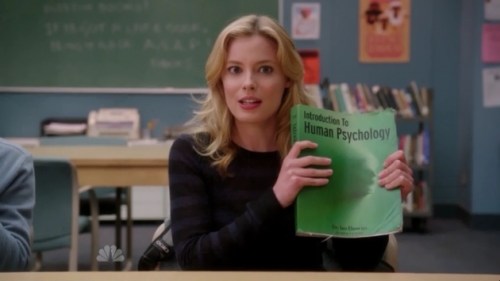
Britta – EXPLORER/Negotiator
Britta-3-britta-perry-30280718-630-355
“That woman is a hurricane.”  Britta is the prototypical Explorer, impulsive enough to drop out of high school because she thought it would impress Radiohead.  She is exceedingly liberal.  This liberalness extends to her finances, as made clear in “Intermediate Documentary Filmmaking.”  But that is not to say she is foolish, just perhaps a little excessively generous, unsurprising as Explorers tend to be champions of a host of social causes.  With Britta, the range of her activism is wide to the point of parody.  She is her own harshest critic when it comes to how successful an activist she is, but perhaps it is just that her Explorer side is tempered by her secondary style of the Negotiator.  “Underneath all that clown makeup, she’s a good kid.”  Despite often rubbing people the wrong way, she is ultimately a people pleaser.

Troy – NEGOTIATOR/Director
troybarnes
Troy Barnes is a leader, but a reluctant one.  He was destined to be the repairman that repairs man, but he preferred to put off adulthood a little while longer and watch TV with his friends.  In “Heroic Origins,” we saw him as the football captain that everyone wanted to hang around, but it was clear on his face that such was not his natural state.  Troy’s default mode is having fun, and making sure everyone else is having fun, but if need be, he can take charge and spring into action when called upon, as in “Epidemiology,” “For a Few Paintballs More,” or even “Cooperative Calligraphy.”  There was a bit of a rivalry brewing between Troy and Jeff in Seasons 2 and 3, and perhaps that is because they are actually just so similar, and fit for the same roles.  Although he does not get as many chances to show it, Troy can be as strong an orator as the other Negotiator in the group, with his pep talk to Annie in “Mixology Certification” more powerful than many a Winger speech.

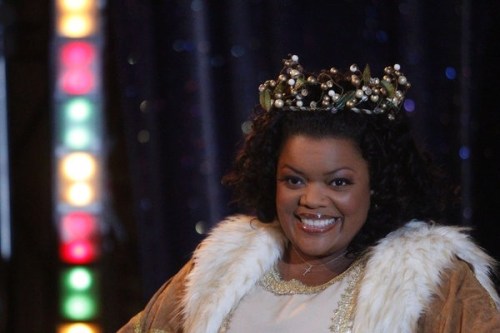
Shirley – BUILDER/Negotiator
shirleychristmas
As the most outwardly religious and accordingly the one most concerned about following rules, Shirley is the Builder of the group.  This goes along with her concern for public appearances and social standing, as when she attempts to hide her alcoholic past in “Mixology Certification” or when she complains that everyone is “judging her like Judy” when she reveals her secret in “Intro to Felt Surrogacy.”  Her Builder qualities almost take her to the point of proselytizing, but they are thankfully tempered by her Negotiator qualities.  It may take a bit of effort, but she is willing to accept everyone’s differences when she realizes that insisting on the morally right path is not necessarily the best idea if not everyone agrees what that right path is.  This is seen most poignantly in “Comparative Religion” when she stops insisting on the traditions of Christmas and decides that she just needs to have Jeff’s back in his struggle with Mike the bully and most hilariously in “Studies in Modern Movement” when she and Britta have another religion vs. atheism fight but ultimately find a common enemy.  And the value of Shirley’s morals should not be discounted, as they can be used to bring her friends back to reality, as when she keeps Jeff from going off the rails in his attempt to understand Blade in “Origins of Vampire Mythology.”

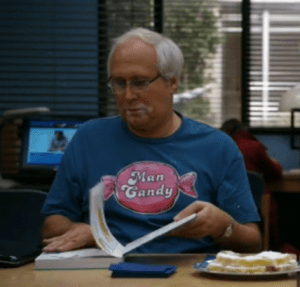
Pierce – EXPLORER/Director
piercemancandy
Pierce represents the restless spirit and curiosity of the Explorer, in his decades as a student at Greendale.  He could have just lived off his money and done nothing, but instead he chose a path that most in his socioeconomic status would have never considered.  He is gregarious and everyone’s friend, or at least he tries to be.  He has a taste for the avant-garde and the risqué (though he doesn’t really understand them).  I am not entirely sure about Pierce’s secondary personality style.  I’m leaning towards Director, as he fancies himself a leader of men, with a “look at me now, Dad” complex.  But he occasionally breaks out a nugget of wisdom, displaying the wordsmith sytlings of the Negotiator (“Home Economics,” “Beginner Pottery,” “Herstory of Dance,” “Economics of Marine Biology”).

Dean – EXPLORER/Builder
Dean_Pelton_rootbeer_and_Let's
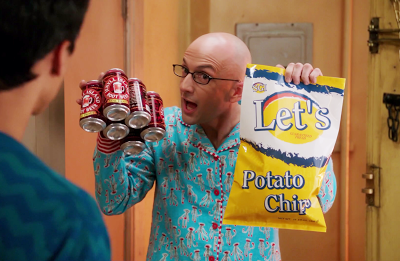
“This better not awaken anything in me,” Dean Craig Pelton says about a video of a person in a dalmatian costume, in only the tenth episode ever of Community.  But it is clear by his delivery that he would be perfectly happy if something were to be awakaned.  And by season’s end – if not sooner – it does.  The Dean’s Explorer characteristics are most obvious in his enthusiastic array of costume choices and his expressive, unique sexuality.  Judging by his crush on Jeffrey, one could assume that he is gay, but he is a prime example of a person whose sexuality is not so easily labeled (after all, he wore a wedding ring in the pilot, although that may just have been an abandoned characteristic).  Vice Dean Laybourne came up with a potential solution to the label problem by coining the much more inclusive term “pansexual imp.”  The Dean has a unique mix of primary and secondary styles, as Builders tends to be incompatible with Explorers.  But while he may flout tradition in his personal life, he is very concerned about when it comes to running Greendale.  He is conscientious about being in good standing with the Greater Greendale Community, always certain to know where his school stands in its rivalry with City College.  This thorough love goes to its logical absurd conclusion in “Documentary Filmmaking: Redux,” but the nature of the Dean’s breakdown in that episode is all Explorer.

Chang – DIRECTOR/Explorer

ken_jeong_ben_chang-550x302
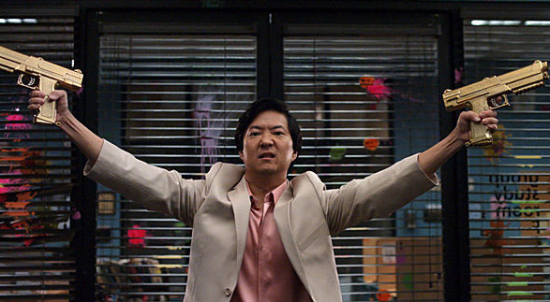
Ben Chang is a leader, and he is going to be a leader whether or not anyone else realizes it.  As a power-drunk Spanish teacher, or a power-hungry security guard, or an insurgent ruler of Greendale, or a mole for City College, Chang is always in control, or at least, always trying to be.  He is most like a Director in that he always does things his way, and if you doubt the truth of that statement, he will make it clear to you directly and straightforwardly.  Like an Explorer, the things he does his way are completely insane – forcing his students to dress in ladies’ pantsuits, painting his skin for an elf costume for Dungeons & Dragons when nobody asked him to, playing a keytar solo as introduction to a bomb explosion, Changnesia can perhaps be generously described as performance art.  As Chang demonstrates, a DIRECTOR/Explorer mix can be quite explosive, as the Explorer side can be bizarre and off-putting, and the Director side will make no excuses for it.

Any thoughts or re-evaluations regarding my analysis?  Any analyses regarding any secondary or tertiary characters at Greendale?
Community Season 4 Re-evaluation

Leave a comment

I recently finished re-watching Season 4 of Community on DVD (with commentary!), which means it is time to compare my original opinions of each episode to my current opinions.  For each one, I have indicated whether my evaluation has gone up, down, or sideways (i.e., about the same).

leonard likes this post

1. “History 101” – Sideways.  Some good stuff here, but way too overstuffed. B+
2. “Paranormal Parentage” – Down.  The characterization is fine, but pretty much nothing happens. Original Grade: B+ Current Grade: B, maybe
3. “Conventions of Space and Time” – Sideways, but tempered.  Perfectly enjoyable, but I may have been guilty of grade inflation. Original Grade: A- Current Grade: B+ (But who knows, I might adjust that back up again.)
4. “Alternative History of the German Invasion” – Sideways.  A few bafflingly bad choices, but this one has a promising premise, and some legitimately funny moments. B
5. “Cooperative Escapism in Familial Relations” – Sideways.  Perhaps the one episode where my feelings remain pretty much exactly the same. A-
6. “Advanced Documentary Filmmaking” – Down.  I interpreted this one in a way that gave it credit that it may or may not have deserved.  But Changnesia was stupid, and there were times when it was amusing, but only when it was acknowledged as stupid; this episode didn’t acknowledged it that way enough. Original Grade: A- Current Grade: B (B+ on a good day)
7. “Economics of Marine Biology” – Up.  “Marine Bio” just seemed so insignificant.  Now I realize it did very little wrong, a great boon in the small mistake-plagued Season 4. Original Grade: B+ Current Grade: A Higher B+
8. “Herstory of Dance” – Sideways (but with a grade adjustment) BRING BACK BRIE LARSON! Original Grade: B+ (with a promise that it might be upgraded) Current Grade: A-
9. “Intro to Felt Surrogacy” – Down.  I loved the premise, loved the set-up, loved the initial follow-through, but they really didn’t stick the landing.  I excused the ending at the time, saying that the loose ends could be resolved over the rest of the season; that wasn’t really deserved.  I really don’t know how much I like this episode. Original Grade: (Conditional) A Current Grade: ?
10. “Intro to Knots” – Down.  I really liked Annie’s explanation that the obligation is the gift.  But other than that, this episode was so confused. Original Grade: B+ Current Grade: I’ll go with B, but I probably wouldn’t have trouble saying B-.
11. “Basic Human Anatomy” – Sideways. A few silly moments, but there’s a lot to bite into here. A-
12. “Heroic Origins” – Down.  This was more of an anti-origin story than an origin story, but the landing making that clear wasn’t stuck cleanly. There’s still some grist for the mill, though. Original Grade: A- Current Grade: B+
13. “Advanced Introduction to Finality” – Up.  I know some people hate this one, and I’ve heard their arguments, but, man, I just don’t get it.  I don’t have to make any excuses to have fun with it. B+

Community, Don’t Do Any More Theme Episodes If They Don’t Make Sense, But Keep Doing Them If They Do Make Sense. What I’m Trying to Say Is, Do What Makes Sense.

Leave a comment

In taking stock of Community Season 4 as a whole, I noticed several fans saying that moving forward into Season 5, the show should focus less on its “theme” or “homage” episodes and take a more low-key approach closer in line to Season 1 than any subsequent seasons.  Much of this was said before it was announced that Dan Harmon would be returning, so fans were concerned that the show was still going to be run by showrunners who did not seem as capable of successfully pulling off the ambitious outings that had worked under Harmon’s initial tenure.  But! – fans declared, the show could still be good even if it backed off the theme episodes.  Then Dan was re-hired, and he too has talked about “re-grounding” the characters, seemingly implying that there indeed will be a decreased reliance on theme episodes.  It is funny to hear all this, in a way, though, considering that the most well-received Season 4 episode by fans and critics alike was “Basic Human Anatomy” – the homage to body-swap movies.  And one of the other consensus stronger Season 4 outings, “Herstory of Dance,” though not a full-on theme episode, did feature an homage to the classic “two dates in one night” sitcom trope in one of its subplots.

The point is, I don’t think Community can, or should, completely abandon its homage elements.  This is a show that began with its characters meeting each other as an homage to The Breakfast Club.  With a character like Abed Nadir, who views his life and the lives of his friends as movies and TV shows, such homages are practically inescapable.  They were present at the show’s beginning, and it would be inorganic for them to disappear.  True, even Abed did speak (in “Herstory”) of “making a conscious effort to get away from filtering everything through TV.”  But he was not necessarily talking about abandoning those references, but rather, expanding his reference points (to include in this case, the entertainment of ancient Rome).

Thus, I would like Community to expand its reference points, hopefully in line with its characters expanding their reference points, just as any good show should mature and expand as its gets older and its characters get older and mature and expand.  Harmon just revealed at Comic-Con plans for an all-animated episode and a second Dungeons & Dragons episode, serving as a counterpoint to his desire for re-grounding.  It sounds like the homages are not going away.  My hope is that they remain as organic as the best ones have been thus far and that they do not swallow up genuine characterization.  That appears to be what Harmon wants as well.  Here is word from one fan saying that it sounds like he has the right attitude.

Ranking the Community Season 4 Tags

Leave a comment

I treated the Puppet Daybreak Rap, which originally aired as a preview for “Intro to Felt Surrogacy” at the end of “Herstory of Dance,” as the tag of “Felt Surrogacy,” and I treated “Sophie’s Biggest Fans” – which was initially only posted online – as the actual “Herstory” tag (thus ignoring the behind-the-scenes bit from “Felt Surrogacy,” at least as far as tags go).

1. Outtakes (“Basic Human Anatomy”) – I thought, “Oh, no, another set of behind-the-scenes footage as a tag?  I want a real tag!”  I love fakeouts.

http://www.hulu.com/watch/483082

2. Evil Jeff Frees Evil Annie (“Intro to Knots”) – “I may not have a right arm, but I am armed with what’s right” – what delightful silliness.  But on a serious note, it has now been proven that it is possible to make Alison Brie even hotter.

http://www.hulu.com/watch/480438

3. American Inspector Spacetime (“Conventions of Space and Time”) – I never realized how much I need Luke Perry and Jennie Garth in my life.

http://community101.tumblr.com/tagged/4.03

4. Antics 101 (“History 101”) – “Oh Lord, no”?  Oh Lord, yes!

http://www.hulu.com/watch/462053

5. Talking to Sophie (“Herstory of Dance”) – Damn, that was perfectly pleasant.

http://community101.tumblr.com/tagged/4.08

6. Bookcase Hijinks (“Paranormal Parentage”) – Indubitably.  Nothing more, nothing less.

http://www.hulu.com/watch/462055

7. Potato Chip Battle (“Economics of Marine Biology”) – I wanted to like this tag more, because, “Get your damn hands off my Let’s!” and all.  But I just don’t believe that Britta is one for brand loyalty.

http://www.hulu.com/watch/470233

8. Puppets Hum Daybreak (“Intro to Felt Surrogacy”) – “Daybreak” isn’t a bit, it’s just something we do.

http://www.hulu.com/watch/475393

9. Chang’s Evil Plan (“Advanced Documentary Filmmaking”) – No, it did not ruin what came before it.  It did provide intrigue, but it may not have been the intrigue we were looking for.

http://www.hulu.com/watch/467708

10. Escape Route (“Cooperative Escapism in Familial Relations”) – Well, Shirley certainly has a hole in her wall now.

http://www.hulu.com/watch/464709

11. Troy and Abed’s Podcast (“Alternative History of the German Invasion”) – “We got a thing”?  Yeesh.

http://www.hulu.com/watch/461984

12. Plan B (“Heroic Origins”) – I didn’t hate that there was another City College taking over Greendale plot, and I didn’t even really hate that it ended so abruptly.  But I would have preferred an actual tag over extra resolution.

http://www.hulu.com/watch/485824

13. Evil Troy and Evil Abed in the Morning (“Advanced Introduction to Finality”) – Evil Troy’s voicebox is rather grating in heavy doses.

http://www.hulu.com/watch/488258

Best Episode of the Season: Community Season 4

2 Comments

Season Analysis: Community Season 4 was not as good as Seasons 1-3, but those years set a mighty high standard, and subpar Community is still among the best sitcoms on television right now.  The What of Season 4 was not really problematic.  The major developments of the year – Jeff met his dad, Britta and Troy dated and then broke up, Abed learned how to deal with change, Annie switched majors, Chang faked amnesia then ultimately chose Greendale, Jeff graduated (and so did Pierce) – were hardly reprehensible, though it would have been nice if there had been more development.  The How of Season 4 was where the problems lay: the editing was off, both within episodes and over the course of the season.  Jokes did not quite land the way they should have, plots were left dangling, and the season was ultimately not more than the sum of its parts.  On a somewhat positive note, what some saw as rampant fanservice was more likely a conscious effort to present and analyze the history of the group, in line with the tradition of the year’s class providing the overall theme of the season.  That is a tricky difference to pull off, and it was not pulled off perfectly or consistently, but it did provide enough moments to make the season overall worthwhile.

Community_Shirleypuppet

“Intro to Felt Surrogacy”
If I were picking the least bad episode of Community Season 4, I would go with something safer and less divisive like “Herstory of Dance” or “Basic Human Anatomy.”  But I am picking the BEST, not the least bad, so my choice is what had the most good, even if it did have some problems.  First off, the homage nature of this episode: some held up “Felt Surrogacy” as an example for why Community should restrain itself from further theme episodes by contending that it did not fully commit to its homage, a contention that I find bizarre.  Like a Muppet movie, it had a sense of adventure competing with a whole heaping of melancholy.  Accordingly, the songs were catchy, bouncy, and just a bit dark.  As for the confessions, here is where the strong reactions were provoked from viewers, and where the risk-taking that won me over made itself known.  These secrets were not symptoms of inconsistent characterization or character regression, but illustrations of the fact that though these people have changed, they are still broken, and they constantly struggle with regret, even if they don’t always show it.  Some of the confessions cried out for further resolution that never came, but that is more a fault of the season overall than of this particular episode.  I can see legitimate criticisms being made against “Intro to Felt Surrogacy,” but you can’t say it didn’t try.  Oh Lord no, you cannot say it didn’t try.

Honorable Mentions: “Herstory of Dance” demonstrated that Community could still cleverly point out and illustrate the tropes of fiction in the everyday, while “Basic Human Anatomy” was good old-fashioned impressionistic fun with an emotional wallop.

Community Episode Review 4.13: “Advanced Introduction to Finality”

Leave a comment

community_advanced_intro

“Remedial Chaos Theory” – still the high water mark of the series for me and many others – presented a series of alternate timelines that diverged from one seemingly minuscule moment.  Though the potential reality of alternate timelines may appeal to theoretical physicists, the argument has been made that the alternate timelines actually all only took place in Abed’s head.  At least as far back as “Debate 109” (Season 1, Episode 9), Abed has displayed such a deep understanding of the group as to practically be able to predict the future.  So it is a little odd that the timeline that has been revisited on occasion – the one in which Troy got the pizza, i.e., “the darkest timeline” – has become so decidedly unrealistic.  And each time it has been revisited – the tag of “RCT,” the Season 3 finale, the tag of “Intro to Knots” – it has been clear that it was in Abed’s head.  As demonstrated in “Virtual Systems Analysis,” Abed has become so close to his friends and therefore too emotionally invested to be able to always have the wherewithal to make the accurate predictions he has made before.

But the return of the darkest timeline in “Advanced Introduction to Finality” is not a look into the head of Abed Nadir, but that of Jeff Winger, he who has constantly repeated, “Abed, there are no other timelines.”  Jeff is finally set to graduate, he’s ready to get back to his old life, and his friends are supportive of him – but something doesn’t feel right.  The “It Was All Just a Dream” trope is one that should be used with great care, as it can come off as little more than a “get out of a jail free” card.  The just a dream reveal in this episode gets away with that by making it immediately clear that the darkest timeline plot is a dream, or, more specifically, a daydream (and therefore Jeff has more control over how the fantasy goes than he would if he were asleep).  Jeff indicates as much when he declares, “I just need to give Abed a chance” – for his own sake, he needs to examine his role within the group by considering an alternate timeline, the way Abed does so so readily.  Jeff has a nagging fear that going back to his old life will lead him to also go back to his old jerkass ways.  Thus, the alternate timeline that Jeff uses to work through this issue in his head is the darkest timeline.

Since Jeff is not as practiced as Abed at considering alternate timelines, the Evil versions of everyone in Jeff’s head are wildly cartoonish and huge exaggerations of each character’s trademark characteristics.  This would be a problem if this were all supposed to actually be taking place in reality (or the reality of Community, that is, a reality which is … not most of this episode).  Luckily, it is a fantasy, and we are allowed to laugh at it.  The repartee between Evil Jeff and Evil Annie – as previewed in the “Intro to Knots” tag – wins my vote for the funniest element of Season 4.  Their passion for each other is thrilling, while their deviousness towards everyone else is entertaining – it’s like a more insane version of “Conspiracy Theories and Interior Design.”  Actually, scratch that, “Conspiracy Theories” was already plenty insane – “less grounded” is a better description.  Evil Jeff wishing that Evil Annie were even younger really seems to get some people’s goats – too bad that their prudishness gets in the way of appreciating something so hilarious.  Seeing Evil Abed – who is not evil anymore – as a sci-fi shaman was also a treat.  True, Abed is already a shaman anyway, but it was nice to see him in the shamanistic beard and robe.  Unfortunately, all the other evil iterations of the study group amounted to little more than a few quick gags.  And Abed’s declaration that they finally made paintball cool again was a bit premature – if something is truly cool, it should not have to be announced so baldly.

As for reality, Jeff’s graduation ceremony was nicely understated but also a little oddly extravagant.  With the theme of “marriage,” Jeff being wed to the Human Being was certainly a memorable sight gag. The presence of Leonard, Quendra, Neil, Vicki, Todd, and Magnitude was a little strange, and strangely heartwarming.  And of course, the use of the “Greendale Is Where I Belong” musical cue is guaranteed to always tug at my heartstrings.  And finally, Pierce also graduates, which was was probably the most decent way possible to finish up Chevy Chase’s run on CommunityB+

Older Entries Newer Entries