‘John Lewis: Good Trouble’ Has a Compelling Subject, But It Needs to Go Deeper

Leave a comment

John Lewis: Good Trouble (CREDIT: Magnolia Pictures)

Starring: Congressman John Lewis

Director: Dawn Porter

Running Time: 96 Minutes

Rating: PG for Reminders of Real-Life Prejudice

Release Date: July 3, 2020 (Theaters and On Demand)

If you want to demonstrate how the American civil rights movement that reached its apotheosis in the 1960s continues to this day, you could do much worse than making a documentary about John Lewis. This man marched alongside Dr. Martin Luther King, and he’s gone on to represent Georgia in Congress for over 30 years. Over the course of his life, he’s been present for important change that has already happened, and he continues to fight for important change that still needs to happen. Just showing footage of where he’s been and where he’s headed ought to be galvanizing, especially in a time of a great national reckoning with race. But John Lewis: Good Trouble never fully captures the fighting spirit of its subject.

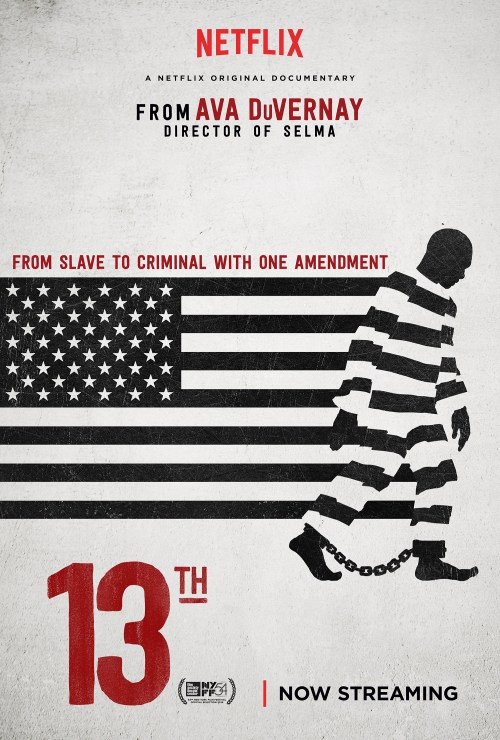
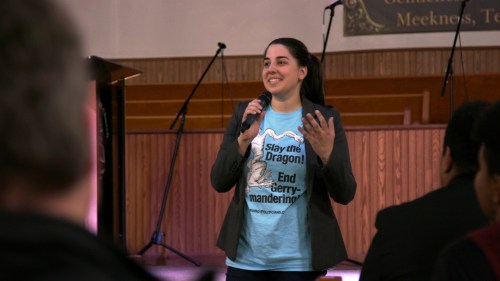
The trouble with Good Trouble, particularly for any viewers who are generally tuned into the trends of cinema and current events, is that the topics it touches upon are covered more thoroughly in other recent documentaries. If you want a historical outline of what has led to so much of America’s racial prejudice, check out Ava DuVernary’s 13th. Or if  you want to be on top of voter suppression, Slay the Dragon is essential viewing. Good Trouble, on the other hand, works mostly as a reminder that these problems exist. It’s nice to know that Lewis is still around in these battles, kicking up the sort of stir that the title refers to, but the inspiration can go only so far if you already knew that about him.

There is one interesting episode that covers the 1986 Congressional election. In the Democratic primary, Lewis squared off against Julian Bond, a close friend and fellow African-American activist. It was a bitterly fought contest in which Lewis implied that Bond used cocaine and emerged victorious thanks to his strong performance among white voters. The strain among these two clear allies must have been significant and surely dramatic enough to devote more than the few minutes that Good Trouble allows it. The fact that the film so quickly switches back to focusing on Lewis’ accomplishments doesn’t necessarily feel like it’s meant to cover up any faults so much as it comes off as cinematic carelessness. Even the most righteous among us have complicated stories; Good Trouble struggles to make that clear.

John Lewis: Good Trouble is Recommended If You Like: Biographical inspiration, but don’t mind some repetition

Grade: 2.5 out of 5 Marches

Original Streaming Movie Catch-Up: ’13th’ Quickie Review

1 Comment

Every good civil rights movement needs its cool cucumbers that get you jazzed up and grinning from ear to ear. So when I finally sat down to watch 13th, I was on the lookout for folks delivering total zingers while refusing to let The Man get them down. That prayer is answered about a half hour in when Van Jones responds to an asinine comment from Grover Norquist about the infamous 1988 Willie Horton attack ad with a terse “Thanks, Grover.” Going forward, I would recommend that as a meme-ish stock response to anyone who refuses to acknowledge the part that race plays in the institutional failings of American criminal justice.

As galvanizing as that moment is, it is not where Ava DuVernay ultimately leads us with her documentary survey of the Thirteenth Amendment to the U.S. Constitution, which abolished slavery only to create a new form of slavery. It is a thorough diagnosis of the problem of how American prisons have perpetuated a de facto form of subjugation for people of color. Knowledge is the first step towards fixing a problem, but 13th ends on a bleak note that suggests that this particular social ill might just be too intractable to ever fully remove. Simply put, it’s in the most profitable interests of certain powers to permanently designate as criminal a significant segment of the population. But maybe there is room for some small hope that there could be a chance for a sliver of change. I watched 13th in 2020, amidst the rage of the most intense civil unrest of my lifetime, and it actually seems like some people in power are now actually considering taking revolutionary measures to address the problem. That undoubtedly has to happen if this country wants to work its way out of all the devil’s bargains it’s made.

Political Documentary ‘Slay the Dragon’ Has an Important and Timely Message About Gerrymandering That We All Need to Hear

1 Comment

CREDIT: Magnolia Pictures

Starring: Activists and Unaccountable Politicians

Directors: Barak Goodman and Chris Durrance

Running Time: 101 Minutes

Rating: PG-13 for Politics as Usual

Release Date: April 3, 2020 (On Demand)

There’s a presidential election, as well as many other elections, happening in these here United States in the year 2020 AD. And there is also very real concern that not everyone who wants to cast a legitimate vote will be able to or that their voice will be counted the way that it is supposed to be in a democracy. A worldwide pandemic is certainly no help here, but there are other problems that have been around for much longer. One of the biggest issues, which the documentary Slay the Dragon would very much like us to be aware of, is gerrymandering. I’ve already seen this topic explained elsewhere plenty of times, but it’s useful to have it all detailed again in one feature-length package. Especially because 2020 is a census year and the next round of redistricting is scheduled to happen in the near future.

In case you haven’t been following this subject closely, gerrymandering is the practice of manipulating the boundaries of political borders for the purpose of gaining a political advantage that might not be what we citizens like to refer to as “fair.” In recent years, a bunch of oddly shaped districts have popped up with nicknames like “Goofy Kicking Donald Duck” that attempt to make some sense out of their geographic improbability. Gerrymandering has also resulted lately in Republicans gaining a majority of seats in certain state legislatures despite Democrats winning more votes in total statewide.

Slay the Dragon presents a number of folks in this fray who are very invested in changing the current system or keeping it just as it is, thank you very much. The most prominent change agent is 29-year-old activist Katie Fahey, who’s been pushing to ban gerrymandering in her native Michigan along with an initiative to institute a bipartisan redistricting commission tasked to work independently of the elected legislators. She’s a dogged, inspiring young person, and if you stick with her story, you might be able to stay sane as you attempt to hold onto the supposed fundamental principles of a representative democracy. She’s got a lot of doubters trying to shoo her away with bad faith arguments and weaponized cognitive dissonance. If she can remain resilient through it all, then the rest of us who also care about a genuine political system ought to be able to check out the diagnosis of this ongoing illness.

Slay the Dragon is Recommended If You Like: The promise of a system that works for everybody

Grade: 3.5 out of 5 Ballot Initiatives

Music Documentary Alert! ‘Linda Ronstadt: The Sound of My Voice’ Review

Leave a comment

CREDIT: Greenwich Entertainment

Starring: Linda Ronstadt

Directors: Rob Epstein and Jeffrey Friedman

Running Time: 95 Minutes

Rating: PG-13, Because Rock Stars Must Be At Least PG-13

Release Date: September 6, 2019 (Limited)

There’s a section in the documentary Linda Ronstadt: The Sound of My Voice that focuses on the singer’s relationship with Jerry Brown during his first stint as California governor in the late seventies. The superficial differences in their lifestyles probably confused some observers. But to Ronstadt and Brown, the attraction surely made self-evident sense, as I imagine they shared some fundamental liberal values, values that made perfect sense to her as a human being. In one clip, when an interviewer suggests that her political views (which we see as anti-nuclear war and anti-racism in this moment) are controversial, she objects by countering, “I don’t think my political views are very controversial. Who likes nuclear warfare?”

That same sense of self-evident certainty is one of the major vibes of The Sound of My Voice. Ronstadt’s voice was so powerful and versatile right from the start of her career that nobody could ever possibly stop something like “You’re No Good” from being a hit. Nor was the boys club mentality of rock ‘n’ roll ever going to prevent her from being a rock star, nor could fuddy-duddy traditionalism keep her from bridging the gaps between, rock, country, and even Latin music. This may be a standard documentary survey of a musician’s career, but when the notes are undeniably so right, you can’t help but surrender to them.

Linda Ronstadt: The Sound of My Voice is Recommended If You Like: Linda Ronstadt’s music, of course

Grade: 3 out of 5 Stone Poneys

The Wettest Documentary Review Ever: ‘Aquarela’

1 Comment

CREDIT: Stine Heilmann/Sony Pictures Classics

Starring: H2O

Director: Victor Kossakovsky

Running Time: 90 Minutes

Rating: PG for General Aquatic Danger

Release Date: August 16, 2019 (Limited)

Water. Water water water water water water water.

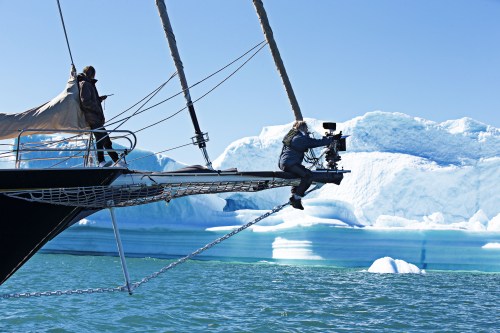
That’s what’s promised and it’s certainly what’s on display in Russian director Victor Kossakovsky’s wet, unique, and uniquely wet documentary Aquarela. Water sustains all life on this planet, so in a way, it also sustains all cinema. But when it stands on its own at number one on the call sheet, does it hit the spot? To be fair, I will have to personally assess a score of “incomplete” on that question, as will most people who end up seeing Aquarela. It was shot at a practically unheard rate of 96 frames per second, four times the standard 24, and there aren’t many theaters with the capacity to project at that rate. So it will be screened at 48 frames per second, which is itself quite rare.

The idea here is to show a montage of H2O in its most overpowering forms (huge waves, flood waters, glaciers cracking apart) and remind humans that we’re at the mercy of the all-consuming forces of nature. On a technical level, Kossakovsky’s accomplishment is unimpeachable. But in terms of the content he’s chosen to include, it all feels so haphazard: here’s a car crashing below ice here, here are some animals stuck in floodwater there, here we go to a close-up of a waterfall.

The king of documentaries that offer a survey of the non-living world in images is the 1982 time-lapse classic Koyaanisqatsi, and Aquarela does not come close to being the hypnotic achievement that Godfrey Reggio gave us. Instead, we start off with a sort of rake joke-style comedy of errors on ice and then somehow make our way to a nameless series of crashing waves. In other words, Kossakovsky hasn’t discovered anything new about water by making it the star of the show, but surrender to the experience, and maybe it can lull you in the right way.

Aquarela is Recommended If You Like: Staring at the ocean all day

Grade: 2.5 out of 5 Floods


Movie Review: The Fly-on-the-Wall Documentary ‘The Brink’ Gets Up Close and Personal With the Dangerous and Anti-Entertaining Steve Bannon

2 Comments

CREDIT: Magnolia Pictures

Starring: Steve Bannon

Director: Alison Klayman

Running Time: 90 Minutes

Rating: Unrated

Release Date: March 29, 2019 (Limited)

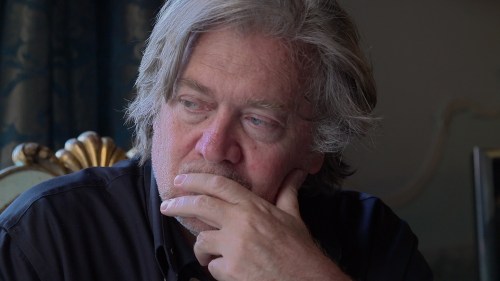
Steve Bannon is eminently convinced about the righteousness of his crusade. I make that conclusion based on how he generally carries himself and on how much access he gave to a documentarian who clearly does not believe in his cause. That open-door approach is a double-edged sword for Alison Klayman’s The Brink, though, as it allows for plenty of (potentially) illuminating footage, while also underscoring how unpleasant it is to spend an hour and a half with Bannon. While he does have his fans, he is objectively not an engaging personality.

The Brink follows Bannon’s efforts to spread his gospel of nationalism and economic populism throughout the United States and around the globe. What is most striking in this portrait, at least to me, is how much his supporters get excited when they are in his presence. It isn’t that I disagree with these people’s politics (although I definitely do), but rather, I am confounded by how much they do not know (or don’t believe) that Bannon is not known for his charm. Klayman’s fly-on-the-wall approach does not change this perception, although I will concede that if you spend enough time with Bannon, you can detect a sort of demented folksiness. The point of The Brink is to tease out the xenophobia inherent in his crusade, and it conveys that thesis effectively enough, but it is locked in a soulless yin-yang with its black hole of a subject that drains away much of the potential for audience catharsis.

The Brink is Recommended If You Like: Spending an hour and a half with an unmagnetic personality with dangerous ideas

Grade: 2.5 out of 5 Torchbearers

Movie Review: ‘Apollo 11’ is a Stunning Feat of Archival Documentary

1 Comment

CREDIT: NEON

Starring: Neil Armstrong, Buzz Aldrin, Michael Collins

Director: Todd Douglas Miller

Running Time: 93 Minutes

Rating: G for Gravity Defiance

Release Date: March 1, 2019 (Limited)

Documentaries featuring restored archival footage are having a moment. Peter Jackson’s box office hit They Shall Not Grow Old got in the trenches of World War I. The Oscar-nominated short A Night at the Garden uncovered a 1939 Nazi rally in New York City. And now Apollo 11 puts us right alongside the crew of the same-named 1969 lunar mission. As a technical achievement, it is stunning and confounding. Every frame is made up of 70 mm film footage that was shot at the time but never previously released to the public. The richness and clarity of the visuals are breathtaking. How it all remained a secret and in such good condition is surely beyond most mortals’ comprehension.

The you-are-there sensibility is so thorough that there is even time to check out the snack bar set up for the crowds gathered to watch the launch. In that regard, it is reminiscent of the seminal 1960 Direct Cinema doc Primary. But it differs insofar as Apollo 11 director Todd Douglas Miller adds a few showy editing flourishes. Occasionally he arranges a series of shots in comic book-style panel arrangements, calling to mind Ang Lee’s Hulk, of all things. Also adding to the mix is Matt Morton’s intensely looming score. I like both of these elements on their own, but I wonder if they are saturating the already plenty powerful raw footage. But no matter what, the awe and beauty on display is unmistakably evident, serving as reassurance that humanity can still find inspiration by looking up to the stars.

Apollo 11 is Recommended If You Like: Primary, They Shall Not Grow Old, First Man

Grade: 4 out of 5 Launch Sequences

This Is a Movie Review: They Shall Not Grow Old

1 Comment

CREDIT: Warner Bros./Imperial War Museum

My favorite part of They Shall Not Grow Old is the featurette after the end of the movie in which Peter Jackson lets us in on the restoration process. It makes me wish that all making-of special features played on the big screen, or at least the ones for the most technically ambitious movies. I almost would have preferred an hour and a half of the behind-the-scenes footage to the actual documentary. But of course, I needed to see the thing itself for the making-of to have its fullest oomph. And it’s not like it’s a bad doc. Indeed, when They Shall Not Grow Old switches to color, it is just about as thrilling as when The Wizard of Oz makes that same vivid transition. The other big value is the peek into a past culture when teenage boys were so eager to enlist at the first sign of war. Society is so profoundly different now. Not that I want it to go back to the way it was. Rather, I am glad we have this first-hand document in such good quality to viscerally show us both how deadly and how disgusting the trenches were.

This Is a Movie Review: ‘Human Flow,’ Ai Weiwei’s Refugee Documentary, is Oddly Constructed, But Still Essential Viewing

Leave a comment

CREDIT: Amazon Studios

This review was originally posted on News Cult in October 2017.

Documentary

Director: Ai Weiwei

Running Time: 140 Minutes

Rating: PG-13 for the Realities of Refugee Life

Release Date: October 13, 2017 (Limited)

Chinese artist/activist Ai Weiwei has extensive documentary experience, but mostly in the form of long-form video pieces. With Human Flow, a portrait of refugee life in the 21st century, he approaches feature documentary (and cinema in general) with a distinctly non-traditional visual grammar. Certain flourishes border (or cross fully into) the amateurish, particularly a bizarrely intrusive TV news-style scrolling ticker. Perhaps Ai is ahead of his time with this technique, but right now it is definitively awkward. That is not to say the whole endeavor is unprofessional. Rather, the unfailingly beautiful cinematography only serves to further highlight the unfairness of the plight of refugees. Still, it is clear that this is the work of someone not exactly fully acquainted with (or not beholden to) the norms of feature filmmaking.

Despite any technical weirdness, I would still recommend Human Flow to all audiences. Roger Ebert famously called the movies “a machine that generates empathy,” and there are few groups more in need of empathy than refugees. With its sprawling, ambitious nature, with footage filmed over the course of a year in 23 countries, Human Flow’s primary purpose is familiarizing the settled with the stories of the displaced. It is impossible (I hope) to spend two hours immersed in their experiences and not come out at least a little more concerned. From an efficiency and entertainment standpoint, Human Flow could be a lot tighter, but if it can lead to solutions for worldwide instability, then those issues don’t much matter.

Human Flow is Recommended If You Like: Looking out for the most vulnerable among us

Grade: 3 out of 5 Evil People Sent Into Space

Newer Entries