
Falling (CREDIT: Brendan Adam-Zwelling/Quiver Distribution)
Starring: Viggo Mortensen, Lance Henriksen, Sverrir Gudnason, Laura Linney, Terry Chen, Hannah Gross, Gabby Velis
Director: Viggo Mortensen
Running Time: 112 Minutes
Rating: R for Just About Every Ethnic and Gendered Slur You Can Think Of (and Brief Nudity)
Release Date: February 5, 2021 (Theaters and On Demand)
I’m generally not terribly excited to watch movies about emotionally abusive parents, whereas I am generally excited to watch the directorial debuts of actors whose work I consistently enjoy. So I find myself internally conflicted at the prospect of Falling, in which Viggo Mortensen directs himself as John Peterson, a family man attempting to deal with his profoundly irascible father Willis (Lance Henriksen). Surprisingly enough, while watching I didn’t find myself entirely anxiety-ridden by all the familial strife on display. Perhaps my mood just happened to be in enough of a state of equilibrium to handle it, and quite possibly I wouldn’t have reacted as keenly on a more stressful day. Or maybe it had something to do with the variety of ways (frustration, gritted teeth, amusement, insults, etc.) that Willis’ kids and grandkids employ to respond to his provocations and declining mental health.
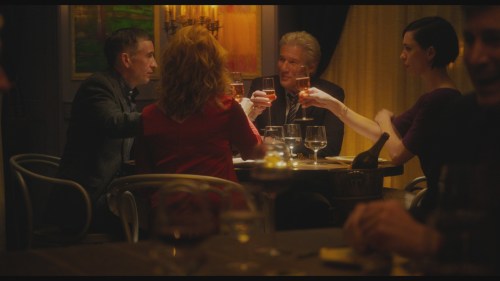
If there is one major takeaway above all others to Falling, it is the Power of Patience. John appears to be genuinely happy that his dad is spending the weekend at his house with his husband Eric (Terry Chen) and daughter Monica (Gabby Velis), but we know that his feelings can’t possibly be all (or even mostly) positive, as childhood flashbacks present a father-son relationship in which Willis browbeats his son over every single major or minor decision that he makes. And yet for all the decades of turmoil he’s endured, John is still conscientious enough to honor his own internal sense of familial loyalty. I wouldn’t judge him if he were to instead decide that the healthiest choice would be to cut his father off, but I’m glad that he tries to keep the peace with him long enough so that we have a family dinner scene in which John’s sister (Laura Linney) and her kids show up so that everyone can have a chance to declare what they really think about Grandpa.
The final act of Falling is a little more slow going, as it departs from John’s place on the West Coast back to Willis’ farm in Upstate New York. John is helping to put the property on the market, but Willis is deeply connected to his horses and intent on spending more time with them. At least that’s what I think is going on. Frankly, the story becomes significantly less dynamic when John and Willis are away from the rest of the extended Peterson clan, and I must admit that my sense of connection to what I was watching started to drift during the farm scenes. But overall, this is still a fairly compelling piece about how intergenerational trauma has a long tail but also about how it can be digested and rejected for a different approach.
Falling is Recommended If You Like: Angsty family dinner scenes, White horses
Grade: 2.5 out of 5 Pathological Insults
 Jmunney's Blog