(Thanks to fishsticktheatre for the “Regional Holiday Music,” “Virtual Systems Analysis,” and “Pillows & Blankets” screencaps.)
Season Analysis: It has gotten to the point that the “special” episodes of Community are so frequent and so consistently satisfactory that I do not realize just how special they are until several days after viewing.
“Remedial Chaos Theory”

People who have not been won over by Community generally seem to be put off, or scared, or confused by the show’s decided eccentricity. But perhaps these people would give the best show on television another chance if they knew that the eccentric side of an episode like “Remedial Chaos Theory” is not just eccentric for eccentricity’s sake and that it actually has a purpose, and a profound one at that. That is not to say that the other “special” or “theme” episodes of Community do not also have a purpose (most – if not all – of them do), but the purpose of the multiple timeline format of “Chaos” is worth giving unique weight to because of how fundamentally it relates to the makeup of the series: the purpose, to spell it out, is to ask the question, “What insight does the multiple timeline conceit give us into what role each character plays in the study group?” Anyone who has ever had any circle of friends can relate, because, for most – if not all – of us, there have been moments when our entire group has been together, moments when only half the group has been there, moments when one person has been missing, etc. But we never experience the same moments more than once with a different group makeup each time – maybe we experience something similar, maybe the same type of event, but not the exact same moment. And so, the metaphysically inclined are left to wonder, “How would this situation have been different if I went downstairs to grab the pizza instead of you, or him, or her?” This is the sort of question that typically belongs in the domain of science fiction, and the geekiest variety at that. But Community makes it more universally relatable by utilizing it in the most mundane fashion imaginable and still manages to turn it into one of the most satisfyingly ambitious half hours of television ever.
You didn’t think I was going to just honor one episode of Community this season, did you? For a show that airs episodes worthy of being most shows’ best of the season on a regular basis, it is practically mandatory to include some Runners-Up:
 “Regional Holiday Music”
How appropriate that in the same year that Glee aired one of the worst Christmas episodes in television history, Community made one of the best Christmas episodes out of a Glee parody. Also, my reaction to Annie’s “Teach Me How to Understand Christmas” routine: “Did that really just happen?!”
 “Documentary Filmmaking: Redux”
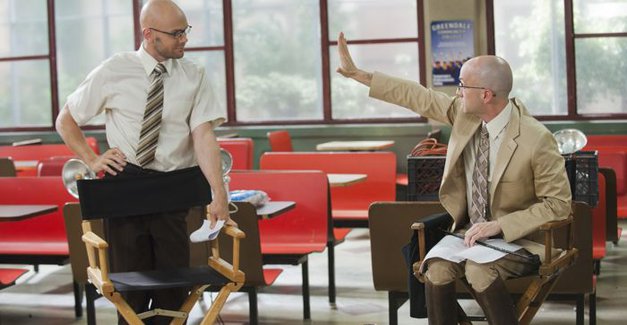
An Apocalypse Now/Hearts of Darkness homage turns into a bizarre love letter to the equally bizarre Greendale (with a Luis Guzman cameo to boot).
 “Virtual Systems Analysis”
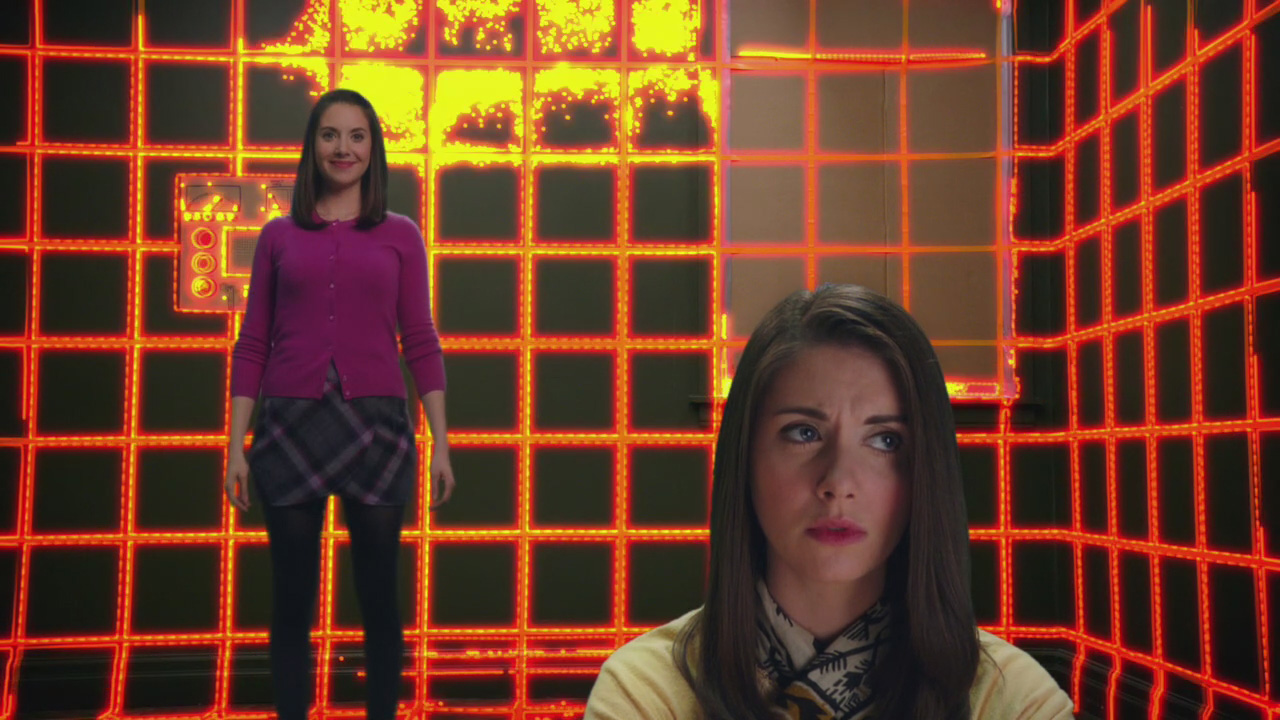
An episode that amazed with its ability to spin several plates at once – with some plates spinning on top of other plates – without any of them breaking: Everybody plays their usual characters, and … Danny Pudi plays Abed playing Annie, Jeff, Britta, Troy, Pierce, Shirley, and Annie playing Abed; Alison Brie plays Abed playing Annie; Joel McHale plays Abed playing Jeff; Gillian Jacobs plays Abed playing Britta; Donald Glover plays Abed playing Troy; Chevy Chase plays Abed playing Pierce; and Yvette Nicole Brown plays Abed playing Shirley. Is your brain still working? Good, then you’ll be happy to watch even more Community.
 “Pillows and Blankets”
I was so amused just by the idea that Community would model an episode after a Ken Burns documentary that I was laughing non-stop all the way until the first commercial break.
 Jmunney's Blog
Leave a comment