This Is a Movie Review: ‘The Endless’ Upends Tropes About Cults and Then Melts Your Brain

Leave a comment

CREDIT: Well Go USA

This review was originally published on News Cult in March 2018.

Starring: Justin Benson, Aaron Moorhead, Tate Ellington, Callie Hernandez, Lew Temple, James Jordan

Directors: Justin Benson and Aaron Moorhead

Running Time: 111 Minutes

Rating: Not Rated, But I Would Peg It at PG-13 for General Eeriness and Some Unhinged Behavior

Release Date: April 6, 2018 (Limited)

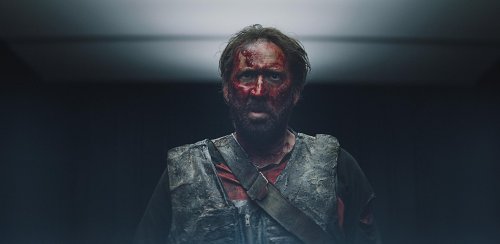
I am writing this review about a month after seeing The Endless. I knew that it was probably going to be a while before I got around to this write-up, so to remind myself what I wanted to say, I left myself the note “Big ideas that might or might not be fully fleshed out.” And now that I have had extra time to mull it all over, I have come to the conclusion that those big ideas were indeed successfully fully fleshed out. Justin Benson and Aaron Moorhead, who co-directed and co-star, are a dynamic duo here to upend your genre expectations.

The pull of religious cults has been a major part of American culture and history, and its portrayal in film and TV has been more or less codified into a particular routine. And at first, it seems like that is what The Endless is going for. Benson and Moorhead play brothers Justin and Aaron Smith; the actors and characters sharing the same first names lends a sort of faux true-life docudrama feel that low-budget indies often aim for. They grew up in a commune that has survived living off the grid by brewing and selling its own beer. Justin eventually wised up to the brainwashing that he was certain was going on and pulled himself and Aaron out of the commune and into a life on their own. But that has come to mean frequent joblessness and dire financial straits.Aaron yearns to return to the bonhomie and relative security of the commune, questioning whether or not it really is a cult. Nudging him along is a videotape they have just received featuring a woman from the commune (Callie Hernandez) prophesying the imminent arrival of “the Ascension,” the type of mysterious, perhaps apocalyptic event that cults tend to prophesy about.

Justin concedes to Aaron’s request, with the firm caveat that this will be a quick visit. Justin’s warnings are seemingly confirmed by the cultish welcoming vibe spiked with an undercurrent of creepiness and manipulative tests of character. But a few foreboding signs that could just be illusions – a tossed baseball stuck in the air, a rope pulled by an unseen force, two moons in the sky – suggest that something stranger and more sinister is actually going on. Some of the phenomena that takes place cannot be explained by human trickery, and at a certain point The Endless swerves hard (but naturally) into a completely different movie – something much more mind-bending and uniquely satisfying. The commune appears to have established in another realm of existence where the laws of time and space have been folded in on themselves. To go into more detail would ruin much of the fun of discovery, but suffice it to say this is a sort of Twilight Zone of indie film, and perhaps the best example of that description that I have ever seen.

The Endless is Recommended If You Like: The pipes from Super Mario World, Another Earth, Primer

Grade: 4 out of 5 Multiple Moons

This Is a Movie Review: ‘A Quiet Place’ Reveals That John Krasinski is a Master of Relentless Horror

2 Comments

CREDIT: Jonny Cournoyer/Paramount Pictures

This review was originally published on News Cult in April 2018.

Starring: John Krasinski, Emily Blunt, Millicent Simmonds, Noah Jupe

Director: John Krasinski

Running Time: 95 Minutes

Rating: PG-13 for Nightmare-Inducing Creature Design and Quickly Edited Disemboweling

Release Date: April 6, 2018

Effective horror movies are often built around a simple hook, and A Quiet Place has a doozy: a family must remain ever silent because they are being terrorized by something that strikes whenever it hears the merest peep. It is such a doozy, in fact, that a very similar setup was employed just a couple of years ago in Don’t Breathe (wherein a crew of burglars had to escape the detection of a blind man). Do we have a boomlet of the “silence is golden” horror subgenre on our hands? The results thus far are encouraging. There is plenty of variation possible in turning away from modern cinema’s default reliance on dialogue, with A Quiet Place exploring the effect it has on nuclear family dynamics.

It has been about a year since these sound-seekers have begun their attacks, and life on Earth has adjusted accordingly. It is unclear how much of the world’s population has been decimated, but even if it is a relatively small percentage, it might as well be just about everybody, as survival requires solitude. This particular family has lucked out in a way, as they have a deaf daughter (played by deaf actress Millicent Simmonds) and are accordingly all fluent in sign language. It is another simple but effective flip: turning a disability into a strategic advantage.

John Krasinski, directing and playing the father, trains us to become fully absorbed in every frame, thus allowing A Quiet Place to pull off killer set piece after killer set piece. From 30 minutes in all the way to the conclusion, this is a non-stop nailbiter. Father and son (Noah Jupe) head off to gather up some food, while daughter revisits a scene of tragedy, leaving pregnant mom (Emily Blunt, Krasinski’s real life wife) home alone to deliver the most silent natural birth ever. There is a lot of resourcefulness on display in keeping the attackers at bay. It is almost a sort of Home Alone-style boobytrapping ingenuity, but the kind that minimizes pratfalls and nut shots.

While A Quiet Place consistently pulls off the visceral thrills, it is not quite as satisfying when it attempts to examine the why and the how. That is not because the answers it offers are unsatisfying per se, but rather because they end up working out a little too perfectly. These creatures are the type that are mostly indestructible but have that one little weakness. In many ways, A Quiet Place resembles Signs, particularly the method for defeating the creatures. It is not quite as ridiculous Shyamalan’s “you gotta have faith” randomness. A Quiet Place’s resolution that is fairly set up and is actually reasonably clever. But it leaves me weirdly disappointed that the terror has been deflated seemingly so thoroughly. I am left in a paradoxical state, as it gives me the rousing resolution I wanted while depriving me of a continued pounding heartbeat as I walk out the theater. Perhaps if the ending had swerved into a Mars Attacks!-style comedic turnaround (with which it shares some DNA), I would have forgiven the excess perfectness. But I can settle for the steady relentlessness that the majority of A Quiet Place delivers.

A Quiet Place is Recommended If You Like: Don’t Breathe, Alien, Signs

Grade: 3.5 out of 5 Shushes


This Is a Movie Review: ‘Ready Player One’ Wrings Some Beauty and Profundity Out of Empty Calorie Storytelling

Leave a comment

CREDIT: Warner Bros.

This review was originally published on News Cult in March 2018.

Starring: Tye Sheridan, Olivia Cooke, Ben Mendelsohn, Lena Waithe, Mark Rylance, T.J. Miller, Simon Pegg

Director: Steven Spielberg

Running Time: 140 Minutes

Rating: PG-13 for Explosions (Both VR and Real Life), Threats of Gun Violence, Partial Referential Nudity, and PG-13’s One Free F-Bomb

Release Date: March 29, 2018

The premise of Ernest Cline’s 2011 novel Ready Player One is basically nerd wish fulfillment writ large: in a dystopian future, a gamer completes a series of puzzles based on pop culture touchstones in a massive virtual reality simulation for the prize of a billionaire’s inheritance. As it plays out, though, (in both the book and Steven Spielberg’s adaptation) it is more of a Robin Hood fantasy, with the winnings serving as the golden ticket to end income inequality. The improbability and the wish fulfillment are all well and good, but they do mean that everything wraps up a little too perfectly, so satisfaction must be found in the details and the execution. Spielberg has remained a proficient craftsman his entire career, so even though Ready Player One’s separation between right and wrong might be a little too stark, it still pulls off some genuine wonder.

The film keeps the same basic outline at the novel, save for switching out some of the homages, both because Spielberg wanted to limit references to his own past work and presumably because of rights issues. Wade Watts (Tye Sheridan) spends most of his time as his avatar Parzival in the VR world known as the OASIS, partly because his real life is situated in a ugly heap of metal, literally, as his home, like many in 2045, exists within one of many trailers stacked on top of each other. He hangs out with his crew of fellow gamers, whom he only knows virtually, which frankly isn’t all that different than how it is for some folks already in 2018. Wade of course falls in love with Art3mis (Olivia Cooke), a bit of a legend in the OASIS, who feels like she is specifically engineered to be the perfect girl for him, which is a bit of a pain, but at least Sheridan and Cooke keep it charming.

This crew’s quest finds them at odds with Nolan Sorrento (Ben Mendelsohn), the brazenly stereotypical asshole CEO of a global conglomerate who employs an army of corporate drones to win the inheritance because he wants to turn the second biggest company in the world into the biggest company in the world, and he’s not averse to killing to get his way. He is plenty scary, but RPO could have benefited greatly from actually exploring what makes him tick.

It is appreciated that Wade is not a chosen one archetype so typical of the genre. The reason he succeeds is because he puts in the relentless work to understand the parameters and intricacies of the journey. That we get to see his process makes his racing a DeLorean around King Kong actually thrilling instead of just a prompt for ticking boxes off the reference checklist.

It is well worth noting that while the references draw from decades of pop culture, they are primarily based around the touchstones of the 1980s. That decade was partly defined by Spielberg, and it consisted of Cline’s formative years, but they are very much not the formative years of RPO’s main characters, nor much of the target audience. But within the narrative, they are the formative years for James Halliday (Mark Rylance), the OASIS co-creator who designed the game and bequeathed his fortune. Thus, the hours of study that Wade and his crew put in resonate in the way of culture being a way in to understand one’s fellow human beings.

With wizardly blond locks and profound diffidence, Rylance plays Halliday a lot like Garth Algar, but if Dana Carvey had envisioned the Aurora metalhead as the greatest tragic figure of all time. Ready Player One works best as an exploration into this one man’s psyche. His social awkwardness goes beyond any simple diagnosis, and Rylance does not shy away from the discomfort. Creating an all-encompassing VR world may be a bit of an overcorrection to his loneliness, but it is heartwarming that Halliday finds a way to make a genuine connection with the world, though it is more than a tad bittersweet how he accomplishes it.

Bottom line: with so much of Ready Player One rendered as virtual reality, it is frequently an off-putting eyesore. But it has moments of beauty, like Parzival and Art3mis’ free-floating dance; as well as strokes of demented remix genius, as when zombies overrun a rendering of Kubrick’s The Shining. Weirdly enough, the references actually end up having more soul and thoughtfulness than the characters (with the exception of Halliday).

Ready Player One is Recommended If You Like: Heavy referentiality whether justified or shameless, Mark Rylance getting deep into character work, The dance scene from WALL·E

Grade: 3 out of 5 Omnidirectional Treadmills

This Is a Movie Review: ‘Gemini’ is a Satisfying Light-and-Dark Neo-Noir

Leave a comment

CREDIT: NEON

This review was originally posted on News Cult in March 2018.

Starring: Lola Kirke, Zoë Kravitz, John Cho

Director: Aaron Katz

Running Time: 92 Minutes

Rating: R for Easygoing, Friendly Profanity and a Bloody Crime Scene

Release Date: March 30, 2018 (Limited)

What if you suddenly discovered that your life has turned into a movie? That’s essentially the same question as: what if you found yourself in the most extreme and unusual of circumstances? As one character in the neo-noir murder mystery Gemini puts it, the most likely culprit is the one with the motive, the opportunity, and the capacity. And there just so happens to be a perfectly creepy guy who fits all the criteria. But if this is a movie, then it might be the craziest, least obvious suspect who turns out to be the culprit. Occam’s razor may give you the right answer nine times out of ten, but that other 10% is where lies the basis for exciting, unpredictable films. Gemini is kind of enjoyably self-aware about that, but only as much as it can be when its leads are a couple of way-out-of-their-depth young adults.

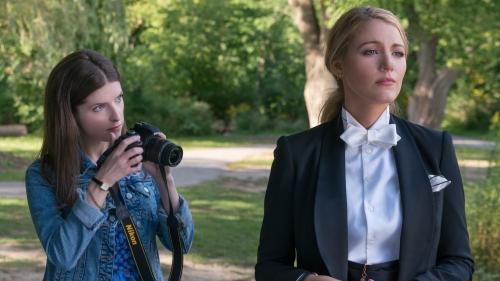
Heather (Zoë Kravitz) is a young actress who is burnt out by the business in her twenties. The presentation of her world is vague to the point that we never get a full sense of just how famous she is, but we do know that she is enough of a star to have a sizable Instagram following and overaggressive fans approaching her in diners. Gemini could have just been a hangout movie depicting the carefree days of Heather and her assistant Jill (Lola Kirke), who are referred to as “freaky, fucked-up best friends,” the kind who “kill each other all the time.” But really, their friendship is genuine and supportive, and while they may keep secrets from each other, that is to be expected when living in a mostly empty mansion in a populous but often lonely city and working in a frequently soul-sucking industry. So when Jill finds Heather dead by gunshot wound, what should be a personal tragedy instead plays out as a hazy detour into purgatory.

If this were a film about millennial self-actualization, Jill would probably be a total boss, and Heather would be right by her side for the majority of the runtime. But instead, Jill does her best to adapt to her new noir status quo. She does some fine investigative work of her own and her psyche holds up well against the withering glare of the lead detective (John Cho, giving an intense performance marked by enigmatic motivation) who clearly suspects that she might be the killer. But she also has moments of silliness, like adopting a disguise that really doesn’t help her out in any capacity, and she gets called out for that pointlessness. Overall, writer/director Aaron Katz pulls off a remarkable tonal balance, utilizing Keegan DeWitt’s jazzy trip-hop score and Andrew Reed’s oppressive cinematography to firmly establish the devastation inherent in the premise while also maintaining a comedic lightness drawn from basic truths of characterization and performance. There is a lot of self-confidence on display here, and that goes a long way.

Gemini is Recommended If You Like: Mulholland Drive, Nerve, References to ’90s pop culture touchstones

Grade: 3.75 out of 5 Blond Wigs

This Is a Movie Review: ‘The China Hustle’ Exposes a Fraudulent Scheme That is Obscure But Possibly Affecting Everybody

Leave a comment

CREDIT: Magnolia Pictures

This review was originally posted on News Cult in March 2018.

Starring: Dan David, Matthew Wiechert, Carson Block, James Chanos, Soren Aandahl, Maj Soueidan

Director: Jed Rothstein

Running Time: 84 Minutes

Rating: R for Profanity That is Surely a Lot Less Offensive Than the Crimes on Display

Release Date: March 30, 2018 (Limited Theatrically and On Demand)

If you loved The Big Short, The China Hustle is now here to give you the same semi-invigorating feelings of cynical helplessness, but with more of a obscure bent. This is a documentary, as opposed to a based-on-real-events fictionalized narrative with frequent fourth-wall breaking, but everything is still plenty topsy-turvy. Docs about global financial fraud have been a bit of a staple at least as far back as 2005’s Enron: The Smartest Guys in the Room (Enron’s director, Alex Gibney, serves as an executive producer on China Hustle). So, disgusting corporate behavior has been going on for a while now, but at least as of 10-15 years ago, it seemed like it was easy to understand. Back then it was just about cooking about the books and reporting false profits. But now, the reporting in The China Hustle is needed not just to expose today’s malfeasance but also to explain what the hell it even is.

The fraud at the center of The China Hustle is the reverse merger, wherein Chinese companies replace defunct, but still existing, American companies and then take their place on the stock exchange. They then have the cachet of a name and stature that allows them to be traded like hot commodities without having to be profitable or even really conducting themselves like an actual business. A trip to one supposedly booming Chinese company turns up little more than a trash heap. With the tension simmering at a steady boil the whole running time, the proceedings are wrapped up with pronouncements about how it is “not illegal to steal from foreign investors” in China and that the country is “fundamentally a broken or fucked-up society.” I would be interested in a response from within China to all this, but when you have two societies playing by profoundly different rules tangled up with each other, these dirty tricks are bound to happen.

The China Hustle is primarily a talking heads doc, and most of the interviewees come off as shell-shocked at the fraud they have mucked through. The main personality that emerges is Philadelphia-area investor Dan David, who intones at the start, “There are no good guys in this story. Including me.” He plays much the same role as Steve Carell in The Big Short, making a killing off shorting the Chinese junk but turning into an activist once he reckons with the consequences that so many individuals have suffered at the hands of a rigged system. The most resonant moment involves David explaining the whole mess to his family during a backyard barbeque. These globalized schemes have not ruined good simple family hangout time, but they have occasionally cast an absurd, ethereal pall over them.

The China Hustle is Recommended If You Like: Enron: The Smartest Guys in the Room, The Big Short, Inside Job

Grade: 3.5 out of 5 Reverse Mergers

This Is a Movie Review: ‘Game Over Man’ Posits: What If ‘Die Hard,’ But with a Scene of Analingus?

Leave a comment

CREDIT: Cate Cameron/Netflix

This review was originally posted on News Cult in March 2018.

Starring: Blake Anderson, Adam DeVine, Anders Holm, Utkarsh Ambudkar, Neal McDonough, Jamie Demetriou, Aya Cash, Rhona Mitra, Sam Richardson, Daniel Stern

Director: Kyle Newacheck

Running Time: 98 Minutes

Rating: Not Rated, But It Would Be a Hard R for Nudity Leading to Violence, Leading to More Violence (Basically Both Naked and Clothed Bodies Are Mutilated and Exploded)

Release Date: March 23, 2018 (Streaming on Netflix)

Suppose you want to shamelessly rip off Die Hard. It’s a reasonable enough desire. Plenty of folks have done it already. It was practically its own sub-genre for a while there. The knockouts have tapered, but the original is still there for new generations to discover and grow up loving. Thus the Workaholics trio of Blake Anderson, Adam DeVine, and Anders Holm have delivered to the bowels of the Netflix original realm Game Over, Man! in which the height of action thriller cinema is crossed with video game excess. What results is less a narrative movie and more a bizarre wish fulfillment fantasy.

Instead of off-duty cop John McClane, Game Over, Man! gives us The Dew Crew, three hotel workers thus named because of their affinity for a certain soft drink (even though we almost never see them drinking any Mountain Dew). Fashioning themselves entrepreneurs, they attempt to get financing for their “Skintendo Joysuit” (basically a full-body video game controller) from a vulgar celebrity (Utkarsh Ambudkar) partying at the hotel, but that is all derailed, of course, by a team of big-time thieves.

The Dew Crew get the McClane role by virtue of happenstance keeping them away while all the hostages are rounded up. So of course we know they will end up saving the day, but it is a wonder that they do not end up killing themselves instead. DeVine, for one, can never get beyond the mindset that they are in a real-life video game, as he remains singularly focused on getting the kill that the other two have already achieved. Anderson and Holm manage to have a little more awareness of the severity of the situation, but their survival is still mostly attributable to coincidence.

Anderson, DeVine, and Holm have clearly been given free rein to be as graphic as possible, and they take full advantage o. Body parts are variously mutilated and exploded, while there is plenty of male nudity, including one detached member that plays a pivotal climactic role. The shock routine is clearly meant to draw the laughs out, but the trouble is, there is no zest, no finesse to the deployment. Extremity for extremity’s sake can serve the purpose of disrupting snobbish tastes, but when you have an already receptive audience (which the Netflix algorithm will work to ensure), the effect is just numbing.

Game Over, Man! is Recommended If You Like: Excessive Violence and Excessive Comic Nudity

Grade: 2 out of 5 Vapes

This Is a Movie Review: ‘Midnight Sun’ is a Mostly Bearable Slice of Teen Weepie Emotional Porn

1 Comment

CREDIT: Global Road Entertainment

This review was originally published on News Cult in March 2018.

Starring: Bella Thorne, Patrick Schwarzenegger, Rob Riggle, Quinn Shephard

Director: Scott Speer

Running Time: 91 Minutes

Rating: PG-13, Because Even Tame Teen Movies Are Rated PG-13

Release Date: March 23, 2018

It’s time for me to just come right out and admit: I have a soft spot for high school movies. How else could I explain my generally positive feelings toward the relatively unheralded Midnight Sun? The dialogue is hokey, and every little decision about what to do is super dramatic. This is all typical of the genre, and it is especially pronounced in this case. But in general, we like to give these excesses a pass, because adolescence is the height of hormonal awkwardness. And in the specific case of Midnight Sun, it is no big deal, charming even, because the vibes are good and everyone is looking out for each other.

Katie Price (Bella Thorne) is a 17-year-old with xeroderma pigmentosum, a potentially deadly sensitivity to sunlight. So she spends her days inside with her loving, protective, widowed father Jack (Rob Riggle). Besides Dad and her team of doctors, the only in-person interaction of note she has had over the years is with her best friend Morgan (Quinn Shephard), who made her way into Katie’s life by sheer force of personality. Since Katie can never venture outside during the day, it makes practical sense that she has never interacted with the boy she is pining after, much more so than is typical for the genre. When that fella, Charlie (Patrick Schwarzenegger), chances to bump into her one night, they are pretty much a perfect item immediately. Since they act like actual teenagers, that initial super-spark does not track as totally unbelievable perfection.

Midnight Sun lays the emotional porn on thick, but it’s not like it is trying to hide its intentions. This is the type of film designed to get the waterworks going, and building the story around a chronic life-threatening disease is a quick, easy way to pull that off. But it is all justified by the fact that the emotions are so grounded. This is a movie in which everyone wants what is best for Katie and she wants what is best for them. They ask her to be honest, and the only times she ever fails to do so are when she does not want someone new to have to bear the burden of her disease. All of the relationships – familial, friendly, romantic – are healthy and admirable, and it is just satisfying to behold that.

It must also be said that Rob Riggle is a bit of a revelation here. From what I know of his career, he has never really stepped out beyond comedy, where he has settled into a niche of partly intimidating, but mostly charming bonhomie. He still more or less fills that role in Midnight Sun, but he recalibrates just enough to be the super-masculine dad who is really a big softie. And the movie needs him to pull that off, because someone has to deliver with conviction lines like “We’re in luck, ’cause she’s one in a million” (in response to being told that the chances of an obscure study leading to a viable treatment option are one in a million). That moment is the height of Midnight Sun’s dorkiness, and thanks to Riggle, I cannot help but love it.

Midnight Sun is Recommended If You Like: The Fault in Our Stars, Everything, Everything, A Walk to Remember

Grade: 3 out of 5 Acoustic Guitars

This Is a Movie Review: ‘Pacific Rim: Uprising’ Has a Few Interesting Moments Buried Within an Indifferently Presented Spectacle

Leave a comment

CREDIT: Legendary Pictures/Universal Pictures

This review was originally posted on News Cult in March 2018.

Starring: John Boyega, Scott Eastwood, Cailee Spaeny, Charlie Day, Rinko Kikuchi, Burn Gorman, Jing Tian

Director: Steven S. DeKnight

Running Time: 111 Minutes

Rating: PG-13 for Kaiju Guts, Tech Sparks, and Human Cuts and Bruises

Release Date: March 23, 2018

Pacific Rim: Uprising does not offer much in the way of a new paradigm in the annals of giant mecha or giant monsters. Honestly, the first Pacific Rim did not really offer that either. To be fair, this series’ purpose in terms of concept and design has never really been about establishing something groundbreaking (to my eyes, anyway). It has been more about the distillation of the gigantic tech and creature genres into something approaching an ideal form. That approach is all well and good as an academic exercise, but it does not have enough inherent oomph to ensure a fully entertaining feature-length film.

It is ten years since humans won the war against the interdimensional beings known as the Kaiju. There has been no hint of another breach by these creatures into Earth, but the training programs designed to fight against them are still operating. There is a weird mix between a sense of security that the threat has been permanently neutralized and an ever-present emphasis on defense. This seeming paradox is never commented upon, which gives the sense that this film has an ill-defined understanding of its own world. But it doesn’t really matter, because sure enough the Kaiju do return, and it is a good thing that the Jaeger program never folded.

The Jaegers were the one great concept of the first Pacific Rim, but in Uprising, their usage is rather perfunctory. As the mental stress is so great, these metallic war machines must be simultaneously operated by two pilots. They are neurally connected to each other, creating a partnership so intimate that they share not just responsibilities but memories and physiology as well, for a connection that lies somewhere between artificial and chemical. The main partnership this time is that between Jake Pentecost (John Boyega), the son of a hero from the first film who gets his personality across mostly through his ice cream eating habits, and Amara (Cailee Spaeny), who gets cool points for building her own Jaeger but mostly comes across as the thinnest of archetypes. These two have only one notable memory-sharing moment, and it registers as little more than just hitting a necessary story beat.

The PR:U trailers position Boyega as the star, and while he does lead the way in screen time, the only notable degree of star power among the cast comes from Charlie Day, returning as the eccentric Dr. Newt Geiszler. He is emblematic of how this film has no idea what to do with its best assets. Newt has been in a bit of a mind-meld relationship with a Kaiju specimen, which might just have something to do with why they have returned. So to a certain extent, he is the main villain this time around. But inexplicably, he spends the entire climax just overlooking the action and not participating in it at all. This is a film that has its toys lined up but little in the way of a plan (or an interesting plan, that is) for how to deploy them.

Pacific Rim: Uprising is Recommended If You Like: Kaiju Fever, John Boyega Making Himself a Sundae, Charlie Day Given Plenty of Space (But Not Enough) to Go Crazy

Grade: 2 out of 5 Kaiju Wives

This Is a Movie Review: ‘Final Portrait’ is a Frustrating Presentation of a Frustrated Artist

Leave a comment

CREDIT: Sony Pictures Classics

This review was originally posted on News Cult in March 2018.

Starring: Armie Hammer, Geoffrey Rush, Tony Shalhoub, Clémence Poésy, Sylvie Testud

Director: Stanley Tucci

Running Time: 90 Minutes

Rating: R for Artistic Frustration F-Bombs and a Few Slips of Nudity

Release Date: March 23, 2018 (Limited)

Can we please, as a society, be done with the idea that artists are just slaves to inspiration that comes and goes as it pleases and is totally beyond their control? Sure, there is something ineffable about sparks of creativity, but the actual act of creation requires discipline and firm decision-making, i.e., things that are within our control. Now, films that portray artists who insist on being totally subject to the whims of the universe are not necessarily in agreement with this philosophy. In the case of Final Portrait, writer-director Stanley Tucci is more interested in the friendship between Swiss painter Alberto Giacometti (Geoffrey Rush) and American writer James Lord (Armie Hammer) than in making any judgment on Giacometti’s chaos. But when such excess is presented matter-of-factly, it tends to be incredibly frustrating.

While visiting Paris in 1964, Lord agrees to be painted for a portrait by Giacometti, who assures him that the sitting will last “an afternoon at the most.” But that afternoon lasts into one more day, and soon enough that extra day has ballooned into a fortnight. Sometimes, Giacometti’s pauses are legitimate, as when he is running a fever or has business to attend to. Other times he just wants to eat, or he doesn’t even bother coming up with an excuse. It is essentially stated at one point that this state of incompletion is where he feels most comfortable. Rush’s wild mane is perfect for Giacometti’s untamed nature, and Hammer is the ideal fit for Lord’s constant bemusement. But overall, we and James are stuck in a dour loop that has us thinking, “Shouldn’t this be over already?” And it certainly does not help that this is taking place during what is apparently the cloudiest two-week stretch in Parisian history.

Elsewhere, there is some business involving Giacometti’s prostitute companion/frequent model Caroline (Clémence Poésy) and his frustrated wife Annette (Sylvie Testud), but hardly anything of note happens in those plot threads. That portion of the film is unceremoniously wrapped up by Giacometti paying off a couple of pimps with huge wads of cash.

There are a few moments that break up the excruciation, like a driving montage set to breezy ’60s French pop music. Giacometti and Lord’s occasional walks are welcome, as it is pleasant to just be outside. Plus, those strolls provide loopy non sequiturs, like Giacometti’s query of “Have you ever wanted to be a tree?” As a portrait of a friendship, Final Portrait has its moments, but as a portrait of a portrait, it never focuses enough on the tension of when James Lord will finally break free.

Final Portrait is Recommended If You Like: Geoffrey Rush Squinting, Armie Hammer’s Face Acting, Watching Someone Quickly Gulp Down Wine and Coffee

Grade: 2.5 out of 5 Sitdowns

This Is a Movie Review: ‘Isle of Dogs’ is an Adorable Allegorical Adventure About the Dangers of Fascism

Leave a comment

CREDIT: Fox Searchlight Pictures

This review was originally published on News Cult in March 2018.

Starring: Bryan Cranston, Koyu Rankin, Edward Norton, Bill Murray, Bob Balaban, Jeff Goldblum, Kunichi Nomura, Akira Takayama, Greta Gerwig, Frances McDormand, Akira Ito, Scarlett Johansson, Harvey Keitel, F. Murray Abraham, Yoko Ono, Tilda Swinton, Ken Watanabe, Mari Natsuki, Fisher Stevens, Nijiro Murakami, Liev Schreiber, Courtney B. Vance

Director: Wes Anderson

Running Time: 101 Minutes

Rating: PG-13 for Dog-on-Dog Violence and Dictatorial Tendencies

Release Date: March 23, 2018 (Limited)

“Whatever happened to man’s best friend?” Nothing, right? We human beings still love dogs, and that cannot possibly ever change! But what if something so terrible happened that it could make us turn on them? One of the functions of fiction is training ourselves to handle horrible hypotheticals. Thus, with the stop-motion animated Isle of Dogs, Wes Anderson has delivered an invaluable how-to guide for if the world should ever turn so severely on our furry companions.

Twenty years in the future, Japan has banished its entire canine population to the bluntly literally named Trash Island, due to a widespread outbreak of snout fever and dog flu. The two conditions appear to be connected as how HIV can lead to AIDS. In this dystopia, the fear from those in charge that the disease could spread to humans is enough to override any bounty of puppy love, despite promising progress for a cure. So intrepid folks must step up on their own to save the dogs, like the young boy Atari (Koyu Rankin), an orphaned ward of the state adopted by his distant uncle, Mayor Kobayashi (Kunichi Nomura). Atari ventures to Trash Island to save his canine protector Spots (Liev Schreiber), who also happens to be the outbreak’s Dog Zero. Joining up with him in his quest are a group of other cast-off dogs with variations on the same sort of name – Rex (Edward Norton), King (Bob Balaban), Boss (Bill Murray), and Duke (Jeff Goldblum) – as well as Chief (Bryan Cranston), the fiercely independent stray who has always lived on his own.

An island entirely populated by dogs might sound like the pinnacle of Wes Anderson giving into his most indulgent instincts, but the darkness of the premise is enough to assuage any of those concerns. Plus, the animation does not hold back from the more aesthetically displeasing elements. These pups are mangy, with fur falling off and distorted pupils. They are also fairly irritable; one early standoff results in an ear getting bit off. Isle of Dogs works as an adventure film as well as it does because it does not back away from the danger, while still bringing plenty of fun to that peril. Fight scenes are portrayed in cartoon chaos clouds, while an accidental trip through a trash incinerator is met with droll acceptance. The set pieces are whimsical, but the stakes are life-or-death.

Isle of Dogs could easily be appreciated just for its surface level sensations, but like so many talking animal flicks, there is an allegory lurking not too far below. And considering current worldwide political trends, Wes Anderson’s anti-fascist storytelling is profoundly welcome. Quarantining a contagious population is an understandable disease control tactic, but what happens to these dogs is more banishment than quarantine. And when a solution appears to be possible, Mayor Kobayashi hides that development for the sake of retaining power, trotting out clearly fraudulent election results in the process. BoJack Horseman-style anthropomorphic dogspeak (“my brother from another litter”) helps it go down easy, but these are heavy ideas that deserve and are granted careful consideration.

A few more items worth noting: even though the setting is Japan, the dogs just about exclusively speak English, even when communicating with humans speaking Japanese. In fact, there is a good deal of American and Japanese cultural mixing. All the political machinations are translated by an interpreter (Frances McDormand), apparently for American and other English-speaking audiences, and an American exchange student (Greta Gerwig) leads a revolt against Kobayashi. The bilingual setup feels woven together mostly seamlessly, though I do wonder if Asian audiences might have a different take on the matter than I do. And I would be terribly remiss if I did not mention Alexandre Desplat’s excellent score, pounded along by unrelenting taiko drums, keeping the tension both constantly uneasy and delicious.

Isle of Dogs is Recommended If You Like: Wes Anderson Symmetry, Fantastic Mr. Fox, Animal Farm, Zootopia, The Goonies, BoJack Horseman

Grade: 4.5 out of 5 Puppy Snaps


Older Entries Newer Entries