This Is a Movie Review: ‘All I See is You’ is a Sensuous Feast Hobbled by an Inconsequential Narrative

Leave a comment

CREDIT: Roland Neveu/Open Road Films

This review was originally posted on News Cult in October 2017.

Starring: Blake Lively, Jason Clarke, Danny Huston, Ahna O’Reilly, Wes Chatham, Miquel Fernández

Director: Marc Forster

Running Time: 110 Minutes

Rating: R for Sex Ranging From Passionate to Frustrated to Illicit to Voyeuristic

Release Date: October 27, 2017 (Moderate)

A couple is in the throes of passion, nearing climax. The woman is blind, but that does not mean she lacks vision entirely. For her, this moment is like a kaleidoscope of rapture, the embrace between her and her husband replicated throughout her entire field of perception. It is a euphoric start for All I See is You, whose aesthetic ambitions far outstrip its narrative ones.

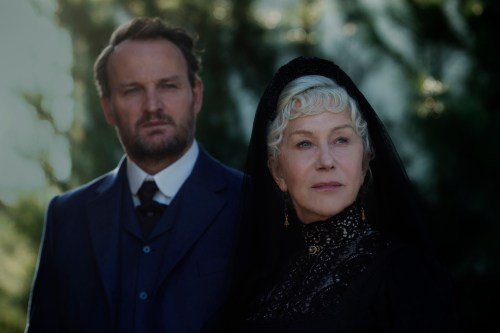
Gina (Blake Lively, rarely better) is the victim of an accident that stripped her of her eyesight. Her husband James (Jason Clarke) has remained a steady presence during her time of darkness. The part of her brain meant to interpret the work of her eyes is still working, so instead of pitch black, she is treated to a constant laser light show. For about the first half hour, director Marc Forster and his design team revel in the opportunities to render the subjective experience of blindness in cinematic terms. But then, her doctor (Huston) promises a procedure to restore her sight, which proves to be a liability for both the film’s creativity and Gina and James’ relationship. Despite how trustworthy as his character is meant to be, it goes to show you that anyone played by Danny Huston cannot help but be ominous.

With Gina on the road to a full recovery, the film takes a swerve into a dour drama about love on the rocks, and not a very interesting one. James proves to be too prudish and unadventurous for Gina, but the real problem is his controlling nature. It was easier when he could be the steady hand when she was blind, but now he is practically useless. It does not help that they are struggling to have a baby, with James likely lashing out due to his own impotence. There is perhaps a story worth exploring here about how this relationship was kept afloat by a disability, but any conclusions drawn therein are rather vague. Besides, it feels pointless to even bother what themes the film is trying to touch on here (something about voyeurism?) when it abandons its best feature way too quickly.

All I See is You is Recommended If You Like: Terrence Malick-ian visuals, Leaving 30 minutes after the movie starts

Grade: 2.5 out of 5 Lasers

This Is a Movie Review: ‘Novitiate’ is the Latest Harrowing and Also Inspiring Peek at the Inner Workings of the Catholic Church

Leave a comment

CREDIT: Sony Pictures Classics

This review was originally posted on News Cult in October 2017.

Starring: Margaret Qualley, Melissa Leo, Julianne Nicholson, Dianna Agron, Denis O’Hare

Director: Margaret Betts

Running Time: 123 Minutes

Rating: R for Sexuality and Profanity-Laced Anger That Can Be Suppressed for Only So Long

Release Date: October 27, 2017 (Limited)

An institution as massive and long-lasting as the Catholic Church is bound to be filled with corners that many of its members are completely unfamiliar with. Sometimes those areas are not even the ones that are shamefully hidden. They may actually be intrinsic features, but if allowed to function independently, they can involve into a weird hybrid of both doctrinaire and renegade. I was raised (and remain) Catholic, but I was born decades after the reforms of Vatican II, which rendered the most extreme practices of convents as seen in Novitiate verobten. But even if I had been a churchgoer in the ’60s, I doubt I would have been familiar with the ins and outs of the nuns’ rigorous training. And yet, this story does not feel fully alien, nor should it feel so to anyone of any background who has ever desired feelings of deep love and devotion.

This examination of religious life is mainly told through the story of Sister Cathleen (Margaret Qualley), who in 1964 is one of the convent’s new class of postulants (candidates to become nuns) who eventually become novitiates (nuns-in-training). Margaret’s ready acceptance of the convent’s extreme practices, e.g. self-abnegation, has nothing to do with lifelong indoctrination, as she comes from a family of bitterly divorced, agnostic parents (at least Mom is agnostic, Dad is never much around). Her attraction to marrying God is perhaps a desire for stability, but it is also more than that. Stirring in her is an aching for transcendence that cannot easily be explained by nurture (or lack thereof). Setting her up as the novice character to follow in this secretive world is crucial, because otherwise the convent’s frightening elements would feel almost abstract and theoretical.

As the convent is resisting the reforms of Vatican II that were then being enacted, the message is clear that this is not the right way to practice religious devotion. But that historical background of rebuke is unnecessary to make that point, except perhaps for viewers with the most hardened of souls. The training and practices – oppressive silence, avoidance of eye contact, asceticism, confession in a group setting – are reminiscent of the auditing of Scientology, so memorably approximated in The Master. Ostensibly designed to make its adherents better people and closer to God, its true effects are vulnerability and surrender to authority. Overseeing all this is the Mother Superior (Melissa Leo), who while sitting on her throne of a central chair, is reminiscent of Pan’s Laybrinth’s Pale Man.

Novitiate is powerful grist for the mill for those who decry the problems inherent to all religions and for those who remain religious but point to this as an example of the wrong way of doing things. And quite frankly, it may very well also make such a connection to the ultra-traditionalists and reactionaries, who might see this as a lament for the old, better way. It is a fascinatingly human look at all those urges, appealing both to a desire to connect to a higher power and a desire to not be wrong.

Novitiate is Recommended If You Like: Spotlight, The Master, Silence

Grade: 4 out of 5 Grand Silences

This Is a Movie Review: Wonderstruck

Leave a comment

CREDIT: Roadside Attractions

Todd Haynes tries his hand at crosscutting concurrent (but not contemporaneous) narratives with the lovely Wonderstruck. The 1927-set and 1977-set portions ultimately converge around the Museum of Natural History in ways that are more than just thematic and geographic. Are the mechanics that get us there smooth or perfunctory? I for one find it satisfying. The earnest performances and fastidious pastiche-y touches go a long way in that regard. I am also impressed by the communication with, between, and around the deaf characters. Here’s the big question: was I wonderstruck? Yah.

I give Wonderstruck 7 Wolf Visions out of 9 Miniatures.

This Is a Movie Review: Bucking Concerns That It Would Be Derivative, ‘The Snowman’ Barely Even Qualifies as Storytelling

Leave a comment

CREDIT: Jack English/Universal Pictures

This post was originally published on News Cult in October 2017.

Starring: Michael Fassbender, Rachel Ferguson, Charlotte Gainsbourg, Val Kilmer, J.K. Simmons, Toby Jones, Chloë Sevigny

Director: Tomas Alfredson

Running Time: 119 Minutes

Rating: R for Snowman-Human Hybrid Tableaux

Release Date: October 20, 2017

The best part of The Snowman happens a few minutes when someone refers to Michael Fassbender’s lead character, “Detective Harry Hole,” by his full name. Shockingly, that is the only time we hear anybody say “Harry Hole” in its entirety. True, my enjoyment of that moment might be the most prurient form of punnery, and I probably won’t be able to convince who looks down upon crudeness and wordplay of its hilarity. But at least that name has personality, something which the rest of the film lacks entirely.

The Snowman’s poster reads, “MISTER POLICE. YOU COULD HAVE SAVED HER I GAVE YOU ALL THE CLUES.” The film itself acts upon the same instinct, essentially giving away the identity of the killer in the first scene. So clearly, the mystery is not the point of this ostensible mystery film. What then is it all about? Perhaps a deep (or at least shallow) dive into a murderer’s psychology? I imagine a fascinating dissertation could be written about a killer who carefully slices up his victims, builds a snowman after each kill, occasionally affixes parts of the victims into the snowmen, and always calls in a missing person report to alert the same detective to arrive on the scene just a little too late. But as for how it plays as narrative, well, the harsh Scandinavian winter must have made everyone too sleepy to craft any plot turns anywhere near compelling.

The Snowman is based on Norwegian author Jo Nesbø’s novel of the same name, one of the many bestselling Scandinavian crime thrillers riding the coattails of The Girl with the Dragon Tattoo. One might imagine that a potential problem here would be falling into a trap of derivativeness, but The Snowman isn’t really a knockoff of anything, whether literary, cinematic, or otherwise. Instead, it is just a hodgepodge of elements that I cannot understand would be a part of any movie whatsoever. The cinematography is plain ugly, almost like specks of snow are constantly stuck to the camera lens. Then there is a whole subplot about Oslo’s bid to host the “Winter Sports World Cup,” which apparently exists because any press about the Snowman Killer cannot be allowed to distract from that bid. Maybe there is supposed to be a point here about government corruption, but it just comes off as narrative padding.

The Snowman’s greatest sin is stranding some very talented actors with absolutely nothing to do. It also calls into question the bona fides of its director, Tomas Alfredson, who had previously pulled off two solid adaptations (Let the Right One In, Tinker Tailor Soldier Spy). Maybe this is just a hiccup, though if so, it is a big one. On the other hand, I have not read the novel, so maybe the problem is with source material that managed to be inexplicably successful. But at least we have Val Kilmer as a suicidal investigator, who is strangely compelling, with a freakish appearance that can only be described as “Haggard Vampire.” After watching The Snowman, you’ll certainly be able to relate to his fatalistic outlook.

The Snowman is Recommended If You Like: Despairing About the Pointlessness of Life

Grade: 1.5 out of 5 Daddy Issues


This Is a Movie Review: ‘Tragedy Girls’ is Pleasantly Gory But Hampered by a Muddled Social Message

Leave a comment

CREDIT: Gunpowder & Sky

This review was originally posted on News Cult in October 2017.

Starring: Alexandra Shipp, Brianna Hildebrand, Jack Quaid, Kevin Durand, Nicky Whelan, Craig Robinson

Director: Tyler MacIntyre

Running Time: 98 Minutes

Rating: R for Sanguine Hacking and Squirting

Release Date: October 20, 2017 (Limited)

Is it possible to be so addicted to social media status that it drives you to serial killing? Tragedy Girls sure seems to think so. But the way it presents this scenario is a bit of a chicken-or-the-egg situation. When we meet high school besties McKayla (Alexandra Shipp) and Sadie (Brianna Hildebrand), they are already both rising Instagram stars AND in the midst of a killing spree. Their attention for fame does not fuel their bloodlust so much as the former provides a channel to express the latter. Any satirical point about how social media obsessions can be deadly is blunted by how much their murderousness is just a part of their nature.

But maybe Tragedy Girls isn’t really meant to be a takedown of what the kids are up to these days. Maybe it is more just the latest profile of banal evil that lurks in supposedly picture-perfect suburbia. Shipp and Hildebrand are certainly committed enough to pull that off, their delightedly and delightfully psychotic performances the highlight of the film. They seem to be operating in a bit of a Zodiac vibe, where part of the thrill is acting as amateur journalists of their own spree.

That’s all well and good, but it doesn’t much matter when everything else around them is a bit too scattershot. Famous faces like Josh Hutcherson and Craig Robinson pop up, only to be quickly dispatched. In the case of the latter, his presence makes sense, since he is also a producer. But Hutch is clearly there as a favor to someone so that there is a big name to be splashy with promotional materials, but in the actual product, he is a distraction from what could have been an unassuming, low-budget charmer.

Tragedy Girls is worth recommending somewhat for the fun of its murderous set pieces. The gore is smeared with squishy goodness and fully imbued with glee. McKayla and Sadie are practically magical in how clean and precise their slicing and dicing (and cleanup!) skills are. It’s enough to remind us the joy of feeding our taste for violence on screen and the safety of eschewing it in real life.

Tragedy Girls is Recommended If You Like: Final Destination at its most cartoonish, the Child’s Play series, Jennifer’s Body

Grade: 2 out of 5 Haters Ruining Prom

This Is a Movie Review: ‘Only the Brave’ Admirably Portrays an Elite Firefighting Crew

Leave a comment

CREDIT: Richard Foreman/Sony Pictures Entertainment

This review was originally posted on News Cult in October 2017.

Starring: Josh Brolin, Miles Teller, Jeff Bridges, James Badge Dale, Taylor Kitsch, Jennifer Connelly

Director: Joseph Kosinski

Running Time: 133 Minutes

Rating: PG-13 for the Conflagrations and References to Past Drug Use

Release Date: October 20, 2017

It is a frequently stated and generally accepted claim that mothers have the strength to lift a car when their children are in danger. Perhaps we need a similarly illustrative example for people who are naturally drawn to extreme situations in service of others. How else can we explain how relatively few people become firefighters but those who do must necessarily be dangerously committed? It is a little abstract to put in these terms, as the threat is often not immediate and it can be difficult for the human mind to comprehend the scale of the population that is being protected. There is also the fact that we already can explain firefighters’ ability via hardcore training and acclimation exercises. But the ever-present life-threatening nature of this calling earns it a more intense appraisal.

With that in mind, the best way to watch Only the Brave is by appreciating a group of experts performing their jobs exceptionally well under pressure. The film tells the story of the Granite Mountain Hotshots, an elite Arizona firefighting crew, and the events leading up to their battle with the Yarnell Hill Fire, one of America’s deadliest wildfires in decades. The two most compelling performances come courtesy of Josh Brolin and Miles Teller. The former is the crew’s head, Eric “Supe” Marsh. We’ve seen his type before: when he isn’t physically out in the forest (which he almost always is), his mind is still there, dreaming about a charging bear drenched in flames. He is the kind of guy whose wife (Jennifer Connelly) must bear hearing clichés like “It’s not easy sharing your man with the fire.” Supe’s characterization comes nowhere reinventing the wheel, but Brolin imbues him with plenty of dignity.

More unique is Teller’s role as Brendan “Donut” McDonough, the crew’s newest recruit, a former addict genuinely trying to improve himself. When introduced, he in no shape to be a firefighter, puking and nearly dehydrating on the first training run. Back home, an ex-girlfriend has just given birth to their daughter, and he is making a genuine effort to earn a place in her life. There are plenty of moments that Brendan could relapse, or abandon his crew, or give up on being a dad. But he always sticks it through, proving his mettle as a man with willpower that is rare and admirable. Dramatic heft is often achieved through fighting past bad decisions, but Only the Brave manages to earn plaudits by continually keeping Brendan on the up-and-up.

Ultimately, I admire the story of Only the Brave more than I enjoy it as a film. Partly, I believe that is due to the narrative’s episodic sensibility, which is an odd choice, considering that it is leading up to a huge climax. Of course, that decision makes a certain sense, in that day-to-day life, no matter how dangerous, is usually unspectacular until the one day that it is unpredictable. This may not be as much of a problem to other viewers, but I do wish the editing had been as compelling as the performances.

Only the Brave is Recommended If You Like: Real Life Bravery

Grade: 2.5 out of 5 Fire Bears

This is a Movie Review: ‘The Killing of a Sacred Deer’ is Disturbingly Unforgettable Horror From the Director of ‘The Lobster’

1 Comment

CREDIT: Jima (Atsushi Nishijima)/A24

This review was originally posted on News Cult in October 2017.

Starring: Colin Farrell, Barry Keoghan, Nicole Kidman, Bill Camp, Raffey Cassidy, Sunny Suljic, Alicia Silverstone

Director: Yorgos Lanthimos

Running Time: 109 Minutes

Rating: R for Bluntly Presented Gore and Nudity

Release Date: October 20, 2017 (Limited)

Yorgos Lanthimos’ specialty as a writer and a director of actors is strange and disturbing dialogue delivered bluntly and clinically. Given the setting and characters in The Killing of a Sacred Deer, it makes a kind of sense that this behavior is typical (due to a combination of professional desensitization and psychopathy), but it is never not unnerving. It works to provide a sense of foreboding for what initially presents itself as a slice-of-life tale that will soon give way to a domestic thriller. But really, what we are being primed for is much more sinister and much more terrifying and in fact qualifies as full-on horror.

Steven Murphy (Colin Farrell) is a cardiac surgeon who takes under his wing Martin (Dunkirk’s Barry Keoghan), the teenage son of a patient who died on his operating table. Martin seems interested in medicine himself, spending significant amounts of time shadowing Steven in the hospital. Steven invites him over to the house for dinner, where he charms his wife Anna (Nicole Kidman), becomes friendly with his son Bob (Sunny Suljic), and grows romantic with his daughter Kim (Tomorrowland’s Raffey Cassidy). The Murphys seem to notice Martin’s odd behavior, but they never fully acknowledge it. For a while, it seems that this film is just taking place in a world of lunacy, where announcing statements like “our daughter just started menstruating last week” are perfectly natural to declare in public. But once Steven recoils at Martin’s mom’s (Alicia Silverstone) attempt to seduce him by aggressively licking his fingers, it becomes clear that this is terrifying for both the audience and the Murphys.

The foreboding is realized hard and unsettlingly, as Bob and then Kim become paralyzed from the waist down without any clear physical explanation. Martin reveals in great detail to Steven what is going on, apparently confirming that he is the source of this ailment. He could be poisoning them, but it is so supernatural that “hex” or “plague” would be a better word. The obvious motivation here is revenge for the death of his father, but Martin’s unflappably flat speaking voice makes it impossible to get a perfect read on him. Lanthimos may or may not be speaking in metaphors; if so, I am not sure what the message is, but if not, the film is disturbing enough that it works on its own terms.

Ultimately, though, The Killing of a Sacred Deer might end up too untethered from its starting point to be an unqualified success. Indeed, it begins to lose me around the point that Steven is firing a shotgun at his family with a bag over his head. That particular scene – and others like it – are filled with fantastic tension, but they feel like Lanthimos is just filling his thirst for demented horror set pieces instead of focusing on the premise he has already established. Maybe that dissociation is the point, but sometimes the heightening of scares can use a firm direction.

The Killing of a Sacred Deer is Recommended If You Like: The inexplicableness of The Happening but not the cheesiness, The Lobster, Funny Games

Grade: 3 out of 5 Bleeding Eyeballs

This Is a Movie Review: Blade Runner 2049

Leave a comment

CREDIT: Stephen Vaughan/Alcon Entertainment/Warner Bros.

When I write pre-release reviews, I include a list of similar titles, genres, etc. to indicate whether or not the movie being reviewed is worth recommending. I do not usually do that for my quicker reviews, but I feel compelled to do so for Blade Runner 2049. To wit: Blade Runner 2049 is recommended if you like Fringe, Orphan Black, the Futurama episode “A Clockwork Origin,” and of course, the original Blade Runner. They all play around with questions of identity and being godlike in the creation of new life. I wonder if they influenced Denis Villeneuve and company. Of course, they were all probably influenced by the original. Except for Blade Runner itself. Although that would be an interesting philosophical claim to say that a movie influenced itself.

I loved the hologram sex scene.

I give Blade Runner 2049 80% Existence out of 100 Replicants.

This Is a Movie Review: Noah Baumbach and Adam Sandler’s Sensibilities Align Perfectly in ‘The Meyerowitz Stories (New and Selected)’

1 Comment

CREDIT: Atsushi Nishijima/Netflix

This review was originally posted on News Cult in October 2017.

Starring: Adam Sandler, Ben Stiller, Dustin Hoffman, Elizabeth Marvel, Emma Thompson, Grace van Patten, Judd Hirsch

Director: Noah Baumbach

Running Time: 110 Minutes

Rating: Unrated, But It Would Probably Be (a Soft) R for Intrafamily Yelling and Artistic Nudity

Release Date: October 13, 2017 (Limited Theatrically and Streaming on Netflix)

It’s tempting to say that The Meyerowitz Stories (New and Selected) is Noah Baumbach’s version of an Adam Sandler comedy. That’s a good starting point, though it isn’t exactly right. It is most accurate to say that Baumbach happened to write a character that just happened to perfectly align with Sandler’s sensibilities. The same can also be said to a certain degree for Dustin Hoffman and Ben Stiller, two of the other Meyerowitzes with distinct styles, but it is Sandler’s shtick that leaves the most telling impression. This film could hardly be mistaken for a Happy Madison production, but it is a sort of cinematic half-sibling.

Hoffman is Harold Meyerowitz, a sculptor and retired art professor whose lack of greater commercial success is constantly referenced and bemoaned. His adult children Danny (Sandler), Jean (Elizabeth Marvel), and Matthew (Stiller) are all sorts of messed up. Danny and Jean are still recovering from all the time they didn’t have with their dad while growing up after he divorced their mother, while their half-sibling Matthew is still recovering from all the time that he did spend with Dad.

Each Meyerowtiz actor is aces in pulling off their own unique form of neuroticism, but this is primarily Sandler’s forte. It plays into his pet interests of fraught but tender father-son relationships and lovable man-children. Danny is probably talented enough to have been a professional musician, but instead he is terminally unemployed, though he occasionally crafts goofy piano-based tunes with his teenage daughter Eliza (Grace van Patten). But this is not really a matter of arrested development, as Danny tracks as a genuine adult, just one who never had to accept professional responsibility, especially because he could still manage to be a great father while retaining a childlike disposition. And I haven’t even mentioned all the moments of that patented Sandler yelling put to good use. In fact, the film opens with Danny and Eliza attempting to find a parking spot in Manhattan, a premiere situation for Sandler frustration if ever there was one.

The main narrative thrust involves the Meyerowitz siblings dealing with Harold’s extended critical hospital stay. Considering all the tension in these relationships, this could be a recipe for disaster. And while a few scuffles do break out, Danny, Jean, and Matthew instead mostly bond over their shared screwed-up natures and resolve to embrace forgiveness and gratitude. Plus, they also all get to gather around and watch Eliza’s work as a film student at Bard College, which consists of the surreal sexcapades of “Pagina Man.” It features a fair bit more nudity than you might think an 18-year-old would be comfortable sharing with her family, but despite any discomfort, they all agree she has talent. And since she comes from a family that is so naturally entertaining, how could she not?

The Meyerowitz Stories (New and Selected) is Recommended If You Like: Noah Baumbach’s New York, Big Daddy, Goofy student films

Grade: 4 out of 5 Ex-Wives

This Is a Movie Review: It’s Chan vs. Brosnan in Revenge Thriller ‘The Foreigner’

Leave a comment

CREDIT: STX Films

This review was originally posted on News Cult in October 2017.

The Foreigner – It’s Chan vs. Brosnan in Revenge Thriller ‘The Foreigner’

Starring: Jackie Chan, Pierce Brosnan

Director: Martin Campbell

Running Time: 113 Minutes

Rating: R for Frequent Explosions, Booby-Trap Puncture Wounds, and a Bit of Scheme-Based Shagging

Release Date: October 13, 2017

At age 63, Jackie Chan is still allowed to shimmy down roofs, walls, and pipes. And good for him, because while what he pulls off stunt-wise in The Foreigner is nowhere near as relentless as his early films, his twists, spins, and rolls still look like the most natural things in the world for him to be doing. But this revenge thriller places a new skill at the top of Chan’s repertoire: survivalism. As a meek London business businessman, Ngoc Minh Quan’s (Chan) knack for springing camouflaged traps with tree branches and leaves is in the key of a doomsday prepper, but actually they represent the horrors of a native land he would rather forget but will summon if he has to.

Quan’s journey for vengeance is set off by a bomb that detonates in a busy street, killing his daughter Fan (Katie Leung, aka Cho Chang from Harry Potter). But he has had the capacity for a long time to go off on a one-man spree to make terrorists pay. He was a trained killer in his home country (it is a little confusing whether Quan is supposed to be Vietnamese, or ethnically Chinese but born in Vietnam, or something else) who sought a more peaceful life by moving to England, but lost two of his children along the way. To further ramp up the tragic backstory, his wife died while giving birth to Fan. So when Fan dies, it is the classic revenge setup of the man who has nothing left to lose. The Foreigner does not add much to this genre, save for Chan’s heavily haunted performance, his eyelids and hair permanently weighed down by the debris of the blast.

Those responsible for the bombing are certain members of the IRA attempting to stir up trouble, which Quan does not much care about, but the film certainly does. There is a sense of a bigger conflict swallowing up a few small people, similar to Edge of Darkness, director Martin Campbell’s last entry in the revenge field. But where that earlier film had an easily identifiable conspiracy hook, The Foreigner’s political conflicts are much more convoluted. For the uninitiated, it is hard to make heads or tails of what the IRA’s issues with the UK are, and why they should be flaring up now. That confusion is papered over a bit by the compelling presence of Pierce Brosnan as government official Liam Hennessy, whose association with the IRA may not be as reformed as he would like to pretend. The cat-and-mouse struggle between Chan and Brosnan is a high-quality white-knuckle battle between two vets who know exactly what they’re doing. But they are surrounded by a hodgepodge of other goings-on that do not come together for a clear message or purpose.

The Foreigner is Recommended If You Like: Apocalypse Prepping, Rambo, Edge of Darkness

Grade: 3 out of 5 Tree Branch Traps

Older Entries Newer Entries