Season Analysis: New Girl Season 3 had its share of hits and misses: put Nick and Jess’ affectionate but rocky relationship and the return of Coach in the plus column, Schmidt’s regression in the minus column (though it was a valiant effort), and everything Winston-related in both columns (since he was consistently hilarious, but also consistently detached from the rest of the group).
“Keaton”
With the Cece/Elizabeth storyline, Schmidt’s characterization had gotten a little out of control in the New Girl writers’ room. It was basically as impossible a situation as Schmidt himself found himself in. Just as there was no way for him to break it off with either of the women in his life without hurting one of them, there was no way for the writing to not make him a pretty awful person if he were to go on deceiving both of them. So it was an important corrective to have an episode like “Keaton” to give Max Greenfield an opportunity to really earn back the audience’s sympathy. This episode also showed off New Girl’s propensity for seamlessly weaving in revealing backstory, as we learned that Schmidt’s communication with “Michael Keaton” began with his mom playing the part of the Batman actor and then Nick picking up the role in college. The fakeness of the Keaton correspondence should have been hilariously obvious (Nick’s e-mail address for Mr. Mom was keatonpotatoes@aol.com), but Schmidt, like a lot of us, needs a hero to hold on to. Ultimately, this episode was a story of both the filial and romantic love of New Girl, with Nick Miller suffering a crisis over deceiving his best friend while partnering with his girlfriend, with the two of them taking part in the deception because of their support for each other and their mutual concern for Schmidt. It is one of those scary moments when your life is at a crossroads and you do not quite know how to do the right thing that New Girl pulls off so well.
Season Analysis: In its formative stage, The Neighbors took a while to figure itself out, striking an inconsistent tone and quality level. So how wonderful was it that in its second (and sadly final) season, it was the most consistent sitcom on television.
“Family Conference”
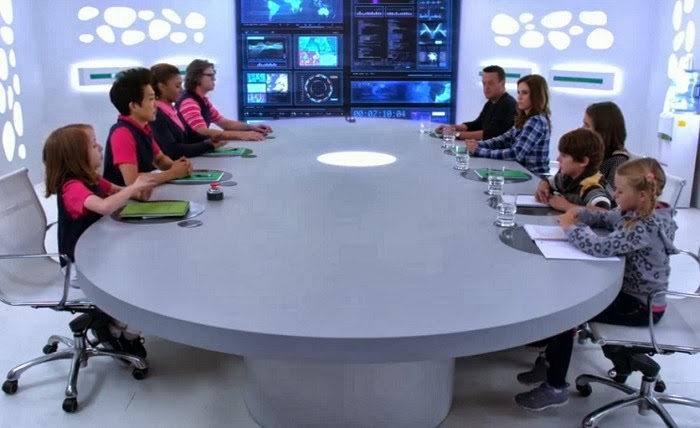
Great episodes of shows with fine ensemble casts tend to be those that put every main character in a room together. By its season 2 premiere, The Neighbors had figured out what each of its characters represented, and that was on display in the Weaver/Bird-Kersee conference for determining the viability of Amber and Reggie dating. Sophomore debuts are often a time for shows to re-assert themselves, and “Family Conference” certainly took that opportunity, with everyone in the roundtable getting at least one moment to shine. Larry’s pomposity, Dick’s officiousness, Abby’s preternatural fortitude, and a hologram Jerry Springer were all on display, but this being an Amber-Reggie plot, it was Tim Jo’s time to shine with lines like “put a little Mickey Mantle in my bewwy” and “just us, a little house, and 2.5 lizards … or orchids” (because Zabvronians are either reptilian or plant-based) wonderfully displaying his off-putting, but weirdly endearing, extraterrestrial sweetness.
Runners-up:
“Supreme Like Me”
An exemplary episode for Larry, who is forced to get a job and in the process learns about the hipster barista lifestyle.
“Close Encounters of the Bird Kind”
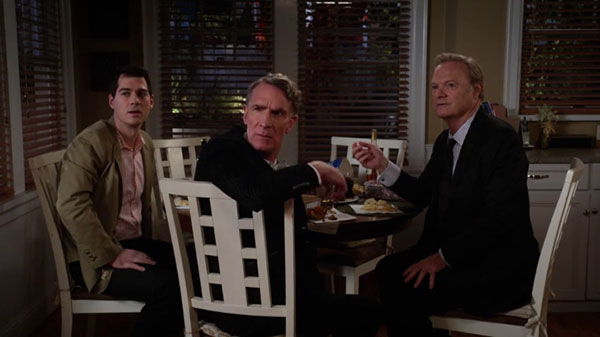
Dick forms a brain trust consisting of Joel Stein, Lawrence O’Donnell, and Bill Nye, and the fact that that could happen in the universe of The Neighbors is hilarious enough, but added to that is the fun revelation that they are Debbie’s three celebrity crushes.
Season Analysis: With its cast getting better and better and its action continuing to be exciting, Arrow made a case for itself as the best live-action superhero series of all time.
“Streets of Fire”
To know why Arrow’s penultimate Season 2 episode was the show at its best, all you have to do is watch this scene:
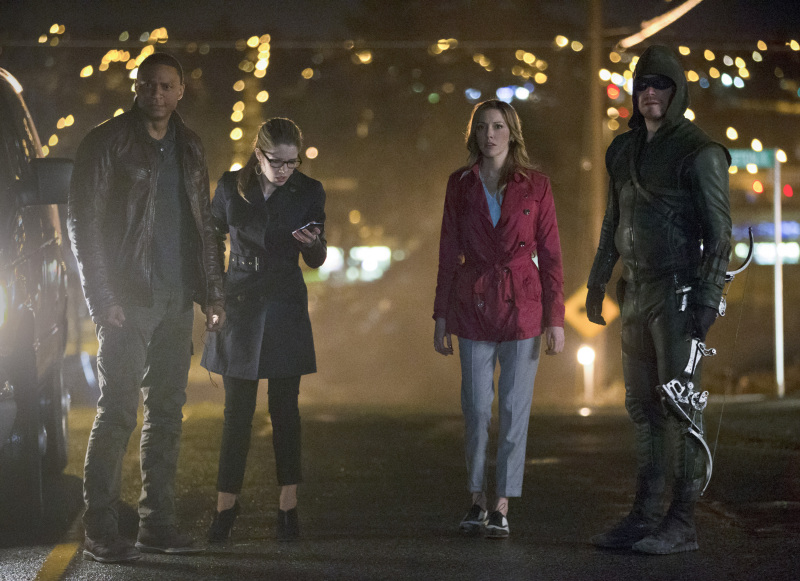
Felicity’s defiant declaration of her belief in Oliver’s righteousness and ability is the best possible reminder of his duty to the city, effectively re-establishing the Arrow’s mission statement. At Oliver’s bleakest hour, the show takes a moment to emphasize how far our protagonists have come and why they deserve faith in the face of seemingly impossible odds. Almost succumbing to despair in response to all the loved ones he’s lost, Oliver is reassured by Felicity, who responds that “you honor the dead by fighting,” counteracting his list of the dead with a list of all those who meant harm to Starling City that he has stopped. Oliver Queen has come a long way: he was on his own when he became the vigilante, but now, as one as of his closest partners makes clear, he could not be farther from solitude: he is not alone, and she believes in him.
Season Analysis: Re-branded as Archer: Vice, the season-long transformation of ISIS into drug runners did not produce laughs as consistently as in previous years, but it was always admirable in its ambition.
“Arrival/Departure”
I will admit that my lack of laughs this season may have had to do with me watching the episodes at a time of night when I was tired and/or my mind was just elsewhere. But I think the arch humor of this show has not really evolved and has thus lost some of its zest. But as all the pieces came together in the season finale, and it was clear that this year had been designed by creator Adam Reed and his team like clockwork from the beginning, it began to click for me, and I was feeling the satisfaction that Archer: Vice was attempting to inspire in its viewers. It was like a real-life dream (or nightmare) that the ISIS crew actually lived through, as everything essentially reset at the end. The actual events at San Marcos seemed like they would have little long-term bearing (beyond the psychological effects), and that wasn’t because what had happened was going to be ignored but because everything was dealt with as it needed to be. There was a bit of a deus ex machina feel to the machinations, but they were as narratively justified as they needed to be. Then there was the surprisingly affecting final scene, in which Lana introduced Sterling to his daughter. The slow fade out of the sound as he struggled to process the news was audiovisual storytelling at its finest.
Season Analysis: Scandal started to turn into Alias a bit in Season 3, which was good, because the subterfuge was a whole lot more interesting than Olivia and Fitz’s umpteenth attempt to make their impossible love affair work.
“Everything’s Coming Up Mellie” Scandal is a sort of opera, insofar as every character has the biggest emotions possible at any moment. Thus, the best performances that can be wrung from that style are those that cover every the full range of big emotions. Bellamy Young is able to imbue First Lady Mellie Grant with just this range by playing her as villain, hero, victim, and manipulator. And she got to shine in all those roles like no other time with the flashback-heavy “Everything’s Coming Up Mellie.” This episode revealed that not only has Mellie been a victim of unfaithfulness, but also a victim of rape by her father-in-law. But she used that total loss of control to take charge like never before. The whole point of this episode is that you cannot peg anybody so easily. Even when people are direct and show their personalities so openly – and Mellie easily fits that description – you never know just what is in their past and who they really, fully are. And that is the trick of Scandal at its best: its operatic emotions make it seem like everyone can be easily judged, but its most revelatory moments make it clear that nobody can ever be so simply pegged.
Season Analysis: Parenthood probably works better with shorter season orders, as the 22-episode fifth season allowed it to indulge in storylines that were not always working. Still, there was stellar acting throughout, particularly from Ray Romano and Max Burkholder.
“Promises”
Smack dab in the middle of the season, “Promises” was the point at which every Braverman story – the questionable and the sensible ones both – were all clicking. I was always skeptical of the Joel and Julia marriage troubles storyline, because the existence of their issues required some unusually unreasonable behavior. But when it produces scenes like Julia confiding in Adam about her problems, with Erika Christensen perfectly conveying how she cannot understand how her life is the way it is right now, it doesn’t really matter if the story didn’t make much sense in the first place. Then there is the weird, but totally engaging, love triangle with Drew, Amy, and Natalie in which it was kind of just fun to examine the personalities of these characters and analyze who really fits with whom. But the best moments of this episode – and really the whole season – come from the best storyline of the year, Max hanging out at Hank’s photography studio. The latest crisis with Max leads Hank to realize that he too might have Asperger’s, and Ray Romano delivers a whole host of reactions that convey how this revelation changes everything about his past and present. It is cathartic because everything finally makes sense but devastating because it might be confirmation that things will never be better. It is this sort of emotional conflict that is Parenthood’s bread and butter, the device that guarantees a few tears will be jerked every episode, and it is rarely pulled off more consistently than it was in “Promises.”
Season Analysis: A big deal is often made when female voices emerge in male-dominated genres, and Broad City accomplished that, but not because that was what it was specifically attempting. It worked out that way because Ilana Glazer and Abbi Jacobson – who conveyed their unique, optimistic, and pleasantly skewed perspective on young adult life in New York City – just happen to be women.
“Hurricane Wanda”
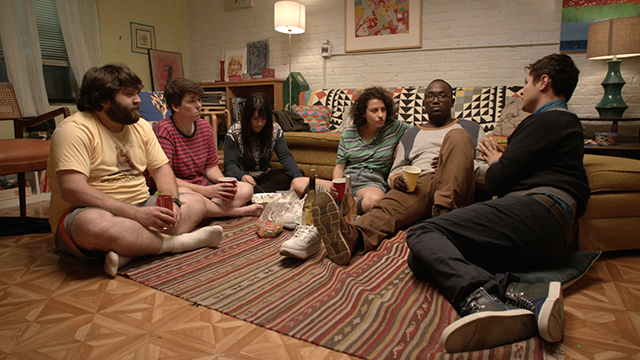
Bottle episodes– those half-hours that take place entirely within one physical location – continue to be sitcom staples because they continue to work so well. Keeping everyone stuck in one spot raises the pressure and thus the emotions that have been simmering over the course of the preceding episodes. When a hurricane keeps Abbi and Ilana stuck in Abbi’s apartment, they are forced to deal with the overwhelming presence of Abbi’s crush Jeremy, the overwhelming (in a different way) presence of Abbi’s roommate’s boyfriend Bevers and Bevers’ sister (UCB stalwart Shannon O’Neill in an energetic performance befitting an episode named after a hurricane), and a malfunctioning toilet. There wasn’t much development on the Jeremy front (although we did get a memorable threesome dream sequence thanks to Ilana). The Bevers siblings, while freakishly aggressive to most everyone else, were mostly destructive towards each other, thanks to the mystery plot of the shit in the shoe. Ultimately, like all of Broad City, this episode was about the power of friendship, with a coda showing Ilana’s duct tape-aided adventure in disposing of Abbi’s turd that would not be flushed.
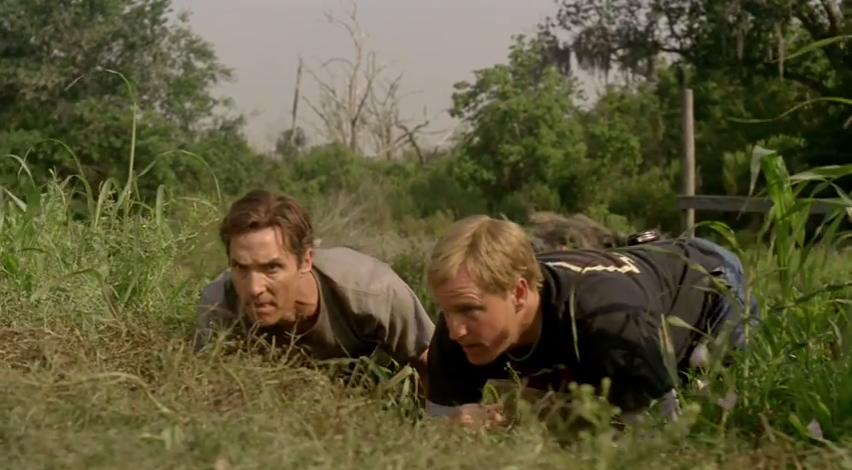
Season Analysis: A mystery that focused on its characters but wisely chose to also allow its mystery to be solved, True Detective succeeded on the strength of its acting, directing, and detours into mysticism.
“The Secret Fate of All Life”
A time jump is a nifty trick employed by television shows that more often than not works to re-energize series that have lost a bit of their edge. This trope has avoided falling into cliché because it still immediately subverts a show’s established expectations. The time jump in “The Secret Fate of All Life” works especially well by taking the subversion even further. A time jump is unexpected with just about any show, but even more so of an anthology series with a narrative contained in one season. Add to that the fact that True Detective was already jumping back and forth between 1995 and 2012; it had not to this point offered any indication that it would be visiting a third period in between those two. Then there was the surprise of Rust Cohle walking out of his interview with Papania and Gilbough. It was almost fourth-wall breaking; the 2012 interviews had seemed to merely be framing devices, but now they were headed in the direction of continuing the narrative. “The Secret Fate of All Life” even subverted the narrative rules TD had set for itself, with the one-two-three punch of Marty and Rust’s covered-up killing of Reggie and DeWall Ledoux in 1995, the introduction of the Yellow King in 2002, and the implication of Rust as a suspect in 2012 leading the show to focus on plot in defiance of the character study established in the season’s first half. It was still a devastating study of tragic personalities, but this was the point when it became clear that it was not satisfied with keeping matters so simple.
Season Analysis: As Axe Cop’s title shot prominently declares, it was co-created by a 5-year-old. Its first season certainly felt like it was, and – thanks hugely to Nick Offerman as the titular hero – it was an ideal realization of a show co-created a 5-year-old.
“The Rabbit Who Broke All the Rules”
An area in which Axe Cop the TV series largely excels is its well-considered mythology, which serves to establish layer upon layer of Axe Cop’s motivations. When Axe Cop becomes a foster father to a strange orphan boy, it is revealed that the boy is possessed by the ghost of the first creature that Axe Cop ever killed: the unconventional titular rabbit. Axe Cop’s opposition to this hind-leg standing, coconut-eating hare is a little fascistic, almost uncomfortably so. But it works as well as it does because it is such a strong character choice. Axe Cop’s black-and-white ethical code may be too simplistic and too intensely applied, but he is committed to it so firmly, and that makes him interesting as a fictional personality. As all-powerful as he may seem, and despite how unassailable his results tend to be, the appropriateness of his methods or lack thereof are worth considering, even though he obviously exists in a fantasy world. Sometimes, dispensing with subtlety proves to be fruitful.
Season Analysis: Season 3 of Billy on the Street leaned a little too heavily on the excessively staged stunts for my taste, but the vast majority of it is still pop culture maestro Billy Eichner interacting with New Yorkers, and thus it is still excellent.
Season 3 Superlatives:
Best Contestant: Elena
The first non-celebrity to return, Season 2 Quizzed in the Face contender Elena is the epitome of the type of New Yorker that Billy on the Street celebrates. She played a round of “Cash Cow” against Lena Dunham (during which she misunderstood Billy’s pronunciation of “Weird Al” Yankovic) and stopped by later for a special round of “For a Dollar,” which featured this classic exchange between her and Billy:
“Annie? They’re making a new movie of it?”
“Yeah, Quvenzhané Wallis, the little girl from Beasts of the Southern Wild, is playing her.”
“Oh, I love her.”
“Yes.”
“She’s not playing Annie!”
“Yes, she is.”
“Oh, Annie! I was thinking of that, what was that Woody Allen movie…”
“Annie Hall?!”
“Yes!”
(runs away) “Elena, never, ever speak to me again!”
Most Prepared Celebrity Contestant: Lena Dunham, who cruised through a round of “Steve Harvey or Harvey Milk”
Most Challenging Celebrity Game: “John Mayer or Pepé Le Pew,” in which Olivia Wilde struggled to identify whether such quotes as “Everyone should have a hobby, don’t you think? Mine is making love” and “I really don’t want to be a hunk” were uttered by the bad boy of pop-rock or a cartoon skunk.
Best New Contestant: David, an aspiring novelist and screenwriter decked out in L.A. Kings gear who won Quizzed in the Face by correctly identifying that Charles Manson would be a fan of Family Guy. When Billy expressed bewilderment about Kristen Chenoweth having sex with Aaron Sorkin, David noted, “She’s a trouper for that.”
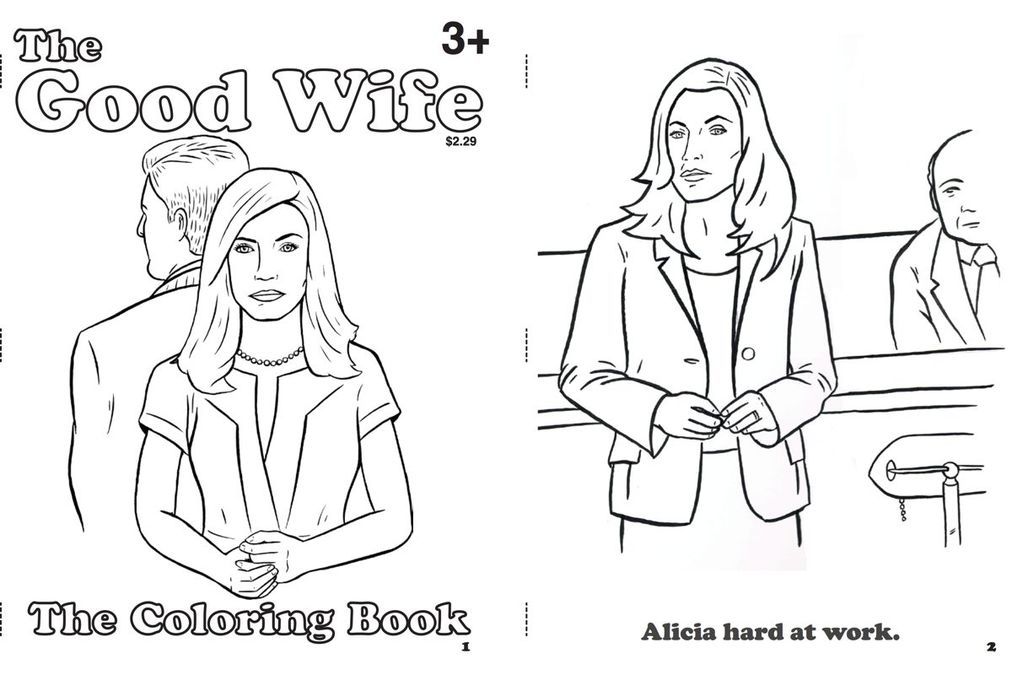
Best Prize: The Good Wife coloring book (I gave one to my mom for Mother’s Day!)
And some more quotables:
From a round of “Humpty Dumpty or Mary J. Blige”
“Sold more than 50 million albums worldwide.” “Humpty Dumpty.”
“Fell off a wall, unfortunately.” “Mary J. Blige.”
“Could not be reassembled, unfortunately.” “Mary J. Blige.”
“Sir, for a dollar, name a movie.” “Uh, RadioShack.”
“Do you think Miley Cyrus is on point?”
“Ummm, I don’t really like her.”
“Why?!”
“I don’t really know, there’s just something about her. I miss Hannah Montana.”
“Oh, come on!”
“I do! I do!”
“She can’t be that forever.”
“I know.”
“She’s a grown-up.”
“She could’ve done what she did so much better, though-”
“Really?!”
“-like she could have done it so much better.”
“What are you talking about? Everybody’s talking about her. How much better can you do that?”
“I don’t know. I just, I don’t know.”
“Okay. What do these bozos think? Do you like her?”
“I do like her. I feel bad for her, though, because-”
“Why?!”
“I feel like she’s going through such a hard time.”
“What do you mean?! She’s so popular! She’s completely in control, the whole thing.”
“She doesn’t have Liam anymore, and like-”
“She doesn’t need him, please. It’s the best thing that ever happened to her.”
“Okay, well, if she’s happy, then that’s all that matters.”
“She’s obviously very happy.”
“Okay.”
“It’s like, this is the most successful she’s ever been. She’s smart, she seems edgy, the music is good. What do you think, idiot?”
“I- I love her.”
“I agree.”
“I think she’s doing a great job at introducing a new style to music.”
“I absolutely agree.”
“Yeah.”
“You look a little like a duck, but I love it.”
“Thanks.”
“Okay, bye.”
“Sir, for a dollar, any thoughts on Kaley Cuoco’s yearly Emmy snub?”
“On whose what?”
“Kaley Cuoco’s yearly Emmy snub.”
“How can I have an opinion? I never heard of it.”
“Kaley Cuoco, she’s on, what, The Big Bang Theory?”
“I don’t have a TV set.”
“You’ve never seen The Big Bang Theory?”
(clears throat)
“BLEGHHH!”
“I wonder what you’ve missed.”
“What?”
“I wonder what you’ve missed.”
“What do you mean, ‘what I’ve missed’? I’ve missed nothing.”
“Muh muh muh muh.”
“Mi mi mi mi.”
“What do you mean, nothing?”
“I’ve missed nothing!”
“Who wrote A World Lit Only By Fire?”
“Huh?”
“Who wrote A World Lit Only By Fire?”
“2 Chainz! Boom!”
“This is- someone’s gonna watch that?”
“Who let the dogs out! Who, who!”
“Goodbye, game over. Thanks very much. Go back to Florida. I mean, I can’t.”
“Miss, I know you’re getting out of a car, but it’s the 10th anniversary of The Passion of the Christ.”
“Miss… Vince Vaughn… What happened?”
“Sir, for a dollar, are you a Key or a Peele?”
“Sir, Meg Ryan said she would consider a return to television.” “I don’t care.”





 Jmunney's Blog