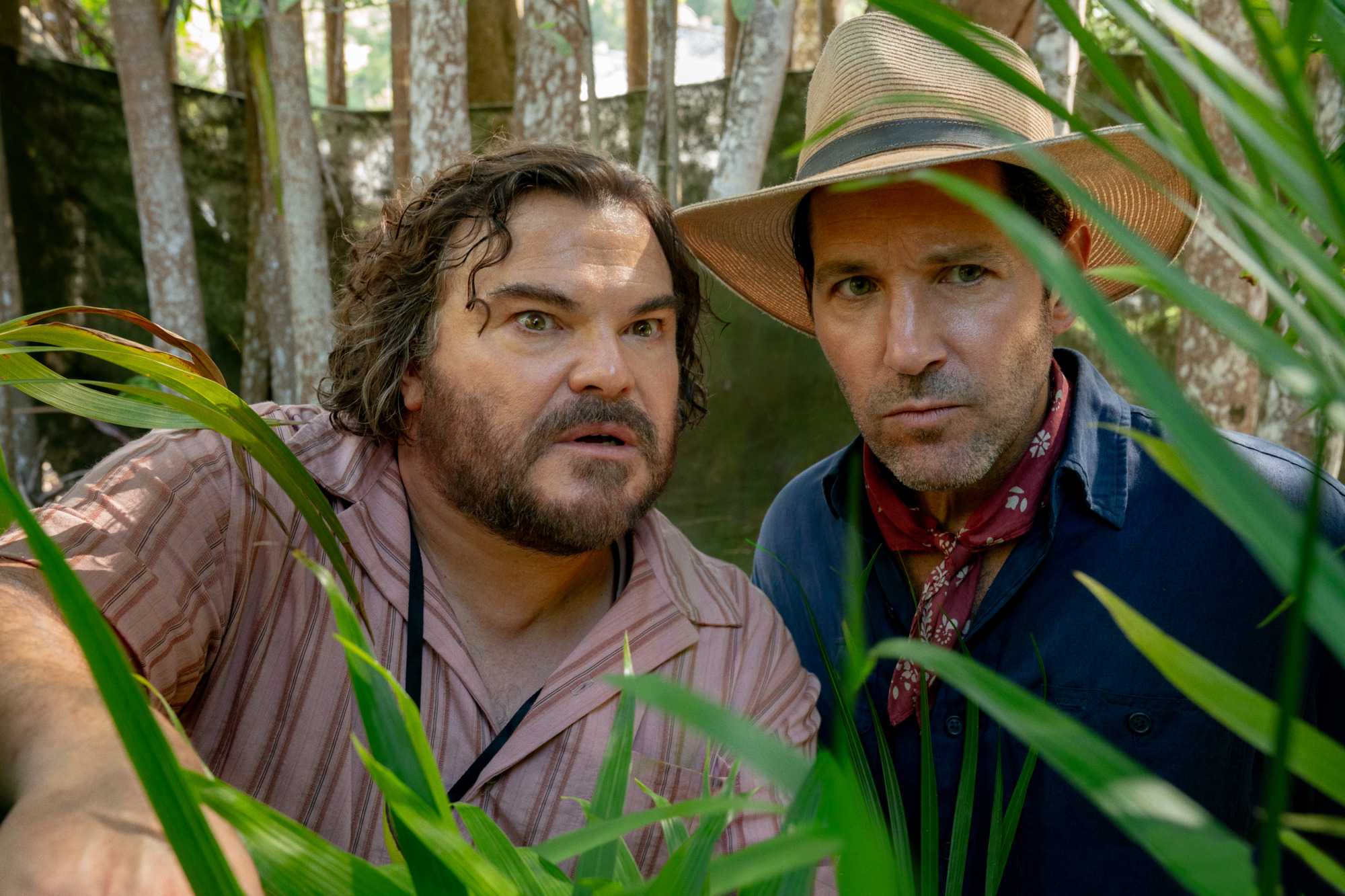
They want more than none (CREDIT: Matt Grace)
Starring: Jack Black, Paul Rudd, Thandiwe Newton, Steve Zahn, Daniela Melchior, Selton Mello, Ione Skye
Director: Tom Gormican
Running Time: 99 Minutes
Rating: December 25, 2025 (Theaters)
Release Date: PG-13 for Chomping and Squeezing and Some Drug Tripping
What’s It About?: Back in the ’90s, a group of friends were dreaming of a silver screen future. But flash-forward to the 2020s, and they’ve all settled into B-grade (maybe B+) lives. Doug (Jack Black) is a wedding videographer whose cinematic instincts keep getting rebuffed by his clients; Griff (Paul Rudd) is a bit part actor whose big break is nowhere in sight; Kenny (Steve Zahn) is working as Doug’s screwup assistant and trying to get sober; and Claire (Thandiwe Newton) is adrift in her foundering marriage. Upon reuniting, they decide in the thrill of the moment to produce an amateur remake of one of their favorite movies of all time: the notorious 1997 creature feature Anaconda. So then they actually fly down to the Amazon, rent a real live snake, and start shooting an actual goshdang moving picture. But it doesn’t take long for things to become pear-shaped, as the crew gets tightly wrapped within a misadventure that’s starting to resemble the original way more than they bargained for.
What Made an Impression?: How Not to Get Bit By an Excess of Cleverness: I haven’t been closely following the pre-production leading up to 2025’s Anaconda, but this definitely feels like a case of desperately trying to reboot intellectual property by any means possible. Settling on a goofy self-aware version could have been too cute by half, but with Jack Black and Paul Rudd in the leads, you’ve got the exact right stars to thread the needle. And honestly, Tom Gormican and Kevin Etten’s script gets the point across pretty well on its own. As for the rest of the main players, Steve Zahn is absolutely a reliable enough supporting player, while Thandiwe Newton may be a little less practiced in this arena, but she understands the assignment as well as everybody else.
Subheading About What Made an Impression: As an example of how Anaconda makes the meta approach work, characters say the word “themes” as a punch line all by itself multiple times… and it works each time! (It certainly helps that one of the horror themes du jour they’re poking fun at is intergenerational trauma.)
Making It Happen: If Anaconda wants us to teach a lesson alongside all the slithering chaos, there are two opposing pitfalls it could have easily fallen into: telling us that it’s much safer to just give up on our dreams, or stubbornly insisting that we never give up on our dreams no matter what our reality. It’s not cynical enough for the former, and it’s actually thoughtful enough to avoid the latter. The message (as sweetly underscored by Doug’s wife Malie, played by the always-sweet Ione Skye) isn’t that we should just drop all our responsibilities to reclaim our lost passions. But rather, if we don’t give ourselves a chance (or at least an indulgence) every once in a while, our souls will just slowly wither away. And if we’re lucky, our most supportive loved ones will be there to nudge us along (and hopefully serve as our emergency contacts in case anything goes wrong!).
Anaconda (2025) is Recommended If You Like: Scream but wish that it were a creature feature
Grade: 3 out of 5 Themes
 Jmunney's Blog