This Is a Movie Review: Miniaturization is Only the Start of ‘Downsizing’s’ Quest to Save the Human Species

Leave a comment

CREDIT: Paramount Pictures

This review was originally posted on News Cult in December 2017.

Starring: Matt Damon, Hong Chau, Christoph Waltz, Kristen Wiig, Udo Kier, Rolf Lassgård, Jason Sudeikis, Maribeth Monroe

Director: Alexander Payne

Running Time: 135 Minutes

Rating: R for Scientific Full-Frontal Nudity

Release Date: December 22, 2017

How do you live in such a way that ensures both the health of the planet and yourself? That’s really what Downsizing is asking. Its light sci-fi innovation about shrinking people is just a quirky way to get in there and explore this big conundrum. No single piece of entertainment is going to answer that question to everyone’s satisfaction, but Downsizing at least knows how to grab our attention, and Alexander Payne’s take is interesting enough in getting us to where he wants to go.

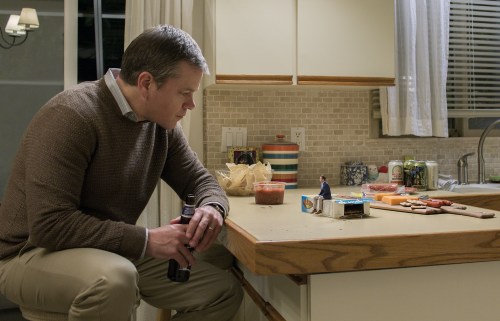
Fair warning, if it is not clear already, that Downsizing is not exactly the movie advertised in its trailer. Its whimsical tale of the land of the miniatures is present, but it is ultimately just an entry point to smuggle a thornier story into. After all, there is only so far you can go with the visual humor of size differential juxtaposition. There are a few bits wringing laughs out of giant (i.e., regular-sized) crackers or Jason Sudeikis sitting on a cutting board and drinking from a tiny wine glass, but those moments are there to just add quick bursts of establishing color. In fact, most of the shots in the miniature world do not feature any contrast to the normal-sized surroundings.

The miniaturization process has been invented to reduce the strain that humans have been putting on the environment, which makes clear sense: if you’re only 5 or 6 inches, you consume many fewer resources than if you’re 5 or 6 feet. And from a personal standpoint, it’s a no-brainer as well, as the exchange rate is tremendous, multiplying the real spending value of your money by about a hundredfold. So Paul Safranek (Matt Damon), bored by his office job and feeling glum at home, signs right up. But his wife Audrey (Kristen Wiig) pulls out of the procedure at the last minute, portending that everything may not be as rosy as promised.

Downsizing is primarily interested in digging into the questions raised by this near future world. The practical and scientific matters (like, do babies born to downsized adults grow up to be similarly small adults?) are not explained too thoroughly, but those matters are not ignored; you kind of have to roll with the film a bit and accept that those things have already been settled. Instead, the focus is on the knottier philosophical questions and the unexpected implications of downsizing. Why has this scientific breakthrough happened while people with chronic diseases still suffer? Should downsized people have the same rights as the natively-sized? Will governments use involuntary downsizing to tamp down undesirable segments of their populations?

The answer to that last question turns out to be a resounding yes, and we see its fallout in the form of Ngoc Lan Tran (Hong Chau, giving the most forcefully charming performance of the year), a Vietnamese dissident who has been downsized against her will and then smuggled into America in a TV box. As we and Paul are introduced to her life, Downsizing makes it clear that it believes that humans are wired to always separate themselves into separate classes, no matter what utopian urges drive us. As she and Paul become entwined, the underlying, most burning question of this film becomes clear: is it better to specifically attempt to save the entire species, or to focus on being a good person in your own particular space? The resolution that Payne offers is a little pat, but not dishonest. Miniaturized or not, utopian or practical, whatever your station in life, no matter how weird things get, you have to give yourself the room to be a good person.

Downsizing is Recommended If You Like: Being John Malkovich, Captain Fantastic, Robot & Frank

Grade: 3.5 out of 5 Utopias

This Is a Movie Review: ‘The Greatest Showman’ Promotes P.T. Barnum’s Brand of Happiness with Enough Surface-Level Charms

Leave a comment

CREDIT: Niko Tavernise/Twentieth Century Fox

This review was originally posted on News Cult in December 2017.

Starring: Hugh Jackman, Michelle Williams, Zac Efron, Rebecca Ferguson, Zendaya

Director: Michael Gracey

Running Time: 105 Minutes

Rating: PG for Unruly Crowds Violently Demanding a Good Show

Release Date: December 20, 2017

PT Barnum, the famed 19th Century circus purveyor, just wanted to make audiences happy. Sure, he trafficked in exploitation and probably a fair bit of flimflam, but his name lives on as one synonymous with showmanship. So why shouldn’t he have a foot-stomping big-screen musical celebrating his life and legacy? Thus, we have The Greatest Showman, with Hugh Jackman donning the top hat and cane, which zips along and finishes up in just over 100 minutes, thus avoiding the exhaustion that musicals are always at risk of. Its delights are mostly surface-level, but not to be dismissed, as it celebrates freaks and tolerance, while pooh-poohing stuffiness and losing sight of what’s important.

The songwriting, courtesy of La La Land and Dear Evan Hansen duo Benj Pasek and Justin Paul, is unrelentingly bombastic. It both fits the subject matter and forces the audience to surrender to the spectacle. The effect is initially chaotic. The opening number drops us right into the lavishness, starting off not so much in media res, but rather in finis res. Eventually it settles into a bearable rhythm, but do prepared for some dizzying and overstuffed cinematography.

There are a few classic conflicts to this story that have me a little distressed for how long they remain inadequately unaddressed. For example – and this is the crux – what really drives Barnum? Is he more concerned about putting on a great show or paying off a lifelong grudge by showing up his rich, pompous father-in-law? Do his loyalties lie more with the freaks who made his name or the opera singer (Rebecca Ferguson) who can win over high society for him? I mean, the answers he seeks should be super obvious, as all he has to do is look at and listen to his wife (Michelle Williams) and daughters and know that he has already won at life. And what of his business partner (Zac Efron) – when he will be willing to publicly display his love for the black trapeze artist (Zendaya) who has won his heart?

These issues are all eventually resolved to sufficient satisfaction, though they do skimp a bit on the hard work of rectification and forgiveness. But that speed works according to the logic of musicals. Emotions are so outsize that genuine reunions can be forged over the few minutes of a reprise. Ultimately, it works out well enough that it leaves me with a smile, and if it has you feeling the same, then The Greatest Showman has fulfilled P.T. Barnum’s hope for happiness.

The Greatest Showman is Recommended If You Like: Hugh Jackman singing more often than Zac Efron, Musicals at their most achingly earnest

Grade: 3 out of 5 Trapezes

This Is a Movie Review: ‘Happy End’ Finds Michael Haneke Still Stinging, But Less Focused

Leave a comment

CREDIT: Sony Pictures Classics

This review was originally posted on News Cult in December 2017.

Starring: Fantine Harduin, Matthieu Kassovitz, Isabelle Huppert, Jean-Louis Trintignant, Franz Rogowski, Laura Verlinden, Toby Jones

Director: Michael Haneke

Running Time: 107 Minutes

Rating: R for Secret Sexual Proclivities and Mental Illness Troubles

Release Date: December 22, 2017 (Limited)

Austrin auteur Michael Haneke does not make his viewing experiences easy for his audiences, and that is exactly the point. The world as he sees it is stiff and unforgiving, so why not make his films just as ramrod confrontational? His 1997 home invasion thriller Funny Games plays wildly with morality, also disorienting his audience with fourth-wall breaking tricks and film grammar deconstruction. His latest, Happy End, proves that he still has the same impish spirit and penchant for poking his nose at the middle class, but this time the effects are slighter and more scattered.

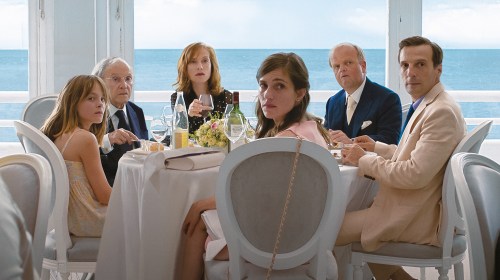
Happy End is essentially about emotional numbness and how suicidal tendencies run through one family. This is difficult material, but worth exploring. The trouble is, Haneke’s approach is so cold and detached here that it is difficult to understand what point he is making and what is really going on. The film begins with preteen Eve (Fantine Harduin) poisoning her mother with sedatives, and I am still trying to figure out if she was in fact trying to kill her, or if she had any clear motivation at all. She poisons herself in the same way later on, and she is so hard to read that I cannot tell whether or not this suicide attempt is due to actual depression. When she helps her frail, wheelchair-bound grandfather Georges (Jean-Louis Trintignant) commit suicide by drowning, it suggests that depression runs in the family. But Georges’ decision might be based more on the pain of old age.

Haneke has a knack for stretching the limits of both civility and cinema, and that is present in Happy End in ways that have stuck with me. A troubled son (Franz Rogowski) disturbs his mother’s (Isabelle Huppert) engagement by showing up with a group of uninvited refugees. Eve’s father (Matthieu Kassovitz) and his new wife (Laura Verlinden) are too distracted by the blah-ness of life to really know what is going on around them. Multiple shots consist of cell phone video footage or a computer message screen. But the overall approach is as numb as its characters and doesn’t add up to a coherent message.

Happy End is Recommended If You Like: The Discreet Charm of the Bourgeoisie, Funny Games, The Square, but like, the first draft version of all of those

Grade: 2.5 out of 5 Hamster Videos

This Is a Movie Review: Christian Bale Gives It His Grimmest in the Dour, Distressing ‘Hostiles’

Leave a comment

CREDIT: Lorey Sebastian/Yellow Hawk, Inc.

This review was originally posted on News Cult in December 2017.

Starring: Christian Bale, Rosamund Pike, Wes Studi, Rory Cochrane, Jesse Plemons, Adam Beach, Q’orianka Kilcher, Ben Foster, Bill Camp, Stephen Lang

Director: Scott Cooper

Running Time: 127 Minutes

Rating: R for Western Hostility

Release Date: December 22, 2017 (Limited)

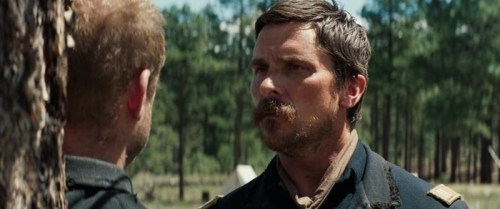
Christian Bale excels at playing men who are forced into carrying the weight of a profoundly demanding mission, whether by their own volition or due to leverage someone else holds over them. The Dark Knight’s “the hero Gotham deserves, but not the one it needs right now” is basically that status as personal credo. In the 1892-set Western Hostiles (Bale’s second collab with his Out of the Furnace director Scott Cooper), he plays a much more reluctant protagonist, an Army captain forced to deliver a Cheyenne chief and his family back to tribal lands, under threat of losing his pension if he refuses. He looks like he hasn’t bathed in years; that stink and his impressive mustache tangibly represent the brunt he is under.

Ergo, Captain Bale (Captain Joseph Blocker is his character name) is filled with a lot of hostility, and he is surrounded by a lot of low-grade or full-blown hostility, whether it be from his fellow soldiers, the suicidal widow (Rosamund Pike) whose family was recently slaughtered, his Cheyenne transports, or the natives that ambush them. We might have our winner for Most Accurate Title of the Year right here.

While nobody in this film is particularly heroic, I do worry that its portrayal of Native Americans hearkens back to a more racist tradition of Westerns. The opening scene presents a group of Comanches at their most savage. For no clear reason, they burn down a family’s home, skinning the father’s scalp and mercilessly killing him and his two young daughters. I am sure that some natives were actually this brutal in late-19th century frontier America, and I do not mean to say that I think that Hostiles is implying that all of them (or all of this particular tribe) were this awful. But the fact that this worst version is all we see of them and that this portrayal is presented so bluntly is concerning.

At least we can appreciate at the aesthetic pleasures (or anti-pleasures, really) with fewer moral qualms. If you ever wanted to see Ben Foster tied up in the cold, muddy rain at night, Hostiles is the film for you. Cooper’s designs for how icky and uninviting nature gets without modern amenities is thoroughly harsh. Lovingly so, even (at least the crafty attention to detail is loving). You’ll probably want to shower afterwards, in a cathartic sort of way, or if you’re a 19th century fetishist, you’ll run right out and find the closest available barren lands.

Hostiles is Recommended If You Like: John Wayne and Clint Eastwood at their most rugged

Grade: 2.5 out of 5 Hostiles

This Is a Movie Review: The Defense of Journalism Mounted by ‘The Post’ is Admirable and Often Rousing, But Almost Quaint

Leave a comment

CREDIT: Niko Tavernise/Twentieth Century Fox

This review was originally posted on News Cult in December 2017.

Starring: Tom Hanks, Meryl Streep, Bob Odenkirk, Tracy Letts, Bruce Greenwood, Matthew Rhys, David Cross, Alison Brie, Sarah Paulson, Bradley Whitford, Jesse Plemons, Carrie Coon, Zach Woods

Director: Steven Spielberg

Running Time: 115 Minutes

Rating: PG-13 for Deadline-Related Light Profanity

Release Date: December 22, 2017 (Limited)/Expands Nationwide January 12, 2018

The First Amendment of the United States Constitution guarantees some fundamental freedoms, but certain limits on those freedoms are understood. Hate speech is not protected by free speech, for example, and human sacrifice is not protected by freedom of religion. But there is not quite the same shorthand for limits on a free press. Publishing anything demonstrably libelous is certainly unacceptable, but when is it inappropriate to print what is in fact true and has hitherto been hidden? This question is at the heart of so many present-day media matters, so in comes Steven Spielberg’s The Post, which examines a time when this conflict was a momentous occasion and not an everyday one.

In 1971, The Washington Post finds itself in possession of the Pentagon Papers, a trove of documents detailing the United States’ involvement in Vietnam over the past few decades. Executive editor Ben Bradlee (Tom Hanks) and his team of journalists think the public deserves to know this information. The federal government says it would be a felony to print it. There is no mistaking where The Post (both the paper and the film) comes down on this conflict. This is not new information and thus serves no imminent threat to American troops in Vietnam. The only harm it can cause is embarrassment for former presidents. The actual conflict that The Post grapples is the attempted reconciliation between ethical and business concerns.

The constant struggle of press outlets, even institutions as big as The Washington Post, is figuring out how to make money by delivering the truth. That struggle is writ large when making a public offering, which is what we’ve got here. Do you make a stronger case to your investors by laying low or by making a ruckus in the course of standing up for your principals? As publisher Katharine Graham, Meryl Streep is all contorted faces and knotted anxiety as she takes the lead to make the decision of printing the Papers or not. The drama is wrung in screwball fashion, with Bradlee appealing to her over the phone at the last a minute, as a gaggle of other interested parties hop on the line.

For as grand as The Post’s ambitions are, it is strange to consider that most of it takes place over the course of just one day. It all then feels almost inconsequential, but of course, certain individual moments can change the course of everything. When that is the case, there has probably been months, or even years, of work behind the scenes setting up those moments, as conveyed by an early scene of Daniel Ellsberg (Matthew Rhys) gathering and absconding with the Papers. Also delivering the dynamic agita is Bob Odenkirk as Ben Bagdikian, an old buddy of Ellsberg’s who tracks down the delivery. Odenkirk’s comedic background is an asset – he moves about with a paranoid shuffle that is somewhere between absolutely necessary and hilariously unnecessary. Also rousing is a typesetting montage following the decision to publish the Papers. This mechanical peek at how things are done is a valuable reminder of underlying structure in much the same way that Michael Mann’s Blackhat spent so much visual space on the wires that undergird the Internet.

Ultimately, while The Post’s advocacy for journalism is timeless, its story feels small-scale, a prelude to the much bigger fallout of Watergate and all the modern-day scandals that use -gate in their nomenclature. The Richard Nixon of The Post is only ever seen from behind and through a window. His fight against the press was fought in the shadows, but today his same tactics are being employed right out in the open. The Post’s lessons are ones I hope everyone takes to heart, but I wonder (despair?) how useful they are when the sorts of secrets exposed by the Pentagon Papers are now nonchalantly tweeted every day.

The Post is Recommended If You Like: All the President’s Men, Spotlight, a Free Press

Grade: 3.5 out of 5 Sealed Documents

This Is a Movie Review: Ferdinand is Not Your Typical Bull, But ‘Ferdinand’ is Your Typical CG-Animated Kids Movie

Leave a comment

CREDIT: Twentieth Century Fox

This review was originally posted on News Cult in December 2017.

Starring: John Cena, Kate McKinnon, David Tennant, Bobby Cannavale, Anthony Anderson, Peyton Manning, Jerrod Carmichael, Gina Rodriguez, Gabriel Iglesias, Miguel Ángel Silvestre, Flula Borg, Boris Kodjoe, Sally Phillips, Lily Day, Juanes, Jeremy Sisto

Director: Carlos Saldanha

Running Time: 107 Minutes

Rating: PG for Destruction Wrought by a Bull Who Refuses to Accept How Big He Is

Release Date: December 15, 2017

Based on Robert Lawson’s 1936 children’s book The Story of Ferdinand, the Blue Sky animated film Ferdinand is all about one of the most massive bulls in all of Spain. He is a beyond-perfect physical specimen for bullfighting, and in this country it goes without saying that calves spend their youths obsessing about the day they will get to face off against the matadors. But Ferdinand does not have the same pugnacious instinct as his peers. He would much rather spend his days on the farm, sniffing flowers, scarfing down carrots, and just hanging out with the preteen girl who dotes on him. But in a world that sees him as a beast, he must find a way to reconcile his hulking physicality with who he is on the inside.

Ferdinand the film, however, does not stick out from the pack as much as its titular character does. Its message of staying true to yourself is de rigueur in kids’ fare, and the CG animation, while certainly professional, does not pull off any truly lasting images. Thus, it lives and dies on the strength of its voice cast and the laugh-generating power of its gags. John Cena’s giant teddy bear persona is the correct vibe for Ferdinand, while Kate McKinnon is just right as the goat sidekick she’s versatile enough that she probably could have voiced any or all of the characters if the Ferdinand casting crew had been in the mood for that). While everyone else is at least adequate, the only significant standout is David Tennant as a heavily accented Scottish bull. Regarding the chuckles, there is some amusement to be had, as when Ferdinand sucks a caterpillar up his nose and sneezes it out as a butterfly or when the mostly blind owner of a china shop mistakes his tail for a feather duster.

Ferdinand also touches upon the fate of the bulls who are not deemed worthy of the bullfighting ring. I’m talking about the chop shop. This raises the question: are all films about talking animals secretly vegetarian propaganda? And if so, is that always, sometimes, or never intentional? A frequent, nigh-unavoidable trope of this genre is the slaughter that is just around the corner from failure or carelessness. When your lead character is an animal whose meat is favored by carnivores and omnivores, it is only natural to draw sympathy out of the threat of being eaten. Efforts to remain kid-friendly often result in daring escapes from pulverization as moments of triumph, and that is very much the case here. I do not mean to make a moral judgment one way or the other, but instead offer a philosophical pondering: are vegetarians drawn into working in the talking animal film business, or does the talking animal film business make its workers vegetarian?

Ferdinand is Recommended If You Like: Every Talking Animal Movie Ever

Grade: 2.5 out of 5 “Macarena”-Playing Flowerpots

This Is a Movie Review: ‘I, Tonya,’ You, Enthralled Audience

1 Comment

CREDIT: Neon

This review was originally posted on News Cult in December 2017.

Starring: Margot Robbie, Allison Janney, Sebastian Stan, Julianne Nicholson, Paul Walter Hauser, Bobby Canavale

Director: Craig Gillespie

Running Time: 121 Minutes

Rating: R for Rinkside Potty Mouth and Redneck-Style Violence

Release Date: December 8, 2017 (Limited)

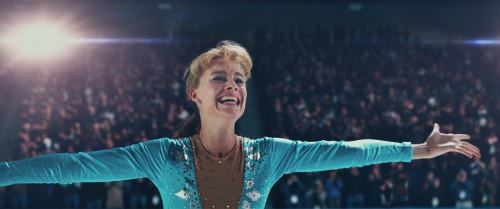
Every story needs a villain, but that’s not always how life works. Even when somebody gets clubbed in the knee leading up to the Olympics, separating the good guys from the bad guys is not always so clear-cut. This is all to say, Tonya Harding has lived a very colorful life, and some pretty illuminating details often get left out in the telling, so she deserves for us to hear her out. It would help, though, if all the parties involved could actually agree on what happened. Nevertheless, I, Tonya, the spirited biopic pieced together by director Craig Gillespie is a record of fantastically entertaining recent tabloid history that is can’t-look-away tawdry but also fair-minded and humanizing.

Harding is one of the all-time greats in American figure skating, but her reputation has forever been marked by the attack on her rival Nancy Kerrigan in the lead-up to the 1994 Olympics. In the popular imagination (and in a gleefully sadistic fantasy scene in the film), Harding was the assailant herself, but it was actually some guy hired by her ex-husband and her bodyguard, and it is questionable how much she ever knew about it in the first place. All of I, Tonya is building up to “The Incident,” but it takes up a relatively small portion of the runtime. After all, Harding’s life was enough of a whirlwind before then for her to already be the wild child in the public eye.

Betting that his big hook is conflicting testimonies and fluffing of image, Gillespie frames the film as a mockumentary consisting of interviews with the principal actors in character, disputing the accounts of the others as they see fit. This is a recipe for raucous storytelling, as every character is oozing with personality to spare. Margot Robbie is dangerously feisty and undeniably winning as she absolutely gives Tonya a chance to redeem herself and just let her voice be heard. Her mother LaVona (Allison Janney), accompanied with a parrot on her shoulder (credited as “LaVona’s Sixth Husband”), is a piece of work, egging her daughter on with profanity-laced tirades and motivational negging. Ex-husband Jeff Gillooly (Sebastian Stan) has mellowed a bit in the present day, but his fiery, mustachioed presence of yore gets a lot of mileage. And an unnamed producer (Bobby Canavale) of the ’90s tabloid news show Hard Copy fills in the blanks with maximum slickness. Not interviewed, but looming large, is Paul Walter Hauser as Shawn Eckhardt, Jeff’s close friend and Tonya’s supposed bodyguard, who earns the biggest laughs of the film, occasionally by just repeating verbatim some of Eckhardt’s most ridiculous claims (like how he is an expert in counterterrorism).

According to Tonya’s telling, there is one big constant: nothing is ever her fault. And certainly she has been a major victim, suffering at the hands of an abusive mother, an abusive husband, and a father who left her. Plus, there is the figure skating establishment that never accepted her, that would never hold up a white trash girl who performed to ZZ Top as their crown jewel. But for all the ways she has been wronged, it is so clear that she needs to shoulder some responsibility herself (as does anyone who wants to have peace). Yes, her ex beat her up, but she also pulled a shotgun on him (though she disputes that part). And sure, the stuffy figure skating establishment probably never gave her a fair chance, but she was intimidating and probably scared a few judges away from reasonability. Ultimately, Tonya implicates everyone watching in creating the monster she has come to be. To which I say: I don’t think you’re a monster! If Margot Robbie has portrayed you accurately, then I like you, Tonya! Chances are I won’t be the only one, as we all get to see the human within this crazy delicious mess.

I, Tonya is Recommended If You Like: The People v. OJ Simpson: American Crime Story, Tyson, Thelma & Louise

Grade: 4.5 out of 5 Triple Axels

This Is a Movie Review: ‘The Disaster Artist’ is James Franco is Tommy Wiseau is the Star Inside Us All

Leave a comment

CREDIT: Justina Mintz/A24

This review was originally posted on News Cult in November 2017.

Starring: Dave Franco, James Franco, Seth Rogen, Alison Brie, Ari Graynor, Josh Hutcherson, Jacki Weaver, Zac Efron, Megan Mullally, Paul Scheer, Jason Mantzoukas, Hannibal Buress, Nathan Fielder, June Diane Raphael, Andrew Santino, Charlyne Yi, Melanie Griffith, Sharon Stone, Bob Odenkirk, Judd Apatow

Director: James Franco

Running Time: 105 Minutes

Rating: R for an Auteur Asshole

Release Date: December 1, 2017 (Limited)/Expands Nationwide December 8, 2017

When I watched Shane Carruth’s 2013 film Upstream Color – about a man and a woman who ingest a larva with the power to drastically affect the human mind – I was excited by the conscious-altering possibilities. But I was ultimately disappointed by the impenetrable narrative. Upstream does have its fans, but I thought an opportunity was missed by presenting an abstract subject with just-as-abstract storytelling. But now we have a film that is more along the lines of what I thought Upstream Color was going to be, and that film is The Disaster Artist, which imposes a typical biopic structure onto one of the strangest individuals of all time. There is the classic rise-fall-rise and a soundtrack that raises the roof with beats that were first hits about a decade before the events of the film, but all this normality only illuminates the unfathomability that is Tommy Wiseau.

Wiseau has achieved a very unique sort of fame as the writer-director-producer-star of the 2003 independent melodrama The Room. It has been called by some the worst movie of all time, but that descriptor is way off-base. A better take that others have offered is “the greatest bad movie of all time,” but that is still not quite right. “A surreal masterpiece” is the moniker that I prefer. For The Disaster Artist to be successful, it does not need to be as surreal as The Room, as The Room already exists. Although perhaps a perfectly valid option would have been to simply remake The Room shot-for-shot with a new cast, which The Disaster Artist does in part in a delightful post-credits segment featuring recreations of classic scenes from The Room presented side-by-side along the originals, displaying how the new versions are accurate to every inch and millisecond.

James Franco directs and stars as Wiseau, and this proves to be the perfect outlet for his incorrigible proclivities. Wiseau is infamously dodgy about his personal background, but based on his accent, it is clear enough that he is from Eastern Europe, though he claims to be from New Orleans. But it is perhaps most accurate to think of him as a vampire caveman alien, as his odd syntax, singular worldview, and inexplicable behavior go beyond simply being lost in translation. Nobody but Tommy could be Tommy, but Franco comes as close as possible. And this is not the sort of lark that much of his career has come off as. Instead, it is in service of a strangely uplifting story about never giving up on your dreams.

Alongside Wiseau is his Room co-star/friend-despite-all-obstacles Greg Sestero (who co-wrote the book of the same name that The Disaster Artist is based on), played by James’ younger brother Dave. The younger Franco is a little more boyish than the deeper-voiced Sestero, but they both have an all-American squeaky-clean handsomeness befitting the moniker “Babyface,” Tommy’s nickname for Greg. The Franco brothers have significantly different faces than Sestero and Wiseau, though their looks are well approximated by solid hair and makeup jobs. This is not an exact encapsulation of the original Wiseau-Sestero dynamic (how could it be?), but there is some weird magic in the Franco pairing that works as an avatar to this weird creative pairing.

I read The Disaster Artist when it was first published in 2013. I have not re-read it since, so my memory of it is not perfectly fresh, but I remember enough to know that there is some streamlining at play here. But the liberties that were taken serve to bolster the film’s thesis that has been borne out by the directions that Wiseau and Sestero’s lives have taken since The Room has become a cult classic. In one scene, Tommy approaches a producer (Judd Apatow) at a restaurant, who assures Tommy that he will never find success in Hollywood in a million years. “But after that?” Tommy earnestly asks. It has not literally taken him that long to achieve his stardom, but “more than one million years later” might be the best figurative way to explain how long it took him to realize his dreams, and that boundlessness beyond normal temporality is the engine that The Disaster Artist runs on.

The obvious antecedent to this film is Ed Wood, but that earlier biopic was released more than a decade after the death of its titular maker of the worst films of all time. Tommy’s story is not over, and now it is inextricably tied up with the most fervent fans of The Room, many of whom populate the cast of The Disaster Artist. There are several moments in this making-of in which classic lines from The Room are uttered in Tommy’s personal life that could come off as fan service but avoid that pitfall because of how nakedly autobiographical The Room is. James Franco and his crew of shockingly eager collaborators have invited us all to take place in this autobiography, and the result is intoxicating.

The Disaster Artist is Recommended If You Like: The Room of course, Ed Wood, James and Dave Franco’s old Funny or Die videos, How Did This Get Made?

Grade: 4.5 out of 5 Doggies

This Is a Movie Review: ‘Wonder Wheel’? More Like ‘Woody Allen Spinning His Wheels’

Leave a comment

CREDIT: Jessica Miglio/Amazon Studios

This review was originally posted on News Cult in November 2017.

Starring: Kate Winslet, Justin Timberlake, Juno Temple, Jim Belushi

Director: Woody Allen

Running Time: 101 Minutes

Rating: PG-13 for Angry Scotch Drinking and Off-Screen Whack Jobs

Release Date: December 1, 2017 (Limited)

Knee-jerk rejection of voiceover narration because it explains things too straightforwardly earns my ire as one of the worst habits in criticism. But in fact there are times when some filmmakers use the technique as crutch, and perhaps none as frequently as Woody Allen. At least in the case of his latest, Wonder Wheel, he attempts a more poetic form of narration, or so he would like us to believe. Scratch that. It’s not just poetic. It’s also dramatic. You see, because the narrator, Mickey Rubin (Justin Timberlake), isn’t just a lifeguard, he’s also a poet and a dramatist. One would think that there is enough drama inherent in a film that its narrator would not need to spell it out so directly, but Wonder Wheel puts that theory to the test.

Mickey would like you to know that he is also a player in the story that he is telling. Perhaps his presence is meant to spice up this tale with extra passion, but that does not appear to be the case in any discernible fashion. The setting is 1950s Coney Island, and most of the action is set in or around the beach or boardwalk. As far as I can tell, the endless amusement of this area is irrelevant to the people who live there. Mickey is having an affair with Ginny (Kate Winslet), a frustrated waitress married to Humpty (Jim Belushi), who is a decent protector but also a bit of a brute. The most interesting thing about him is his name – is it a nickname? Is it short for something? Could it actually be his given name? Meanwhile, Humpty’s adult daughter Carolina (Juno Temple) shows up unexpectedly, after having run off and married a gangster years earlier. She tries to lay low and get through night school, but naturally some of her husband’s associates come looking for her because she knows too much.

Ultimately, nobody gets a happy ending, which is hardly surprising. But it would have been nice if there had been some sense, any sense, of finality. One of the worst possible outcomes happens, and then Wonder Wheel just stops. Then we just move on out the theater and get on with our lives, with nary a memorable impression to show for it. Maybe the stagy, stilted, sporadically compelling acting style will stick with me a bit, but otherwise, it must be said: Woody, you don’t have to stick to your one-film-per-year routine. It is okay to wait until you find inspiration.

Wonder Wheel is Recommended If You Like: The Jim Belushi-aissance, Stage-style acting on film, Narration that is too wispy to even be pretentious

Grade: 2 out of 5 Humptys

This Is a Movie Review: With ‘The Shape of Water,’ Guillermo del Toro Re-Molds the Classic Creature Feature According to His Vision

Leave a comment

CREDIT: Fox Searchlight Pictures

This review was originally posted on News Cult in November 2017.

Starring: Sally Hawkins, Michael Shannon, Richard Jenkins, Doug Jones, Octavia Spencer, Michael Stuhlbarg, David Hewlett, Nick Searcy

Director: Guillermo del Toro

Running Time: 123 Minutes

Rating: R for Penetration From a Monster, Both of the Variety That Causes Massive Bleeding and Frustrated Profanity and the Kind That Results in Ecstasy

Release Date: December 1, 2017 (Limited)

If you are a fan of ’50s and ’60s creature features but wish that they concluded with the heroine and the monster consummating their love, then it should be not surprising to discover that you have a kindred spirit in Guillermo del Toro. With The Shape of Water, there is now proof of that truism in feature-length form.

Elisa Esposito (Sally Hawkins) is a mute woman working as a custodian at a government research facility in 1962 Baltimore when an amphibious humanoid referred to as “The Asset” (Doug Jones and a bunch of movie magic) is brought in from South America. With a condition that renders her an eternal outsider, it only makes thematic sense that Elisa would be drawn to The Asset. Now, my natural inclination would be to push against such a longstanding trope, but when one half of a coupling is a fantastical being, symbolic meanings are hard to avoid. And in this particular case, Elisa and The Asset’s attraction does appear to go deeper than their shared general abuse at the hands of society. Words cannot capture it, but it is undeniable that they see the world in compatible ways.

There are plenty of other sci-fi B-movie hallmarks blown out to full intensity to provide color around the monster shagging. As a colonel in charge of The Asset, Michael Shannon runs around barking orders at everybody, and I’m not sure if that’s more of a B-movie trademark or a Michael Shannon trademark, or just the perfect marriage of the two. As the lead scientist with a secret identity who wants to preserve The Asset, Michael Stuhlbarg gets a two-for-one deal of nuclear era tropes. Octavia Spencer, as another custodian and Elisa’s closest friend at work, does not necessarily fit into the mold of a classic creature feature character, but her presence is invaluable. And being that this is mid-century America, Richard Jenkins plays the tragically closeted artist; his story is saddest when he is no longer able to have any of his beloved diner-fresh slices of pie.

But this is Elisa and The Asset’s story through and through. Everything else is important, but in the grand scheme of things, they are all just in service of the lovingly shot, artfully composed, and almost too indulgent (but not quite) sex scenes. Let’s just say that Sally Hawkins is not shy. But hey, when you find love that is this real and unbridled, you owe it to yourself, like Elisa, to be rid of all timidity.

The Shape of Water is Recommended If You Like: Creature From the Black Lagoon but wish it had been more explicitly romantic

Grade: 4 out of 5 Slices of Key Lime Pie

Older Entries Newer Entries