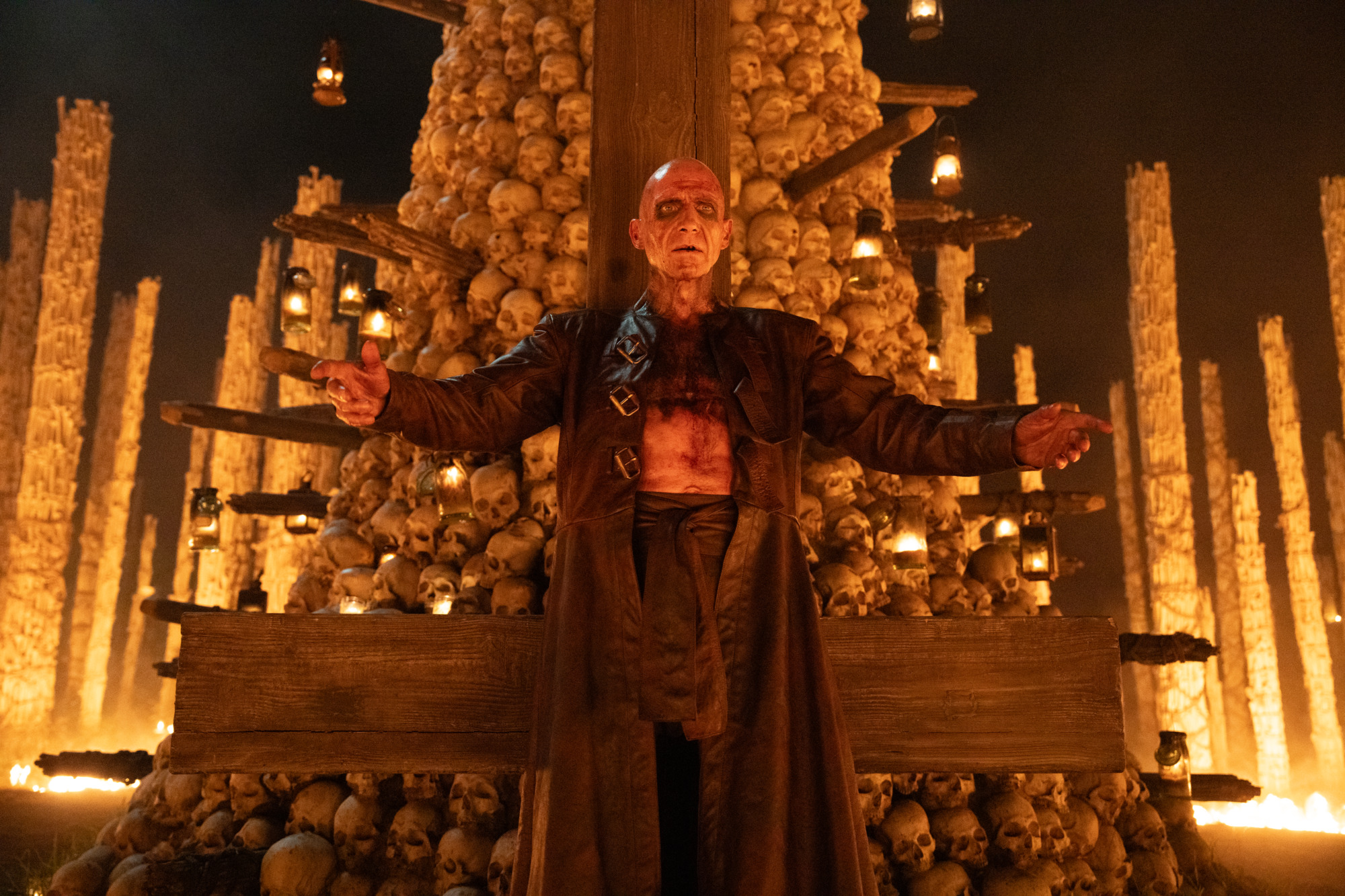
Come on, send him your bones! (CREDIT: Miya Mizuno/Columbia Pictures)
Starring: Ralph Fiennes, Jack O’Connell, Alfie Williams, Erin Kellyman, Chi Lewis-Parry, Emma Laird, Louis Ashbourne Serkis, Maura Bird, Ghazi Al Ruffai, Sam Locke
Director: Nia DaCosta
Running Time: 109 Minutes
Rating: R for Big Ol’ Zombie Nudity Again, Plus Some More Graphic Zombie Violence, But Even More Disturbing Uninfected Human-on-Human Violence
Release Date: January 16, 2026 (Theaters)
What’s It About?: Last we saw of young lad Spike (Alfie Williams) in post-Rage Virus Britain, his mom had died of cancer, while he opted to fend for himself as his dad headed back home. Now he finds himself in the clutches of the Jimmys, a cultish group of scavengers who sport blond wigs in the style of disgraced English DJ Jimmy Savile. Under the leadership of the charismatically cruel Sir Lord Jimmy Crystal (Jack O’Connell), they psychopathically enforce their will over anyone and everyone. It’s a dangerous conscription, though it offers pretty solid protection against the zombified humans infected by the Rage Virus. Speaking of the infected, the most fearsome in the last chapter was the hulking specimen known as Samson (Chi Lewis-Parry), who finds himself forming an unlikely companionship with Dr. Ian Kelson (Ralph Fiennes), who may just have developed some reliable treatments all these years later.
What Made an Impression?: I Think I’m Going to Ralph: 28 Years Later featured Ralph Fiennes being his usually terrific self, but it’s The Bone Temple that really lets him explore entirely new dimensions. He brings tenderness to an unlikely buddy comedy, cavorts with the forces of evil, and delivers a choreographed dance to Iron Maiden. It’s as full and varied a performance as you could possibly ask for.
Consistency is Key: It can be tricky shooting multiple sequels together and releasing them within a year of each other. Making matters even trickier is when you switch up the director, with Nia DaCosta taking over the reins from Danny Boyle this time around. But no need to worry, as the same sensibility manages to sufficiently survive. (I’m sure it helped that Alex Garland stayed on as writer.) Furthermore, DaCosta takes firm ownership over this chapter, and it might be my favorite feature from her yet.
The Man Behind the Wig: At times, the Jimmys are just unbearably ultraviolent, and it doesn’t feel like there’s much of a point to that beyond mere indulgence. Plus, O’Connell is all too willing to be as depraved as possible. Fortunately, we eventually get a peek behind the mask to discover how he became this menace in a way that rounds out the full storytelling picture without being overly pat. If things start out a little too mean for your tastes, just be patient, and everything will eventually be in its right place.
And One More Thing!: If things go well enough at the box office, there will be (at least) one more chapter in the Rage Virus saga, and The Bone Temple‘s final coda tantalizingly teases what that will be. You don’t need to stick around until after the credits to see it, but nevertheless make sure you pay attention all the way to the end.
28 Years Later: The Bone Temple is Recommended If You: Like being in the middle of a storytelling circle and winding around the corner with the end in sight
Grade: 3.75 out of 5 Jimmys



 Jmunney's Blog