Viggo Mortensen Confronts Abusive Parenting in His Directorial Debut ‘Falling’

Leave a comment

Falling (CREDIT: Brendan Adam-Zwelling/Quiver Distribution)

Starring: Viggo Mortensen, Lance Henriksen, Sverrir Gudnason, Laura Linney, Terry Chen, Hannah Gross, Gabby Velis

Director: Viggo Mortensen

Running Time: 112 Minutes

Rating: R for Just About Every Ethnic and Gendered Slur You Can Think Of (and Brief Nudity)

Release Date: February 5, 2021 (Theaters and On Demand)

I’m generally not terribly excited to watch movies about emotionally abusive parents, whereas I am generally excited to watch the directorial debuts of actors whose work I consistently enjoy. So I find myself internally conflicted at the prospect of Falling, in which Viggo Mortensen directs himself as John Peterson, a family man attempting to deal with his profoundly irascible father Willis (Lance Henriksen). Surprisingly enough, while watching I didn’t find myself entirely anxiety-ridden by all the familial strife on display. Perhaps my mood just happened to be in enough of a state of equilibrium to handle it, and quite possibly I wouldn’t have reacted as keenly on a more stressful day. Or maybe it had something to do with the variety of ways (frustration, gritted teeth, amusement, insults, etc.) that Willis’ kids and grandkids employ to respond to his provocations and declining mental health.

If there is one major takeaway above all others to Falling, it is the Power of Patience. John appears to be genuinely happy that his dad is spending the weekend at his house with his husband Eric (Terry Chen) and daughter Monica (Gabby Velis), but we know that his feelings can’t possibly be all (or even mostly) positive, as childhood flashbacks present a father-son relationship in which Willis browbeats his son over every single major or minor decision that he makes. And yet for all the decades of turmoil he’s endured, John is still conscientious enough to honor his own internal sense of familial loyalty. I wouldn’t judge him if he were to instead decide that the healthiest choice would be to cut his father off, but I’m glad that he tries to keep the peace with him long enough so that we have a family dinner scene in which John’s sister (Laura Linney) and her kids show up so that everyone can have a chance to declare what they really think about Grandpa.

The final act of Falling is a little more slow going, as it departs from John’s place on the West Coast back to Willis’ farm in Upstate New York. John is helping to put the property on the market, but Willis is deeply connected to his horses and intent on spending more time with them. At least that’s what I think is going on. Frankly, the story becomes significantly less dynamic when John and Willis are away from the rest of the extended Peterson clan, and I must admit that my sense of connection to what I was watching started to drift during the farm scenes. But overall, this is still a fairly compelling piece about how intergenerational trauma has a long tail but also about how it can be digested and rejected for a different approach.

Falling is Recommended If You Like: Angsty family dinner scenes, White horses

Grade: 2.5 out of 5 Pathological Insults

The Hysterical ‘Bliss’ is Here to Warn Us That Reality Isn’t Real, and I Cannot Look Away

1 Comment

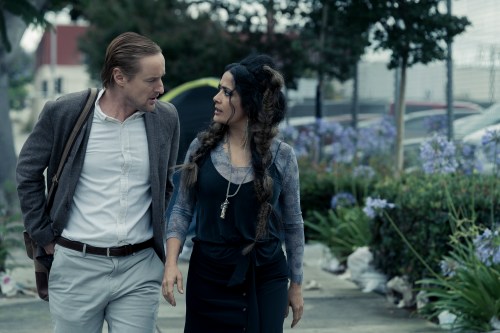
Bliss (CREDIT: Hilary Bronwyn Gayle/Amazon Studios)

Starring: Owen Wilson, Salma Hayek, Nesta Cooper, Bill Nye

Director: Mike Cahill

Running Time: 103 Minutes

Rating: R for Some Very Kooky Violence, Profanity, and Sexuality

Release Date: February 5, 2021 (Amazon Prime Video)

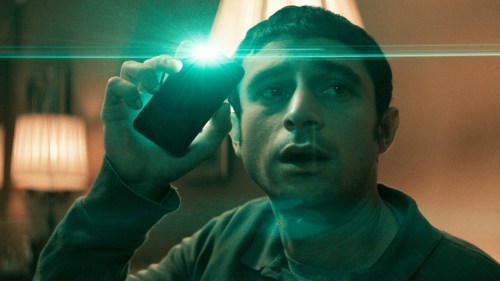
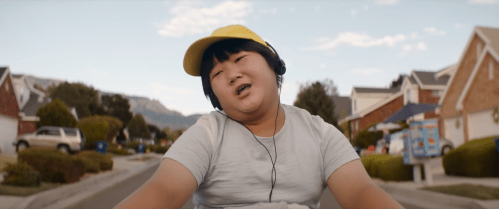
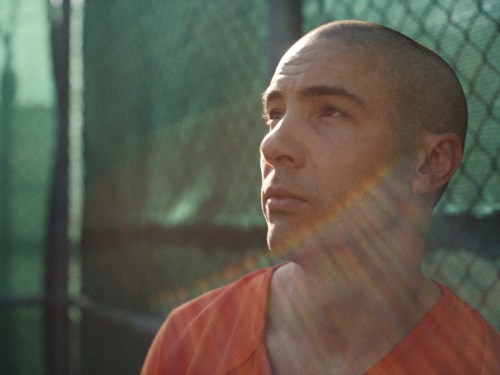
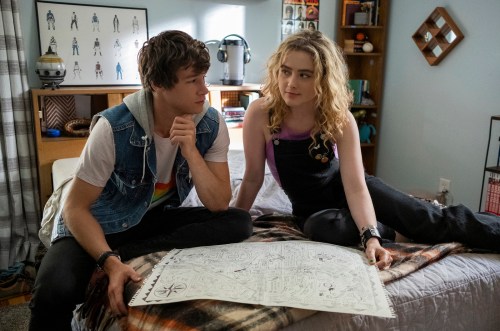
Man, how are we so lucky as to get a movie like Bliss? It stars a totally wigged-out Salma Hayek trying to convince Owen Wilson that they’re living in a simulation. And quite frankly, the evidence is immediately pretty convincing, as they seem to be the only people in the world with telekinetic powers, which manifests by them popping their hands out with authority, Bruce Almighty-style. Seriously, there’s an entire scene in which they go to a roller rink and make everyone fall on their asses just for the hell of it. And on top of all that, Bill Nye has a pretty significant part, not as himself, but as a very Bill Nye-type who keeps strong-arming Wilson with some important information. And for all you hardcore perverted philosophy geeks, Slavoj Žižek shows up just long enough for anyone who recognizes him to go, “Oh snap! Slavoj’s in this, too?!”

The only other film directed by Mike Cahill that I’ve seen besides Bliss was 2011’s similarly mindbendy-wendy Another Earth, which I found infuriatingly pretentious. Honestly, Bliss isn’t necessarily any less pretentious in its eagerness to dive into a trendy sci-fi premise in its own vaguely intellectual way. So what’s the difference? Has my cinematic tolerance level just increased significantly in the past ten years? Perhaps, but there’s also the fact that Hayek and Wilson are such inspired left-field casting choices. She is always indefatigably dynamic; give her something to rant about, and you’re not going to be able to keep your eyes off her. As for Wilson, I don’t think he ever utters his signature “Wow,” but that low-key sense of being perpetually stunned is indeed the vibe he gives off the whole time. This is a “two-very-different-tastes-that-go-great-together” situation that we never could have expected would work out as beautifully as it did.

Overall, though, I’m not sure if the ideas of Bliss really come together into anything substantial, and that’s partly because I’m not entirely sure what Cahill is trying to say.  But – and this is important – I don’t particularly care. This is an incorrigible movie, and I’m such a sucker for that sort of energy. While watching, I said to myself, “What is going on?!” a healthy number of times, and I must admit that is a feeling I enjoy experiencing. It’s too often in short supply, but it most certainly is not when Salma Hayek and Owen Wilson are questioning reality, creating their own realities, buying into fake realities, and just generally enjoying free rein to do whatever the hell they want to do.

Bliss is Recommended If You Like: The Matrix but wish it had less kung fu and more makeshift homes on the side of a highway, The “Downtime” episode of the recent Twilight Zone revival, The parts of the X-Men movies where they wave their hands around

Grade: 3.5 out of 5 Blue Crystals

‘Two of Us’ Offers a French Spin on a Late-in-Life Queer Romance

Leave a comment

Two of Us (CREDIT: Magnolia Pictures)

Starring: Barbara Sukowa, Martine Chevallier, Léa Drucker

Director: Filippo Meneghetti

Running Time: 95 Minutes

Rating: Unrated (I’d give it a PG-13 – it’s not too explicit)

Release Date: February 5, 2021 (Theaters and On Demand)

Sometimes I like to offer my skewed take on movie reviews by asking, “Does the title of this movie have something to do with this random connection I’m making?” So with that in mind, does the contemporary French romance Two of Us have anything to do with that scene from the 1932 horror flick Freaks in which a bunch of characters chant “One of us! One of us!”? It almost certainly doesn’t. The French title, after all, is Deux, which translates to just “Two” without the “of us.” And I can’t say that I detect any references to circus folk, literal or metaphorical, in Two of Us. But there may be one notable similarity, insofar as Two of Us is also concerned with the outcasts of society.

Early on in Two of Us, a woman named Nina (Barbara Sukowa) is getting annoyed at her neighbor Madeleine (Martine Chevallier) as they attempt to sell Madeleine’s home. So Nina blows up and shouts at the realtor, “Mr. Bremond, do you have a problem with old dykes?” Mr. Bremond is unsure how to answer, but it’s made perfectly clear that no, in fact, he has no problem with lesbians of a certain age (and if he did, he would probably be too afraid of Nina to say so). The actual problem is with Madeleine, who doesn’t exactly want to tell her family about Nina, who’s been her secret lover for decades. What’s notable about Two of Us compared to most other queer cinematic romances I’ve seen is that the society we see doesn’t much care that there’s a same-sex couple in their midst. This is very much an intra-family conflict, nothing more.

But within that straightforward setup, Two of Us offers surprises. Because of Madeleine’s health struggles, the narrative isn’t so simple as “secret romance” or “one lover tries to convince partner to be honest to family.” Madeleine suffers a stroke, rendering her unable to speak for herself, which has the oddly slapstick-y effect of making the subterfuge somewhat reminiscent of a heist caper, while also throwing in elements of blackmail amidst the emotional land mines. In life, plenty of people really have to fight to be allowed to love the people they love. Sometimes that fight is silly, sometimes it’s infuriating, sometimes it’s profoundly unpredictable, and sometimes it’s quite touching, and maybe most of the time, it’s a mix of all of the above. That’s certainly the case in Two of Us.

Two of Us is Recommended If You Like: Senior cinematic romances,

Grade: 3.5 out of 5 Old Dykes

Are We Living in a Simulation? That’s What ‘A Glitch in the Matrix’ is Here to Find Out!

3 Comments

A Glitch in the Matrix (CREDIT: Magnolia Pictures)

Starring: Proponents of Simulation Theory, including Philip K. Dick, Elon Musk, and even Plato in his own way

Director: Rodney Ascher

Running Time: 108 Minutes

Rating: Unrated (I’d Give it a PG, or Maybe PG-13 for Some Heavy Moments)

Release Date: February 5, 2021 (Theaters and On Demand)

Computers are everywhere nowadays! There’s computers on our desks, computers in our laps, computers in our hands, computers in our pockets, computers in our TVs, computers in our cars, and even (I’m assuming) computers in our toilets. Are there also computers in our heads? Or to phrase it another way: are our brains computers? Or are we just inclined to think that way because computers are the dominant technology of our era? Early on in A Glitch in the Matrix, directed by Rodney Ascher, one interview subject muses how humans tend to conceptualize their bodies according to models analogous to the innovations of the day. When aqueducts were big, it was thought that the body was ruled by humors; when telegraphs had their moment, so too did nerve wires. Now it’s computers’ turn, and with it, the popular emergence of a hypothesis that our reality may just be a simulation.

A Glitch in the Matrix initially positions itself as a scientific-sociological examination, but it soon becomes clear that it is also (and perhaps primarily) a piece of visual film criticism, much like Ascher’s 2012 doc Room 237, which overlaid narration of fan interpretation on clips of The Shining. Now he’s turned his lens to the Wachowskis’ landmark sci-fi franchise, which has set the tone for decades of speculation that we may not exactly be in control of our own existence. The evidence that we’re living in a simulation is mostly a matter of probability: if there’s a civilization with the capacity to create simulated realities, then it’s probably able to create billions and billions of them. Ergo, most of the realities that theoretically exist are probably simulations. Personally, while I’m open to the possibility, I’ve never found Simulation Theory all that convincing, and A Glitch in the Matrix doesn’t do much to change my mind. But it’s not trying to prove the validity of the theory so much as it is examining the consequences of living in a world in which a sizable number already buy into it. And on that score, there is plenty to dig into.

Where Room 237 was a surprisingly rich text devoted to a very niche topic, A Glitch in the Matrix is an unsurprisingly overflowing work devoted to an unruly and expansive topic. Where the former was occasionally infuriating in how its theorizing could venture so far away from anything resembling everyday thinking, the latter holds your attention with an ethos (or at least a veneer) of plausibility and respectability. And even if you’re not too inclined to agree with the likes of Elon Musk or Philip K. Dick, A Glitch in the Matrix can still work as a cinematic experience. The whole thing is so gosh dang enveloping, thanks to the full-body 3D-animated avatars that many of the interview subjects employ, the surround sound of Jonathan Snipes’ plinking electronic score, and the general sense that you’ve fallen down a wormhole that is set to take over your entire life.

Ascher is also ultimately wise to explore the occasionally deadly consequences of embracing Simulation Theory. For some people, the hypothesis is an invitation to commit acts of violence without any consequences. But as certain real-world (or simulated world) examples demonstrate, a lack of agency does not mean a lack of repercussions. That is made terrifyingly clear in the case of Joshua Cooke, who was convicted of killing his parents with a shotgun in 2003 after convincing himself that he was living in a Matrix-style virtual reality. It’s a sobering detour in what first appeared to be a rather playful documentary. As far as I can tell, A Glitch in the Matrix comes down pretty strongly in favor of a relativist approach to its ideas. You can accept Simulation Theory or not, but if you do, there’s no reason that you should dramatically revolutionize your behavior. Go ahead and jump down that rabbit hole if you must, but keep close track of the trail behind and ahead of you.

A Glitch in the Matrix is Recommended If You Like: Room 237, New York Magazine’s February 4, 2019 issue, The “A Clockwork Origin” episode of Futurama

Grade: 4 out of 5 Realities

The Religious Madness of ‘Saint Maud’ is Equal Parts Wrenching and Ecstatic

Leave a comment

Saint Maud (CREDIT: A24)

Starring: Morfydd Clark, Jennifer Ehle, Lily Knight, Lily Frazer

Director: Rose Glass

Running Time: 83 Minutes

Rating: R for Disturbing Content, Often Sexually Themed

Release Date: January 29, 2021 (Theaters)/February 12, 2021 (On Demand)

Religiosity is a hell of a drug. That possibility for ecstasy is one of the reasons I’ve remained loyal to my own faith practices. But you can take it too far to the point that it gets a little dangerous, as demonstrated by Morfydd Clark as the titular caretaker of Saint Maud. Jennifer Ehle is also present to play Amanda, a ballet dancer in hospice care. Stage 4 lymphoma has done a number on her body, but it hasn’t taken away her caustic wit. So when new live-in nurse Maud struts in, it’s pretty clear she’s got a lot on her plate to handle.

Hospice care is surely demanding and highly stressful, even for people who are fully committed to the calling. Maud does her best to be fully committed, but how exactly does that commitment manifest? Bloody religious imagery suggests that she may just be falling into a possession. But is this a hellish spirit that is overtaking her, or a heavenly one? Or maybe this is some sort of placebo possession, in which she wants to be such a good little servant of God that she subliminally convinces herself that she’s’ been taken over. She’s got an active mind, and active minds can be quite fabulous when you are devoted to a lonely job and the subject of your devotion is much more distant than you’d like her to be.

By insisting that everyone follows her way of doing things, Maud comes off as a bit of a Pharisee, although she is quite a bit more tortured than that traditionalist biblical group. (Although maybe some Pharisees had agonizing internal lives that we never got to see?) Here’s the deal: Saint Maud starts off pretty straightforwardly, at least as straightforward as you can be when one main character is so close to death and the other one is so close to God. But from the beginning, there is also some bloody mystical business bubbling underneath the surface, and if  you think that is going to lead to some big expressive climax, then your cinematic viewing instincts are in proper working order.

While watching Saint Maud, I found it somewhat difficult to emotionally connect to as I had trouble figuring out just what sort of movie it wanted to be. But having had plenty of time to digest it now, I think that’s less a failing of the film itself and more a feature of its main character. Maud is pretty, pretty sure that she has a rather close relationship with God and that everyone else should as well. But doubt about her own spiritual bona fides is never far away. So she enjoys some indulgences, then she castigates herself, and the final climax enters into another transcendent dimension entirely, as a religiously minded movie like this one is wont to do. Ultimately, I believe Saint Maud wants to teach us that we should have our moments of ecstasy, because people are going to keep succumbing to cancers and other horrible fates and we might as well look skyward while we can.

Saint Maud is Recommended If You Like: The VVitch, Suspiria, Speaking in tongues

Grade: 3.5 out of 5 Caretakers

‘Some Kind of Heaven’ Checks in on Retired Life in The Villages

Leave a comment

Some Kind of Heaven (CREDIT: Magnolia Pictures)

Starring: The Residents of The Villages

Director: Lance Oppenheim

Running Time: 83 Minutes

Rating: Unrated (I’d peg it as PG, or maybe a soft PG-13)

Release Date: January 15, 2021 (Theaters and On Demand)

In the beginning of Some Kind of Heaven, one of the residents of The Villages remarks that living in a retirement home is more than a little bit reminiscent of college life. And it’s true. For those who like to spend their golden years this way and are fortunate enough to afford it, it promises a pretty cushy arrangement in which hanging out with your friends requires little more than stepping out your door. Situated in central Florida, The Villages takes the college comparison several steps further with a reputation as “Disneyland for Retirees.” Hanging out with your best buds every day is great; spending each one of those days at the most wonderful place on Earth is pretty dang expensive. With that in mind, Some Kind of Heaven focuses on a quartet of folks who are caught on the margins of The Villages.

For such a sunny setting, director Lance Oppenheim’s documentary takes a rather glum approach, as we witness some of The Villages’ most overcast days (literally and metaphorically). I’m sure that all the residents have their own set of troubles, but I’m willing to bet that we meet the ones burdened with the most upheaval. There’s Anne and her husband Reggie, who’s losing his hold on reality while turning to psychedelic drugs as he tries to insist that their relationship is strengthening. Their story is somewhere in the nexus of delusion and enlightenment. Elsewhere is Barbara, a widow surprised to find herself still working full time, bringing out the melancholy in full force. Then there’s 82-year-old Dennis, who’s not actually a resident but living in his van while he looks for a rich gal and tries to outrun his legal troubles. Some retirees really are just late-in-life adolescents, aren’t they?

I was surprised at the intimacy of Some Kind of Heaven‘s approach. Its subject struck me as more suited to an expansive overview of a unique subculture. Instead, it goes piecemeal in a way that I suspect may have been more suited to a series of half-hour episodes. Regardless of the medium and format, though, the clear-eyed and verite empathy shine through. Our stories and struggles don’t always end quite so smoothly as we may want them to, and the glitzy promises of a place like The Village tend to paper over the more complicated details.

Some Kind of Heaven is Recommended If You Like: Slice-of-life documentaries, Directorly unobtrusiveness, A dog randomly humping a cat during an interview

Grade: 3 out of 5 Retirees

‘Soul’ is Pretty Dang Soulful

1 Comment

Soul (CREDIT: Pixar/YouTube Screenshot)

Starring: Jamie Foxx, Tina Fey, Graham Norton, Rachel House, Alice Braga, Richard Ayoade, Phylicia Rashad, Donnell Rawlings, Angela Bassett, Questlove

Directors: Pete Docter and Kemp Powers

Running Time: 106 Minutes

Rating: PG

Release Date: December 25, 2020 (Disney+)

Graham Norton as a hippie sign waver? I wasn’t expecting that. I like it!

I’m going to go ahead and whip out the “Does this movie make me want to do what it’s about?” type of review. So here goes: does Soul make me want to have a soul? Very much so! I may already have one, but if I don’t … I’d like one! Also relevant: when I’m listening and/or singing along to soul music, that’s pretty dang invigorating as well. (Soul features more jazz than soul, but soul and jazz are often in conversation with each other.)

It’s ultimately a religio-philosophical matter whether or not an inner essence exists, and what it should be called, and how it should be defined. Which is all to say, we probably can’t fully ever know all there is to know about the soul. This film is part of that inquiry, and if its inquiring essence resonates with anybody, then it might just be worth incorporating its ideas into our personal philosophies. Soul posits that our purpose isn’t what we’re passionate about, but how we’re passionate. That’s pretty damn life-affirming from my vantage point.

Grade: 4 out of 5 Jerrys (and 1 out of 5 Terrys)

‘Wonder Woman 1984’: Surprising, Confusing, Unexpected

1 Comment

Wonder Woman 1984 (CREDIT: Warner Bros. Pictures/YouTube Screenshot)

Starring: Gal Gadot, Chris Pine, Kristen Wiig, Pedro Pascal, Robin Wright, Connie Nielsen

Director: Patty Jenkins

Running Time: 151 Minutes

Rating: PG-13

Release Date: December 25, 2020 (Theaters/HBO Max)

Wonder Woman 1984 was … not exactly what I was expecting. It’s a “Monkey’s Paw”/be careful what you wish for-type story. In fact, at one point Diana Prince literally says “Monkey’s Paw.” Multiple times, if I’m remembering correctly. You see, there’s this stone that grants wishes to whomever’s touching it. Which sounds like a pretty sweet deal, right? But alas of course, something important is taken from the wish-grantee in turn. Not exactly mold-breaking in terms of the history of storytelling, but quite unusual in the realm of big-budget superhero cinema. At the very least, I gotta give Patty Jenkins and company credit for very much not taking the road most travelled.

I wish I could say I was thrilled by the execution, though! Instead, I was trying to figure out what the whole deal with the execution was throughout most of the movie. And this is a long movie! Spending more than two hours trying to figure out a movie’s whole deal is not my preferred way of watching a movie. I could envision some structural changes to the script/editing that would make character motivations a bit more clear and resonant. I’m pretty sure I got what Diana’s situation was, and K-Wiig as Barbara Minerva and Mr. Pedro Pascal started with intriguing setups, but at the end, I found myself thinking, in multiple ways, “Wait, how’s that again?” Also, this movie took place in the 80s, but there were very few, if any, scenes of people doing coke or voting for Ronald Reagan.

Grade: More Lassos of Truth, Less Confusion

‘Promising Young Woman’ Spoiler-Filled Review Addendum

1 Comment

Promising Young Woman (CREDIT : Merie Weismiller Wallace/Focus Features)

I’ve already published a rave review of Promising Young Woman that you can check out here, and now that the release date has finally arrived, I’ve got some spoiler-rific thoughts to share. This is all to say: SPOILER ALERT! So you know, don’t read this unless you’ve seen it or if you’re fine with knowing all the details ahead of time.

ONE LAST WARNING! Don’t click ahead unless you really mean to…

More

In Paul Greengrass’ Western, Tom Hanks Sends the ‘News of the World’ and an Orphaned Girl on Their Way

Leave a comment

News of the World (CREDIT: Bruce W. Talamon/Universal Pictures)

Starring: Tom Hanks, Helena Zengel, Michael Covino, Mare Winningham, Elizabeth Marvel, Thomas Francis Murphy, Bill Camp

Director: Paul Greengrass

Running Time: 118 Minutes

Rating: PG-13 for A Particularly Tense Shootout and a Few Other Occasional Bursts of Western Meanness

Release Date: December 25, 2020

The title of Paul Greengrass and Tom Hanks’ latest collaboration might lead you to believe that America’s Dad is finally getting his Frank Sinatra on. And while he does indeed start spreading those titular news, the focus is much more squarely on his journey with a young girl in a sort of gentler spin on The Searchers. Both elements of the story are about the importance and difficulty of communication. Hanks plays Captain Jefferson Kidd, a widowed Civil War veteran who traverses the Texas frontier to tell tales of recent events of notes to whomever is willing to listen to them. During his journeys, he encounters 10-year-old Johanna (Helena Zengel), who’s been raised by the Kiowa tribe ever since they killed her German immigrant parents. She fancies herself a Kiowa now, so when the family she’s been living with is also killed, she becomes an orphan twice over. She then winds up in the captain’s care as he attempts to deliver her to her aunt and uncle, which is not a plan she’s exactly a fan of.

News of the World demonstrates the value of an unexpected title. There are only a handful of scenes of Captain Kidd delivering those news, so I don’t think I would have considered them very deeply if the title hadn’t primed me to. In a setting with rudimentary mass communication, these stories are orphans that find themselves in as precarious a position as Johanna. There is no guarantee that the ears they fall on will even accept them. They benefit immensely from a patient medium like Captain Kidd. Both the news of the world and Johanna require love and support in getting from where they are to where they need to be going. I wasn’t expecting the philosophy of Marshall McLuhan to be so starkly clear in the latest Greengrass film, but in this case, the medium absolutely is the message.

News of the World is Recommended If You Like: A kind and gentle (but not that gentle) approach to Westerns, Clutch supporting turns from Bill Camp and Elizabeth Marvel

Grade: 3.5 out of 5 Wagons

Older Entries Newer Entries