The Writers of ‘Bridesmaids’ Ramp Up the Delightful Absurdity in ‘Barb and Star Go to Vista Del Mar’

2 Comments

Barb and Star Go to Vista Del Mar (CREDIT: Lionsgate/YouTube Screenshot)

Starring: Kristen Wiig, Annie Mumolo, Jamie Dornan, Damon Wayans Jr., Michael Hitchock, Reyn Doi, Kwame Patterson, Vanessa Bayer, Fortune Feimster, Rose Abdoo, Phyllis Smith, Wendi McClendon-Covey, Richard Cheese

Director: Josh Greenbaum

Running Time: 107 Minutes

Rating: PG-13 for Very Playful (and Kind of Explicit) Sexual Dialogue

Release Date: February 12, 2021 (On Demand)

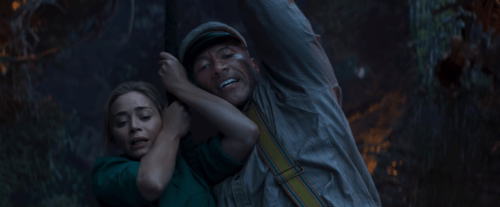
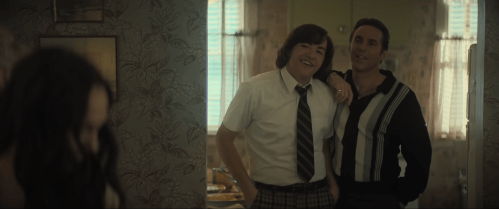
A young boy in a canary yellow hat rides his bike down a picturesque suburban street while delivering newspapers and singing along to “Guilty,” the 1980 Barbra Streisand/Barry Gibb smooth jazz duet. Encountering a robot owl, he heads purposefully underground into a world of intrigue. A super-secret, super-important mission appears to be afoot. And that’s when we meet Barb and Star (Annie Mumolo and Kristen Wiig, respectively), two fortysomething best friends who appear to have absolutely nothing to do with everything we’ve seen up to this point. Instead, they spend their days gabbing away about whatever absurd notions pop into their heads while sitting on one of the showroom couches at the furniture store where they work. But alas, horror of horrors: the store is closing forever, and Barb and Star have no idea what to do with all their newfound free time! They could hang out at their rigidly regimented friend group gabfest (run by a fantastically tightly wound Vanessa Bayer), but then an opportunity comes knocking in the form of a vacation to the resort town of Vista Del Mar. They’ve never been the type to venture outside their hometowns, but heckfire, what better time than now to throw caution to the wind and spread their wings!

Often when reviewing movies, I like to ask myself, “Does this film make me want to do the thing it says in its title?” So with that in mind, does Barb and Star Go to Vista Del Mar make me want to go to Vista Del Mar? And the answer is … heck yeah! It’s a beachside town full of bright colors, romance, magic, and Mark Jonathan Davis as his lounge act persona Richard Cheese singing naughty songs in a hotel lobby, after all. And if I could spend my stay there right alongside Barb and Star and their versatile culottes, oh wow, would I be in hog heaven. The world has made no effort to stop them from being who they really are, and their conversations reflect that, as Wiig and Mumolo bring an astounding improvisatory yes-and energy to every single one of their interactions.

There’s also so many more elements in this movie that I haven’t mentioned yet, mostly because I don’t want to mention them, as this is the most satisfyingly unpredictable comedy I have seen in quite some time. Wiig and Mumolo co-wrote the screenplay, and it feels like a passion project of two best friends daring each other to indulge in their most outré excesses. Playing straight(-ish) man to their whirligig of whimsy is Jamie Dornan, who seems to have found his perfect niche as a lovelorn hopeless romantic agent of espionage. Also of note: Wiig pulls double duty as a supervillian best left unremarked upon, Damon Wayans Jr. shows up for a running gag of very silly inadvertent secret-revealing, and Barb and Star’s conversations about a hypothetical woman named “Trish” eventually pay off handsomely. In conclusion, this is one of those funny flicks that delights me immediately and endlessly, but I’m not quite sure how to fully put into words why it makes me feel that way (the last few paragraphs notwithstanding). But I hope to continually revisit it and think about it much more in the coming years and then explain it as best I can when the proper time comes along.

Barb and Star Go to Vista Del Mar is Recommended If You Like: Zoolander, Hot Rod, AM Radio hits of the 70s

Grade: 4 out of 5 Seafood Jams

‘The Mauritanian’ Gives Guantánamo Bay Detainee Mohamedou Ould Salahi the Legal Thriller Treatment

Leave a comment

The Mauritanian (CREDIT: STX Films)

Starring: Tahar Rahim, Jodie Foster, Shailene Woodley, Benedict Cumberbatch, Zachary Levi, Saamer Usmani

Director: Kevin Macdonald

Running Time: 129 Minutes

Rating: R, Mainly for a Scene of Intense Torture

Release Date: February 12, 2021

In the 2000s and early 2010s, films that grappled with 9/11 and its aftermath tended to be combat thrillers, reaching an apotheosis in terms of cultural impact with 2012’s Zero Dark Thirty. Now the focus has turned toward the War on Terror’s legal repercussions. 2019’s The Report took a deep dive into the massive amount of paperwork detailing the CIA’s use of post-9/11 torture, and now The Mauritanian comes along to narrow its attention on the particular case of Mohamedou Ould Salahi, who was detained at Guantánamo Bay withou charge for more than a decade. His story has been told before via the likes of 60 Minutes and Salahi’s own memoir, but even if you come in to this movie completely cold (as I more or less did), it’s immediately obvious that we are witnessing a miscarriage of justice.

There’s essentially zero doubt at any point in The Mauritanian about Salahi’s innocence. We’re not exactly told this outright, but we might as well be. With the guarded way that Tahar Rahim plays Salahi, there is a sense that he might be susceptible to being tricked into thinking that he has abetted terrorist activity. But these are merely survival tactics, as he mostly keeps his head down and says what is demanded of him when he absolutely has to so as to stay alive and sane enough to get by. The main source of the movie’s tension then is how much our patience is tested: just how long – in real time and movie time – will Salahi be detained? Because if you know anything about Guantánamo Bay, you know it’s probably going to take a while. Luckily, he has a couple of competent lawyers on his case in the form of Nancy Hollander (Jodie Foster) and Teri Duncan (Shailene Woodley), and with Foster giving off Hall of Fame-level tenacity vibes, we can feel confident that there will be a happy ending eventually.

Salahi’s story is undoubtedly compelling, but in terms of how it works as cinema, it’s not an automatic slam dunk. It mostly avoids indulging in the shoutiest excesses of miscarriage-of-justice legal procedurals, but it perhaps swings too far in the opposite direction, opting for a low-key approach that’s content to mostly just hum along. Then there are the torture scenes, which is something I would happily never see re-created on screen ever again. That’s not to say that it’s always absolutely wrong to portray torture; the ethics of doing so are certainly debatable. But aesthetically, it tends to be jarring and unnecessary, very much so in this case. Still, despite my misgivings, I’m glad that movies like The Mauritanian exist. The value they offer by getting these stories out to a wide audience generally outweigh my trepidations.

The Mauritanian is Recommended If You Like: The due process of law, Un-redacting the redactions

Grade: 3 out of 5 Forced Confessions

‘The Map of Tiny Perfect Things’ is Here to Fulfill the Time Loop Movie Quota

Leave a comment

The Map of Tiny Perfect Things (CREDIT: Dan Anderson/Amazon Studios)

Starring: Kyle Allen, Kathryn Newton, Jermaine Harris, Josh Hamilton, Jorja Fox, Cleo Fraser, Anna Mikami, Al Madrigal

Director: Ian Samuels

Running Time: 99 Minutes

Rating: PG-13 for Random, Mostly Harmless Teenage Shenanigans

Release Date: February 12, 2021 (Amazon Prime Video)

Oh wow, another time loop movie already? Is Hollyweird required to release at least one of these per year? (Or does it just feel that way because it seems like all the days in the real world are just reruns?) This time around, the romantic story takes special prominence, as was also the case in the loopy likes of Groundhog Day, Palm Springs, and even Happy Death Day. As with Palm Springs, the main guy and gal in The Map of Tiny Perfect Things are both re-doing the same day, and it’s that commonality from whence their sparks fly (at least initially). And I mean, hey, why not! That’s a pretty significant similarity. If you’re living through a time loop, it’s hard to fully relate to anyone else unless they’re also living through that loop.

When we first meet Mark (Kyle Allen) and Margaret (Kathryn Newton), they appear to be at least dozens – if not hundreds (or thousands) – of loops deep. And quite frankly, they’re totally OVER it all. That’s not to say they’re in Despair Mode, but rather that they have a roll-with-the-punches attitude of teenagers privileged enough to not yet be crushed by the weight of adult responsibilities. In a typical time loop movie, breaking out of the loop requires (or is at least accompanied by) discovering how to be a better person. As for Mark and Margaret, sure, they learn some lessons, but that aspect feels more or less beside the point. Instead, they spend their time experiencing all the titular “tiny perfect things” (like the sunset or a cute lost dog reappearing) that occur in their town on this particular day, because what the heck else are they going to do with all this infinity?

Eventually, we do get an explanation about why this loop started and how it shall end, and your chances of finding it emotionally satisfying will probably depend on whether or not you’re a teenager or if you can at least tap into your inner teen. But before we get there, Tiny Perfect Things is more interested in the minutiae of making the most minute changes while repeating a process over and over. There’s a runner in which Mark explains everything that’s going on to his friend Henry (Jermaine Harris) while Henry plays video games. It’s in these moments when the movie is at its most comfortable, as it posits: what if life were like a video game in which you keep making it to the same point and try something different each time to survive or successfully complete a task? Depending on your inclination, the result would either be mind-numbing or endlessly fascinating (or perhaps both).

The Map of Tiny Perfect Things is Recommended If You Like: Twitch video game streaming, AB testing, Discovering postmodernism for the first time

Grade: 2.5 out of 5 Lost Dogs

‘Minari’ Features One of the Greatest Cinematic Grandmother-Grandson Stories of All Time

1 Comment

Minari (CREDIT: Josh Ethan Johnson/A24)

Starring: Steven Yeun, Han Ye-ri, Alan Kim, Noel Kate Cho, Youn Yuh-jung, Will Patton

Director: Lee Isaac Chung

Running Time: 115 Minutes

Rating: PG-13 for Some Hilariously Surprising Potty Humor

Release Date: February 12, 2021 (Theaters)/February 26, 2021 (On Demand)

Minari is the heartwarming tale of a boy and his kooky grandma, who at first don’t get along very well. She’s not your typical grandma, and he only wants her around if she’ll bake cookies and offer hugs freely. But alas, she has zero culinary skills and would much rather dish out zingers than physical affection. I suppose I should also mention the tension between the boys’ parents, but I’d really prefer to focus my review pretty much exclusively on the grandma stuff. The title “Minari” refers to a wort plant native to East Asia, but if I had been in charge of naming this movie, I would have christened it “Mountain Water,” which is what the soda-guzzling grandma calls her beloved Mountain Dew. And that’s very important information, because the most memorable scene involves a new way of, shall we say, “doing the Dew.”

More

Viggo Mortensen Confronts Abusive Parenting in His Directorial Debut ‘Falling’

Leave a comment

Falling (CREDIT: Brendan Adam-Zwelling/Quiver Distribution)

Starring: Viggo Mortensen, Lance Henriksen, Sverrir Gudnason, Laura Linney, Terry Chen, Hannah Gross, Gabby Velis

Director: Viggo Mortensen

Running Time: 112 Minutes

Rating: R for Just About Every Ethnic and Gendered Slur You Can Think Of (and Brief Nudity)

Release Date: February 5, 2021 (Theaters and On Demand)

I’m generally not terribly excited to watch movies about emotionally abusive parents, whereas I am generally excited to watch the directorial debuts of actors whose work I consistently enjoy. So I find myself internally conflicted at the prospect of Falling, in which Viggo Mortensen directs himself as John Peterson, a family man attempting to deal with his profoundly irascible father Willis (Lance Henriksen). Surprisingly enough, while watching I didn’t find myself entirely anxiety-ridden by all the familial strife on display. Perhaps my mood just happened to be in enough of a state of equilibrium to handle it, and quite possibly I wouldn’t have reacted as keenly on a more stressful day. Or maybe it had something to do with the variety of ways (frustration, gritted teeth, amusement, insults, etc.) that Willis’ kids and grandkids employ to respond to his provocations and declining mental health.

If there is one major takeaway above all others to Falling, it is the Power of Patience. John appears to be genuinely happy that his dad is spending the weekend at his house with his husband Eric (Terry Chen) and daughter Monica (Gabby Velis), but we know that his feelings can’t possibly be all (or even mostly) positive, as childhood flashbacks present a father-son relationship in which Willis browbeats his son over every single major or minor decision that he makes. And yet for all the decades of turmoil he’s endured, John is still conscientious enough to honor his own internal sense of familial loyalty. I wouldn’t judge him if he were to instead decide that the healthiest choice would be to cut his father off, but I’m glad that he tries to keep the peace with him long enough so that we have a family dinner scene in which John’s sister (Laura Linney) and her kids show up so that everyone can have a chance to declare what they really think about Grandpa.

The final act of Falling is a little more slow going, as it departs from John’s place on the West Coast back to Willis’ farm in Upstate New York. John is helping to put the property on the market, but Willis is deeply connected to his horses and intent on spending more time with them. At least that’s what I think is going on. Frankly, the story becomes significantly less dynamic when John and Willis are away from the rest of the extended Peterson clan, and I must admit that my sense of connection to what I was watching started to drift during the farm scenes. But overall, this is still a fairly compelling piece about how intergenerational trauma has a long tail but also about how it can be digested and rejected for a different approach.

Falling is Recommended If You Like: Angsty family dinner scenes, White horses

Grade: 2.5 out of 5 Pathological Insults

The Hysterical ‘Bliss’ is Here to Warn Us That Reality Isn’t Real, and I Cannot Look Away

1 Comment

Bliss (CREDIT: Hilary Bronwyn Gayle/Amazon Studios)

Starring: Owen Wilson, Salma Hayek, Nesta Cooper, Bill Nye

Director: Mike Cahill

Running Time: 103 Minutes

Rating: R for Some Very Kooky Violence, Profanity, and Sexuality

Release Date: February 5, 2021 (Amazon Prime Video)

Man, how are we so lucky as to get a movie like Bliss? It stars a totally wigged-out Salma Hayek trying to convince Owen Wilson that they’re living in a simulation. And quite frankly, the evidence is immediately pretty convincing, as they seem to be the only people in the world with telekinetic powers, which manifests by them popping their hands out with authority, Bruce Almighty-style. Seriously, there’s an entire scene in which they go to a roller rink and make everyone fall on their asses just for the hell of it. And on top of all that, Bill Nye has a pretty significant part, not as himself, but as a very Bill Nye-type who keeps strong-arming Wilson with some important information. And for all you hardcore perverted philosophy geeks, Slavoj Žižek shows up just long enough for anyone who recognizes him to go, “Oh snap! Slavoj’s in this, too?!”

The only other film directed by Mike Cahill that I’ve seen besides Bliss was 2011’s similarly mindbendy-wendy Another Earth, which I found infuriatingly pretentious. Honestly, Bliss isn’t necessarily any less pretentious in its eagerness to dive into a trendy sci-fi premise in its own vaguely intellectual way. So what’s the difference? Has my cinematic tolerance level just increased significantly in the past ten years? Perhaps, but there’s also the fact that Hayek and Wilson are such inspired left-field casting choices. She is always indefatigably dynamic; give her something to rant about, and you’re not going to be able to keep your eyes off her. As for Wilson, I don’t think he ever utters his signature “Wow,” but that low-key sense of being perpetually stunned is indeed the vibe he gives off the whole time. This is a “two-very-different-tastes-that-go-great-together” situation that we never could have expected would work out as beautifully as it did.

Overall, though, I’m not sure if the ideas of Bliss really come together into anything substantial, and that’s partly because I’m not entirely sure what Cahill is trying to say.  But – and this is important – I don’t particularly care. This is an incorrigible movie, and I’m such a sucker for that sort of energy. While watching, I said to myself, “What is going on?!” a healthy number of times, and I must admit that is a feeling I enjoy experiencing. It’s too often in short supply, but it most certainly is not when Salma Hayek and Owen Wilson are questioning reality, creating their own realities, buying into fake realities, and just generally enjoying free rein to do whatever the hell they want to do.

Bliss is Recommended If You Like: The Matrix but wish it had less kung fu and more makeshift homes on the side of a highway, The “Downtime” episode of the recent Twilight Zone revival, The parts of the X-Men movies where they wave their hands around

Grade: 3.5 out of 5 Blue Crystals

‘Two of Us’ Offers a French Spin on a Late-in-Life Queer Romance

Leave a comment

Two of Us (CREDIT: Magnolia Pictures)

Starring: Barbara Sukowa, Martine Chevallier, Léa Drucker

Director: Filippo Meneghetti

Running Time: 95 Minutes

Rating: Unrated (I’d give it a PG-13 – it’s not too explicit)

Release Date: February 5, 2021 (Theaters and On Demand)

Sometimes I like to offer my skewed take on movie reviews by asking, “Does the title of this movie have something to do with this random connection I’m making?” So with that in mind, does the contemporary French romance Two of Us have anything to do with that scene from the 1932 horror flick Freaks in which a bunch of characters chant “One of us! One of us!”? It almost certainly doesn’t. The French title, after all, is Deux, which translates to just “Two” without the “of us.” And I can’t say that I detect any references to circus folk, literal or metaphorical, in Two of Us. But there may be one notable similarity, insofar as Two of Us is also concerned with the outcasts of society.

Early on in Two of Us, a woman named Nina (Barbara Sukowa) is getting annoyed at her neighbor Madeleine (Martine Chevallier) as they attempt to sell Madeleine’s home. So Nina blows up and shouts at the realtor, “Mr. Bremond, do you have a problem with old dykes?” Mr. Bremond is unsure how to answer, but it’s made perfectly clear that no, in fact, he has no problem with lesbians of a certain age (and if he did, he would probably be too afraid of Nina to say so). The actual problem is with Madeleine, who doesn’t exactly want to tell her family about Nina, who’s been her secret lover for decades. What’s notable about Two of Us compared to most other queer cinematic romances I’ve seen is that the society we see doesn’t much care that there’s a same-sex couple in their midst. This is very much an intra-family conflict, nothing more.

But within that straightforward setup, Two of Us offers surprises. Because of Madeleine’s health struggles, the narrative isn’t so simple as “secret romance” or “one lover tries to convince partner to be honest to family.” Madeleine suffers a stroke, rendering her unable to speak for herself, which has the oddly slapstick-y effect of making the subterfuge somewhat reminiscent of a heist caper, while also throwing in elements of blackmail amidst the emotional land mines. In life, plenty of people really have to fight to be allowed to love the people they love. Sometimes that fight is silly, sometimes it’s infuriating, sometimes it’s profoundly unpredictable, and sometimes it’s quite touching, and maybe most of the time, it’s a mix of all of the above. That’s certainly the case in Two of Us.

Two of Us is Recommended If You Like: Senior cinematic romances,

Grade: 3.5 out of 5 Old Dykes

Are We Living in a Simulation? That’s What ‘A Glitch in the Matrix’ is Here to Find Out!

3 Comments

A Glitch in the Matrix (CREDIT: Magnolia Pictures)

Starring: Proponents of Simulation Theory, including Philip K. Dick, Elon Musk, and even Plato in his own way

Director: Rodney Ascher

Running Time: 108 Minutes

Rating: Unrated (I’d Give it a PG, or Maybe PG-13 for Some Heavy Moments)

Release Date: February 5, 2021 (Theaters and On Demand)

Computers are everywhere nowadays! There’s computers on our desks, computers in our laps, computers in our hands, computers in our pockets, computers in our TVs, computers in our cars, and even (I’m assuming) computers in our toilets. Are there also computers in our heads? Or to phrase it another way: are our brains computers? Or are we just inclined to think that way because computers are the dominant technology of our era? Early on in A Glitch in the Matrix, directed by Rodney Ascher, one interview subject muses how humans tend to conceptualize their bodies according to models analogous to the innovations of the day. When aqueducts were big, it was thought that the body was ruled by humors; when telegraphs had their moment, so too did nerve wires. Now it’s computers’ turn, and with it, the popular emergence of a hypothesis that our reality may just be a simulation.

A Glitch in the Matrix initially positions itself as a scientific-sociological examination, but it soon becomes clear that it is also (and perhaps primarily) a piece of visual film criticism, much like Ascher’s 2012 doc Room 237, which overlaid narration of fan interpretation on clips of The Shining. Now he’s turned his lens to the Wachowskis’ landmark sci-fi franchise, which has set the tone for decades of speculation that we may not exactly be in control of our own existence. The evidence that we’re living in a simulation is mostly a matter of probability: if there’s a civilization with the capacity to create simulated realities, then it’s probably able to create billions and billions of them. Ergo, most of the realities that theoretically exist are probably simulations. Personally, while I’m open to the possibility, I’ve never found Simulation Theory all that convincing, and A Glitch in the Matrix doesn’t do much to change my mind. But it’s not trying to prove the validity of the theory so much as it is examining the consequences of living in a world in which a sizable number already buy into it. And on that score, there is plenty to dig into.

Where Room 237 was a surprisingly rich text devoted to a very niche topic, A Glitch in the Matrix is an unsurprisingly overflowing work devoted to an unruly and expansive topic. Where the former was occasionally infuriating in how its theorizing could venture so far away from anything resembling everyday thinking, the latter holds your attention with an ethos (or at least a veneer) of plausibility and respectability. And even if you’re not too inclined to agree with the likes of Elon Musk or Philip K. Dick, A Glitch in the Matrix can still work as a cinematic experience. The whole thing is so gosh dang enveloping, thanks to the full-body 3D-animated avatars that many of the interview subjects employ, the surround sound of Jonathan Snipes’ plinking electronic score, and the general sense that you’ve fallen down a wormhole that is set to take over your entire life.

Ascher is also ultimately wise to explore the occasionally deadly consequences of embracing Simulation Theory. For some people, the hypothesis is an invitation to commit acts of violence without any consequences. But as certain real-world (or simulated world) examples demonstrate, a lack of agency does not mean a lack of repercussions. That is made terrifyingly clear in the case of Joshua Cooke, who was convicted of killing his parents with a shotgun in 2003 after convincing himself that he was living in a Matrix-style virtual reality. It’s a sobering detour in what first appeared to be a rather playful documentary. As far as I can tell, A Glitch in the Matrix comes down pretty strongly in favor of a relativist approach to its ideas. You can accept Simulation Theory or not, but if you do, there’s no reason that you should dramatically revolutionize your behavior. Go ahead and jump down that rabbit hole if you must, but keep close track of the trail behind and ahead of you.

A Glitch in the Matrix is Recommended If You Like: Room 237, New York Magazine’s February 4, 2019 issue, The “A Clockwork Origin” episode of Futurama

Grade: 4 out of 5 Realities

The Religious Madness of ‘Saint Maud’ is Equal Parts Wrenching and Ecstatic

Leave a comment

Saint Maud (CREDIT: A24)

Starring: Morfydd Clark, Jennifer Ehle, Lily Knight, Lily Frazer

Director: Rose Glass

Running Time: 83 Minutes

Rating: R for Disturbing Content, Often Sexually Themed

Release Date: January 29, 2021 (Theaters)/February 12, 2021 (On Demand)

Religiosity is a hell of a drug. That possibility for ecstasy is one of the reasons I’ve remained loyal to my own faith practices. But you can take it too far to the point that it gets a little dangerous, as demonstrated by Morfydd Clark as the titular caretaker of Saint Maud. Jennifer Ehle is also present to play Amanda, a ballet dancer in hospice care. Stage 4 lymphoma has done a number on her body, but it hasn’t taken away her caustic wit. So when new live-in nurse Maud struts in, it’s pretty clear she’s got a lot on her plate to handle.

Hospice care is surely demanding and highly stressful, even for people who are fully committed to the calling. Maud does her best to be fully committed, but how exactly does that commitment manifest? Bloody religious imagery suggests that she may just be falling into a possession. But is this a hellish spirit that is overtaking her, or a heavenly one? Or maybe this is some sort of placebo possession, in which she wants to be such a good little servant of God that she subliminally convinces herself that she’s’ been taken over. She’s got an active mind, and active minds can be quite fabulous when you are devoted to a lonely job and the subject of your devotion is much more distant than you’d like her to be.

By insisting that everyone follows her way of doing things, Maud comes off as a bit of a Pharisee, although she is quite a bit more tortured than that traditionalist biblical group. (Although maybe some Pharisees had agonizing internal lives that we never got to see?) Here’s the deal: Saint Maud starts off pretty straightforwardly, at least as straightforward as you can be when one main character is so close to death and the other one is so close to God. But from the beginning, there is also some bloody mystical business bubbling underneath the surface, and if  you think that is going to lead to some big expressive climax, then your cinematic viewing instincts are in proper working order.

While watching Saint Maud, I found it somewhat difficult to emotionally connect to as I had trouble figuring out just what sort of movie it wanted to be. But having had plenty of time to digest it now, I think that’s less a failing of the film itself and more a feature of its main character. Maud is pretty, pretty sure that she has a rather close relationship with God and that everyone else should as well. But doubt about her own spiritual bona fides is never far away. So she enjoys some indulgences, then she castigates herself, and the final climax enters into another transcendent dimension entirely, as a religiously minded movie like this one is wont to do. Ultimately, I believe Saint Maud wants to teach us that we should have our moments of ecstasy, because people are going to keep succumbing to cancers and other horrible fates and we might as well look skyward while we can.

Saint Maud is Recommended If You Like: The VVitch, Suspiria, Speaking in tongues

Grade: 3.5 out of 5 Caretakers

‘Some Kind of Heaven’ Checks in on Retired Life in The Villages

Leave a comment

Some Kind of Heaven (CREDIT: Magnolia Pictures)

Starring: The Residents of The Villages

Director: Lance Oppenheim

Running Time: 83 Minutes

Rating: Unrated (I’d peg it as PG, or maybe a soft PG-13)

Release Date: January 15, 2021 (Theaters and On Demand)

In the beginning of Some Kind of Heaven, one of the residents of The Villages remarks that living in a retirement home is more than a little bit reminiscent of college life. And it’s true. For those who like to spend their golden years this way and are fortunate enough to afford it, it promises a pretty cushy arrangement in which hanging out with your friends requires little more than stepping out your door. Situated in central Florida, The Villages takes the college comparison several steps further with a reputation as “Disneyland for Retirees.” Hanging out with your best buds every day is great; spending each one of those days at the most wonderful place on Earth is pretty dang expensive. With that in mind, Some Kind of Heaven focuses on a quartet of folks who are caught on the margins of The Villages.

For such a sunny setting, director Lance Oppenheim’s documentary takes a rather glum approach, as we witness some of The Villages’ most overcast days (literally and metaphorically). I’m sure that all the residents have their own set of troubles, but I’m willing to bet that we meet the ones burdened with the most upheaval. There’s Anne and her husband Reggie, who’s losing his hold on reality while turning to psychedelic drugs as he tries to insist that their relationship is strengthening. Their story is somewhere in the nexus of delusion and enlightenment. Elsewhere is Barbara, a widow surprised to find herself still working full time, bringing out the melancholy in full force. Then there’s 82-year-old Dennis, who’s not actually a resident but living in his van while he looks for a rich gal and tries to outrun his legal troubles. Some retirees really are just late-in-life adolescents, aren’t they?

I was surprised at the intimacy of Some Kind of Heaven‘s approach. Its subject struck me as more suited to an expansive overview of a unique subculture. Instead, it goes piecemeal in a way that I suspect may have been more suited to a series of half-hour episodes. Regardless of the medium and format, though, the clear-eyed and verite empathy shine through. Our stories and struggles don’t always end quite so smoothly as we may want them to, and the glitzy promises of a place like The Village tend to paper over the more complicated details.

Some Kind of Heaven is Recommended If You Like: Slice-of-life documentaries, Directorly unobtrusiveness, A dog randomly humping a cat during an interview

Grade: 3 out of 5 Retirees

Older Entries Newer Entries