February 5, 2019
jmunney
Cinema, Movie Reviews
Alison Brie, Charlie Day, Chris Miller, Chris Pratt, Elizabeth Banks, Lego, Mike Mitchell, Nick Offerman, Phil Lord, Stephanie Beatriz, The Lego Movie, The Lego Movie 2, The Lego Movie 2: The Second Part, Tiffany Haddish, Will Arnett

CREDIT: Warner Bros.
Starring: Chris Pratt, Elizabeth Banks, Will Arnett, Tiffany Haddish, Stephanie Beatriz, Charlie Day, Alison Brie, Nick Offerman
Director: Mike Mitchell
Running Time: 107 Minutes
Rating: PG for Traumatizing Lego Destruction
Release Date: February 8, 2019
Where does a sequel go after the original makes such a definitive statement? This is the conundrum facing The Lego Movie 2: The Second Part. (That subtitle is infinitely unnecessary, but not indicative of the movie’s humor as a whole, and also this title would have looked rather naked without a subtitle.) 2015’s first part summed up in cinematic form the whole ethos of the iconic Danish building blocks: in a world that often favors rigidity and conformity, you cannot give up on your individuality, because everyone can be and is special. Childlike imagination and wonder are what fueled The Lego Movie to be as successful as it was. Those values will get you pretty far in life. So why do any more statements need to be made?
It turns out that while The Lego Movie offers a philosophy with wide-ranging applicability, it is not quite a grand unified theory that covers absolutely everything. It spoke to the power of a singular creative vision, but The Second Part demonstrates how collaboration is equally vital. Emmet Brickowski (Chris Pratt) and his Lego friends are now living in the wasteland Apocalypseburg, because in the human world that is controlling them, a little sister has invaded the playspace of her big brother. So Emmet, Lucy (Elizabeth Banks), Batman (Will Arnett), and company head out to broker a peace with some differently designed block-creatures. This leads to permanent bachelor Batman becoming engaged to a sparkly shape-shifter voiced by Tiffany Haddish, while Superman (Channing Tatum) lives happily alongside General Zod in a Stepford-esque perfect suburb.
Sizing up the situation, Emmet believes that his mission is to free his friends from the brainwashing of strangers. But while it may seem that all is not what it seems, it turns out that that particular mystery trope is not being played as straight as you might expect. The Lego Movie taught us to be skeptical about a constantly smiling world insisting that everything is awesome, but it also taught us that awesomeness sometimes really is awesome if it has genuine feeling behind it. The candy-coated invading milieu of The Second Part initially appears to be fundamentally suspicious. But sometimes a bright, peppy outer layer is only covering a bright and rewarding core. Sometimes a catchy song that jams itself right in your head is so buoyant that you’re happy it’s stuck there. Belief in yourself is important, but don’t forget to be open-minded about everyone else.
The Lego Movie 2: The Second Part is Recommended If You Like: The Lego Movie and its spin-offs, Playing with your siblings
Grade: 4 out of 5 Catchy Songs
December 18, 2017
jmunney
Cinema, Movie Reviews
Alison Brie, Bob Odenkirk, Bradley Whitford, Bruce Greenwood, Carrie Coon, David Cross, Jesse Plemons, Matthew Rhys, Meryl Streep, Sarah Paulson, Steven Spielberg, The Post, Tom Hanks, Tracy Letts, Zach Woods

CREDIT: Niko Tavernise/Twentieth Century Fox
This review was originally posted on News Cult in December 2017.
Starring: Tom Hanks, Meryl Streep, Bob Odenkirk, Tracy Letts, Bruce Greenwood, Matthew Rhys, David Cross, Alison Brie, Sarah Paulson, Bradley Whitford, Jesse Plemons, Carrie Coon, Zach Woods
Director: Steven Spielberg
Running Time: 115 Minutes
Rating: PG-13 for Deadline-Related Light Profanity
Release Date: December 22, 2017 (Limited)/Expands Nationwide January 12, 2018
The First Amendment of the United States Constitution guarantees some fundamental freedoms, but certain limits on those freedoms are understood. Hate speech is not protected by free speech, for example, and human sacrifice is not protected by freedom of religion. But there is not quite the same shorthand for limits on a free press. Publishing anything demonstrably libelous is certainly unacceptable, but when is it inappropriate to print what is in fact true and has hitherto been hidden? This question is at the heart of so many present-day media matters, so in comes Steven Spielberg’s The Post, which examines a time when this conflict was a momentous occasion and not an everyday one.
In 1971, The Washington Post finds itself in possession of the Pentagon Papers, a trove of documents detailing the United States’ involvement in Vietnam over the past few decades. Executive editor Ben Bradlee (Tom Hanks) and his team of journalists think the public deserves to know this information. The federal government says it would be a felony to print it. There is no mistaking where The Post (both the paper and the film) comes down on this conflict. This is not new information and thus serves no imminent threat to American troops in Vietnam. The only harm it can cause is embarrassment for former presidents. The actual conflict that The Post grapples is the attempted reconciliation between ethical and business concerns.
The constant struggle of press outlets, even institutions as big as The Washington Post, is figuring out how to make money by delivering the truth. That struggle is writ large when making a public offering, which is what we’ve got here. Do you make a stronger case to your investors by laying low or by making a ruckus in the course of standing up for your principals? As publisher Katharine Graham, Meryl Streep is all contorted faces and knotted anxiety as she takes the lead to make the decision of printing the Papers or not. The drama is wrung in screwball fashion, with Bradlee appealing to her over the phone at the last a minute, as a gaggle of other interested parties hop on the line.
For as grand as The Post’s ambitions are, it is strange to consider that most of it takes place over the course of just one day. It all then feels almost inconsequential, but of course, certain individual moments can change the course of everything. When that is the case, there has probably been months, or even years, of work behind the scenes setting up those moments, as conveyed by an early scene of Daniel Ellsberg (Matthew Rhys) gathering and absconding with the Papers. Also delivering the dynamic agita is Bob Odenkirk as Ben Bagdikian, an old buddy of Ellsberg’s who tracks down the delivery. Odenkirk’s comedic background is an asset – he moves about with a paranoid shuffle that is somewhere between absolutely necessary and hilariously unnecessary. Also rousing is a typesetting montage following the decision to publish the Papers. This mechanical peek at how things are done is a valuable reminder of underlying structure in much the same way that Michael Mann’s Blackhat spent so much visual space on the wires that undergird the Internet.
Ultimately, while The Post’s advocacy for journalism is timeless, its story feels small-scale, a prelude to the much bigger fallout of Watergate and all the modern-day scandals that use -gate in their nomenclature. The Richard Nixon of The Post is only ever seen from behind and through a window. His fight against the press was fought in the shadows, but today his same tactics are being employed right out in the open. The Post’s lessons are ones I hope everyone takes to heart, but I wonder (despair?) how useful they are when the sorts of secrets exposed by the Pentagon Papers are now nonchalantly tweeted every day.
The Post is Recommended If You Like: All the President’s Men, Spotlight, a Free Press
Grade: 3.5 out of 5 Sealed Documents
November 30, 2017
jmunney
Cinema, Movie Reviews
Alison Brie, Andrew Santino, Ari Graynor, Bob Odenkirk, Charlyne Yi, Dave Franco, Greg Sestero, Hannibal Buress, Jacki Weaver, James Franco, Jason Mantzoukas, Josh Hutcherson, Judd Apatow, June Diane Raphael, Megan Mullally, Melanie Griffith, Nathan Fielder, Paul Scheer, Seth Rogen, Sharon Stone, The Disaster Artist, The Room, Tommy Wiseau, Zac Efron

CREDIT: Justina Mintz/A24
This review was originally posted on News Cult in November 2017.
Starring: Dave Franco, James Franco, Seth Rogen, Alison Brie, Ari Graynor, Josh Hutcherson, Jacki Weaver, Zac Efron, Megan Mullally, Paul Scheer, Jason Mantzoukas, Hannibal Buress, Nathan Fielder, June Diane Raphael, Andrew Santino, Charlyne Yi, Melanie Griffith, Sharon Stone, Bob Odenkirk, Judd Apatow
Director: James Franco
Running Time: 105 Minutes
Rating: R for an Auteur Asshole
Release Date: December 1, 2017 (Limited)/Expands Nationwide December 8, 2017
When I watched Shane Carruth’s 2013 film Upstream Color – about a man and a woman who ingest a larva with the power to drastically affect the human mind – I was excited by the conscious-altering possibilities. But I was ultimately disappointed by the impenetrable narrative. Upstream does have its fans, but I thought an opportunity was missed by presenting an abstract subject with just-as-abstract storytelling. But now we have a film that is more along the lines of what I thought Upstream Color was going to be, and that film is The Disaster Artist, which imposes a typical biopic structure onto one of the strangest individuals of all time. There is the classic rise-fall-rise and a soundtrack that raises the roof with beats that were first hits about a decade before the events of the film, but all this normality only illuminates the unfathomability that is Tommy Wiseau.
Wiseau has achieved a very unique sort of fame as the writer-director-producer-star of the 2003 independent melodrama The Room. It has been called by some the worst movie of all time, but that descriptor is way off-base. A better take that others have offered is “the greatest bad movie of all time,” but that is still not quite right. “A surreal masterpiece” is the moniker that I prefer. For The Disaster Artist to be successful, it does not need to be as surreal as The Room, as The Room already exists. Although perhaps a perfectly valid option would have been to simply remake The Room shot-for-shot with a new cast, which The Disaster Artist does in part in a delightful post-credits segment featuring recreations of classic scenes from The Room presented side-by-side along the originals, displaying how the new versions are accurate to every inch and millisecond.
James Franco directs and stars as Wiseau, and this proves to be the perfect outlet for his incorrigible proclivities. Wiseau is infamously dodgy about his personal background, but based on his accent, it is clear enough that he is from Eastern Europe, though he claims to be from New Orleans. But it is perhaps most accurate to think of him as a vampire caveman alien, as his odd syntax, singular worldview, and inexplicable behavior go beyond simply being lost in translation. Nobody but Tommy could be Tommy, but Franco comes as close as possible. And this is not the sort of lark that much of his career has come off as. Instead, it is in service of a strangely uplifting story about never giving up on your dreams.
Alongside Wiseau is his Room co-star/friend-despite-all-obstacles Greg Sestero (who co-wrote the book of the same name that The Disaster Artist is based on), played by James’ younger brother Dave. The younger Franco is a little more boyish than the deeper-voiced Sestero, but they both have an all-American squeaky-clean handsomeness befitting the moniker “Babyface,” Tommy’s nickname for Greg. The Franco brothers have significantly different faces than Sestero and Wiseau, though their looks are well approximated by solid hair and makeup jobs. This is not an exact encapsulation of the original Wiseau-Sestero dynamic (how could it be?), but there is some weird magic in the Franco pairing that works as an avatar to this weird creative pairing.
I read The Disaster Artist when it was first published in 2013. I have not re-read it since, so my memory of it is not perfectly fresh, but I remember enough to know that there is some streamlining at play here. But the liberties that were taken serve to bolster the film’s thesis that has been borne out by the directions that Wiseau and Sestero’s lives have taken since The Room has become a cult classic. In one scene, Tommy approaches a producer (Judd Apatow) at a restaurant, who assures Tommy that he will never find success in Hollywood in a million years. “But after that?” Tommy earnestly asks. It has not literally taken him that long to achieve his stardom, but “more than one million years later” might be the best figurative way to explain how long it took him to realize his dreams, and that boundlessness beyond normal temporality is the engine that The Disaster Artist runs on.
The obvious antecedent to this film is Ed Wood, but that earlier biopic was released more than a decade after the death of its titular maker of the worst films of all time. Tommy’s story is not over, and now it is inextricably tied up with the most fervent fans of The Room, many of whom populate the cast of The Disaster Artist. There are several moments in this making-of in which classic lines from The Room are uttered in Tommy’s personal life that could come off as fan service but avoid that pitfall because of how nakedly autobiographical The Room is. James Franco and his crew of shockingly eager collaborators have invited us all to take place in this autobiography, and the result is intoxicating.
The Disaster Artist is Recommended If You Like: The Room of course, Ed Wood, James and Dave Franco’s old Funny or Die videos, How Did This Get Made?
Grade: 4.5 out of 5 Doggies
June 28, 2017
jmunney
Cinema, Movie Reviews
Adam Pally, Alison Brie, Aubrey Plaza, Dave Franco, Fred Armisen, Jeff Baena, Jemima Kirke, John C. Reilly, Jon Gabrus, Kate Micucci, Lauren Weedman, Molly Shannon, Nick Offerman, Paul Reiser, Paul Weitz, The Little Hours

This review was originally posted on News Cult in June 2017.
Starring: Alison Brie, Dave Franco, Kate Micucci, Aubrey Plaza, John C. Reilly, Molly Shannon, Fred Armisen
Director: Jeff Baena
Running Time: 90 Minutes
Rating: R for Naked Witchcraft Acid Trips
Release Date: June 30, 2017 (Limited)
Fred Armisen shows up as a visiting bishop about halfway through The Little Hours. It is a hilarious scene, but it encapsulates the trepidation I had upon viewing this flick. In writer/director Jeff Baena’s riff on one of the tales from 14th-century story collection The Decameron, things are getting wild and crazy at a convent, with a trio of central nuns (Alison Brie, Aubrey Plaza, Kate Micucci) getting into sex, witchcraft, and other debauchery. While the premise alone is worth several chuckles, I had worried that it was better suited to a sketch rather than a full feature length, and Armisen’s routine demonstrates exactly what I was thinking of.
As Bishop Bartolomeo, Armisen takes stock of all the sinning that the residents have been getting up to, and it is a potent mix of petty, mundane, and outrageous. Running down kooky lists and taking a few breaks for exasperation is one of Armisen’s specialties. He revels in a litany that includes envy, “being a busy body,” “eating blood,” and “not being baptized.” This recaps everything important that has happened thus far and if this scene had been an SNL sketch (easily imaginable, considering the cast), our imaginations would just fill in the visuals for all that outrageousness. Instead, we get to see all the vulgarity play out, which could be a recipe for exhaustion after ninety minutes, but The Little Hours has some grounding elements to make the whole course palatable.
The focus is on three young brides of Christ – Alessandra (Brie), Fernanda (Plaza), and Genevra (Plaza) – who are either seeking to escape the convent or happy to stay there but not really interested in living the religious life properly. This would all be just a mélange of nuns behaving badly if not for the appearance of runaway servant Massetto (Dave Franco), who strikes up a romance with Alessandra and a deal with the head priest (John C. Reilly) to keep his true nature a secret. The love story is kinda sweet and Reilly is always so invested in the material no matter how ridiculous, elements that help offset all the debauchery, which is fitfully amusing but could have been exhausting if not for these counterpoints. Besides, this film cannot coast on shock value when its ladies do not bother one iota to resemble actual nuns.
The Little Hours is Recommended If You Like: History of the World: Part 1, The sexier scenes from Monty Python and the Holy Grail, The To Do List
Grade: 3.5 out of 5 Rolls in the Hay
February 13, 2016
jmunney
Best in Film 2015, Best of 2015, Cinema
Alison Brie, Ex Machina, Oscar Isaac, Sleeping with Other People

Here is a rundown of the excellence in individual performances in films in 2015, starting with my choices for the 2 best and then the rest in alphabetical order. At the top are a fellow who talked and talked his way through a freaky-cerebral premise, and a lady who cracked her buoyant starting point into a heartbreakingly complicated interior.
Oscar Isaac, Ex Machina
Alison Brie, Sleeping with Other People

Christian Bale, The Big Short
Elizabeth Banks, Love & Mercy
Angela Bassett, Chi-Raq
Cate Blanchett, Carol
Josh Brolin, Sicario
Steve Carell, The Big Short
John Cusack, Chi-Raq
Paul Dano, Love & Mercy
Benicio Del Toro, Sicario
Robert De Niro, The Intern
Deanna Dunagan, The Visit
Joel Edgerton, Black Mass
Michael Fassbender, Steve Jobs
Walton Goggins, The Hateful Eight
O’Shea Jackson, Jr., Straight Outta Compton
Michal B. Jordan, Creed
Brie Larson, Room
Peter McRobbie, The Visit
Jason Mitchell, Straight Outta Compton
Daisy Ridley, Star Wars: The Force Awakens
Seth Rogen, Steve Jobs
Saoirse Ronan, Brooklyn
Mark Rylance, Bridge of Spies
Jason Segel, The End of the Tour
Phyllis Smith, Inside Out
Sylvester Stallone, Creed
Charlize Theron, Mad Max: Fury Road
Lily Tomlin, Grandma
Stanley Tucci, Spotlight
Alicia Vikander, Ex Machina
October 10, 2015
jmunney
Cinema, Movie Reviews
Alison Brie, Jason Sudeikis, Sleeping with Other People

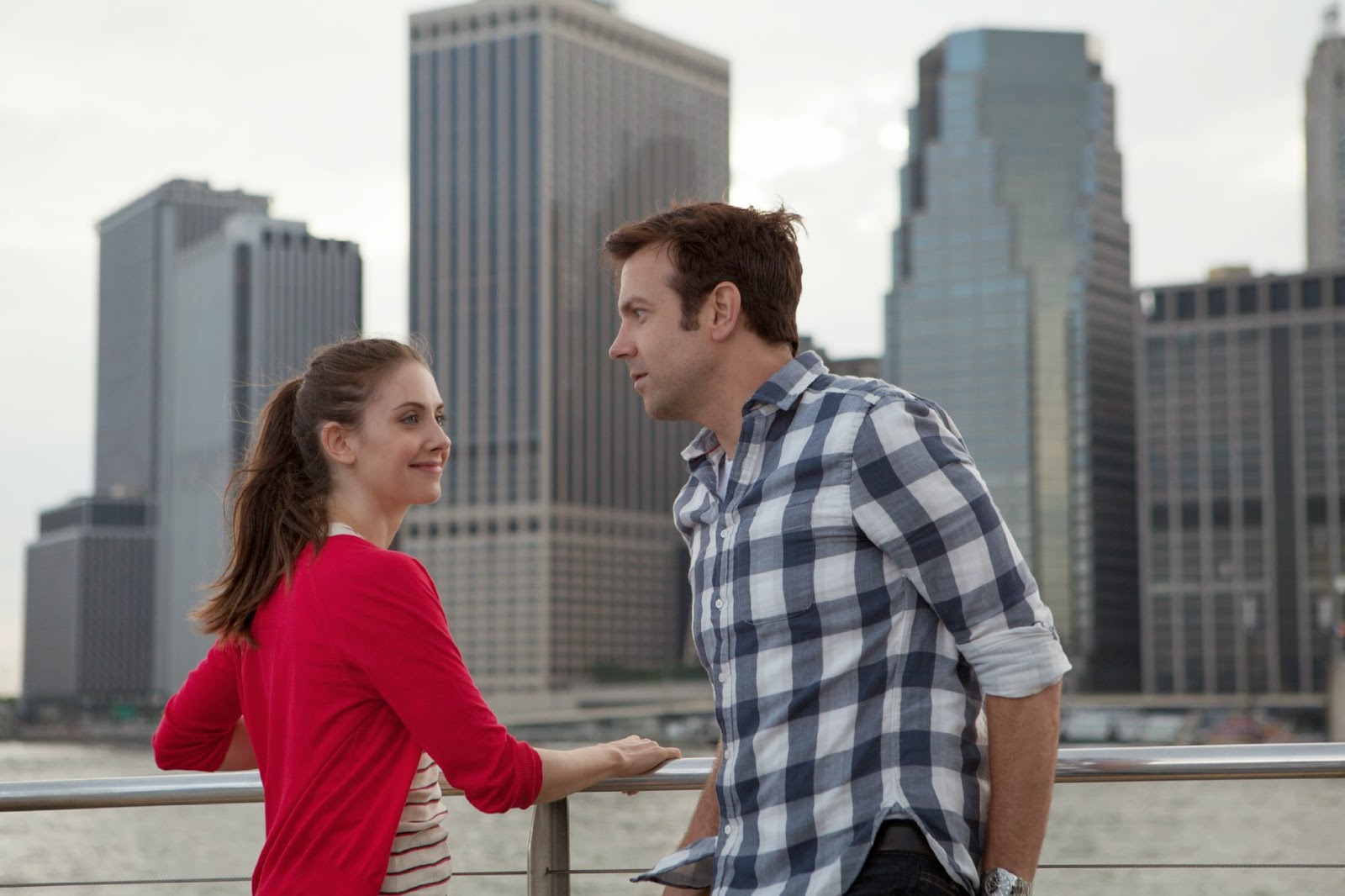
Imagine, if you will, a romantic comedy in which two friends want to prove that they can prevent romance from getting in the way of their platonic status. You don’t have to imagine it – there are already plenty. So what does Sleeping with Other People have to add to this subgenre (other than a strong cast, fiery wit, and Alison Brie dancing to “Modern Love”)? Because even with all the fun on display, you figure that at its core, this is still the same old tale. But there actually is a twist on the formula: where sex is usually what gets in the way of the friendship, this time friendship gets in the way of friendship.
Despite their history of emotionally unhealthy sex, Jake (Jason Sudeikis) and Lainey (Brie) understand the importance of a deep personal bond in a relationship. They also recognize how strong a match they are for each other. Therein lies the conflict: it would be so easy if they were to only kind of like each other, or if they were to not realize how strong their attraction is. But at the same time, it is not easy to just stop spending time and sharing everything with a soul mate. This particular rom-com concept has inspired groans because of contrivances; Sleeping with Other People gets it right because of honesty.
July 13, 2015
jmunney
Awards Shows, Emmys, Television
2015 Emmys, @midnight, Abbi Jacobson, Adam Arkin, Adam Driver, Adelaide Clemens, Aden Young, Alison Brie, Allison Janney, American Dad!, Amy Poehler, Amy Schumer, Andre Braugher, Android, Anna Chlumsky, Arrow, Aya Cash, Better Call Saul, Big Bird, Billy on the Street, Bob Odenkirk, Bojack Horseman, Britt Lower, Broad City, Brooklyn Nine-Nine, Chris Geere, Chris Gethard, Chris Mckenna, Christina Hendricks, Christine Baranski, Claire Danes, Comedy Bang! Bang!, Community, Conan, Constance Wu, Craig T. Nelson, Dan Harmon, Danny Pudi, David Anders, Dominic West, Don Cheadle, Downer Ending, Downton Abbey, Dreaming of a White Porsche Christmas, Dwayne Johnson, Eden Sher, Edie Falco, Elena, Elisabeth Moss, Ellie Kemper, Emilia Clarke, Emily Bett Rickards, Emmys, Emotional Consequences of Broadcast Television, Empire, Eric Andre, Eva Green, Fresh Off the Boat, Friends Furever, Game of Thrones, Girls, Homeland, House of Cards, House of Lies, Hugh Bonneville, Ilana Glazer, Inside Amy Schumer, It's Always Sunny in Philadelphia, iZombie, Jane Krakowski, Jeff Daniels, Jeffrey Tambor, Jesse Tyler Ferguson, Jim Carter, Jim Parsons, Jimmy Kimmel Live, Joel McHale, John Hawkes, Jon Voight, Jonathan Banks, Jordan Gavaris, Julia Louis-Dreyfus, Julianna Margulies, Julie Bowen, Justified, Kate McKinnon, Ken Jeong, Kether Donohue, Kevin Spacey, Key & Peele, Kroll Show, Lamorne Morris, Last Week Tonight, Laverne Cox, Lena Dunham, Lena Headey, Linda Lavin, Louie, Louis CK, Mad Men, Mae Whitman, Maggie Smith, Man Seeking Woman, Mandy Patinkin, Masters of Sex, Mayim Bialik, Mel Rodriguez, Michael McKean, Michael Rapaport, Michael Sheen, Michelle Dockery, MIchelle Obama, Milana Vayntrub, Modern Espionage, Modern Family, Mom, Nathan Fielder, Nathan for You, New Girl, Nurse Jackie, Orange is the New Black, Orphan Black, Other Space, Parenthood, Parks and Recreation, Penny Dreadful, Peter Dinklage, Pimento, Portlandia, Ray Donovan, Real Time, Rectify, Rhea Seehorn, Rob Schrab, Robin Wright, Rose McIver, RuPaul, RuPaul's Drag Race, Ruth Wilson, Sarah Steele, Saturday Night Live, Shameless, Silicon Valley, Susie Essman, Taraji P. Henson, Tatina Maslany, The Affair, The Big Bang Theory, The Colbert Report, The Daily Show, The Eric Andre Show, The Last Man on Earth, The Middle, The Newsroom, The Promise, The Simpsons, The Tonight Show, Thomas Middleditch, Thomas Schnauz, Tim and Eric's Bedtime Stories, Timothy Olyphant, Titus Burgess, Tony Hale, Too Many Cooks, Traib, Transparent, Treehouse of Horror XXV, Ty Burrell, Unbreakable Kimmy Schmidt, Veep, Walton Goggins, Will Forte, William H Macy, You're the Worst, Zach Woods, Zooey Deschanel
For my detailed thoughts on my predictions and wishlists in the major Drama, Comedy, and Variety categories, check out these links:
–Comedy
–Drama
–Variety
Guest Actor, Comedy
John Hawkes, Inside Amy Schumer
Michael Rapaport, Louie
Chris Gethard, Parks and Recreation
Dwayne Johnson, Saturday Night Live
Guest Actress, Comedy
Susie Essman, Broad City
Guest Actor, Drama
Mel Rodriguez, Better Call Saul
Guest Actress, Drama
Allison Janney, Masters of Sex
Linda Lavin, The Good Wife
Directing, Comedy
Rob Schrab, “Modern Espionage,” Community
Directing, Drama
Adam Arkin, “The Promise,” Justified
Writing, Comedy
Dan Harmon and Chris McKenna, “Emotional Consequences of Broadcast Television,” Community
Writng, Drama
Thomas Schnauz, “Pimento,” Better Call Saul
Animated Program
Bojack Horseman – “Downer Ending”
American Dad! – “Dreaming of a White Porsche Christmas”
The Simpsons – “Treehouse of Horror XXV”
Commercial
Android – “Friends Furever”
Host – Reality/Reality Competition
RuPaul, “RuPaul’s Drag Race”
Interactive Program
Last Week Tonight with John Oliver
Main Title Design
Man Seeking Woman
Single-Camera Picture Editing, Comedy
Bojack Horseman – “Downer Ending”
Short-Format Live-Action Entertainment Program
Too Many Cooks
Billy On The Street With First Lady Michelle Obama, Big Bird And Elena!!!
Stunt Coordination for a Comedy Series or a Variety Program
Community
Special Visual Effects in a Supporting Role
Man Seeking Woman – “Traib”
Newer Entries
 Jmunney's Blog