‘Saturday Night’ Seeks to Capture the Prelude to One of the Biggest Seventh Days of the Week of All Time

1 Comment

I’m not Chevy Chase, and they’re not (CREDIT: Hopper Stone/Columbia Pictures)

Starring: Gabriel LaBelle, Rachel Sennott, Cory Michael Smith, Ella Hunt, Dylan O’Brien, Emily Fairn, Matt Wood, Lamorne Morris, Kim Matula, Finn Wolfhard, Nicholas Braun, Cooper Hoffman, Kaia Gerber, Andrew Barth Feldman, Tommy Dewey, Willem Dafoe, Matthew Rhys, J.K. Simmons, Jon Batiste, Naomi McPherson, Taylor Gray, Mcabe Gregg, Nicholas Podany, Billy Bryk, Ellen Boscov, Joe Chrest, Catherine Curtin, Leander Suleiman, Paul Rust, Robert Wuhl, Corinne Britti, Kirsty Woodward, Josh Brener, Brad Garrett

Director: Jason Reitman

Running Time: 109 Minutes

Rating: R for General Crudeness and Casual Backstage Drug Use, and One Unsolicited Private Release

Release Date: September 27, 2024 (Limited Theaters)/Expands October 4 and October 11

What’s It About?: As the prophet declared, “The show doesn’t go on because it’s ready, it goes on because it’s 11:30.” While that is a widely accepted maxim in 2024, a few decades ago it was met by the masses with an outpouring of skepticism. According to Saturday Night director Jason Reitman and his co-writer Gil Kenan’s telling, things were so touch-and-go that the first episode of Lorne Michaels’ brainchild barely made it to air in one piece. While the hour-and-a-half that began on the National Broadcasting Company at 11:30 PM Eastern on October 11, 1975 has since been immortalized, the hour-and-a-half that immediately preceded it was also apparently quite the transformative odyssey. And so, Saturday Night‘s log line is quite simple: the real-time chaos that led right up to the birth of one of the most famous TV shows of all time.

What Made an Impression?: Would You Accept a Wolverine in Place of the Truth?: Saturday Night is filled with an unending series of too-perfect coincidences that I don’t really have any interest in fact-checking (at least not in terms of whether or not they make for a worthwhile movie). Like, did John Belushi really refuse to sign his contract until approximately 15 minutes before the cameras started rolling? Surely that must have been sorted out days, if not weeks, earlier? I suppose it’s dramatically true enough, as Belushi was certainly known for being erratic. Some of these stunningly on-the-nose moments are kind of funny, like when Lorne has a sarcastic back-and-forth with a building employee who supposedly thinks that he’s producing Saturday night the night, as opposed to Saturday Night the TV show. But then there are similar incidents that I found myself groaning at, like Milton Berle lecturning everyone he encounters about the way that showbiz really works (although J.K. Simmons does play Uncle Miltie with the just right flavor of stunningly pompous).
Inescapable Iconography: It’s hard to imagine that Saturday Night will be anyone’s introduction to SNL. Even if you don’t watch every new episode like clockwork, you’ve surely encountered some of it through cultural osmosis. But save for a couple of semi-unavoidable bits, the movie mostly avoids the pitfall of simply recreating memes and catchphrases. Nevertheless, it isn’t like this is a completely untold story. The behind-the-scenes foibles have been recounted in numerous outlets on numerous occasions, and the characters are based on quite famous real people, many of whom are still alive. So it’s no surprise that some of these performances are mostly glorified impressions. To be fair, some of them are quite good impressions. Dylan O’Brien in particular captures the singularly rat-a-tat patter of Dan Aykroyd. Others have room to go a little deeper, especially Gabriel LaBelle in the lead, as he effectively captures the harried arrogance and earnestness of attempting to spark a revolution through television. But as good as LaBelle is, I can’t help but look at him and go, “That’s not Lorne Michaels.” It’s close, but not quite. That’s not necessarily a bad thing. But it is uncanny.
It’s Saturday Night, and You’re Not: I kind of wish that Saturday Night had gone the Weird biopic route, by maintaining some semblance of reality while obviously comedically exaggerating everything else. It certainly would have been in the spirit of a sketch show that has aired plenty of memorable parodies in its own right. Of course, it would be unfair to review it for not being something that it’s not trying to be. But it’s still fun to wonder, “What if?” As it is, we’ve got something that feels like cosplay populated by body snatchers. It’s energetic and loving cosplay, but the thrills are mostly theoretical rather than visceral.

Saturday Night is Recommended If You Like: Studio 60 on the Sunset Strip, Really sticking it to the censors, Bricks

Grade: 3 out of 5 Affiliates

If You Can Imagine ‘IF,’ the IFs Will Come

1 Comment

If, if, if, uh… (CREDIT: Paramount Pictures)

Starring: Cailey Fleming, Ryan Reynolds, John Krasinski, Fiona Shaw, Alan Kim, Steve Carell, Phoebe Waller-Bridge, Liza Colón-Zayas, Bobby Moynihan, Louis Gosset Jr., Emily Blunt, Matt Damon, Maya Rudolph, Jon Stewart, Sam Rockwell, Sebastian Maniscalco, Christopher Meloni, Awkwafina, Richard Jenkins, Blake Lively, George Clooney, Matthew Rhys, Bradley Cooper, Amy Schumer, Keegan-Michael Key

Director: John Krasinski

Running Time: 104 Minutes

Rating: PG for Mild Potty Humor and Imaginary Nudity

Release Date: May 17, 2024 (Theaters)

What’s It About?: Ever since her mom died, 12-year-old Bea (Cailey Fleming) has pretty much forgotten how to have fun. It certainly doesn’t help that her dad (John Krasinski) is about to undergo heart surgery, though he tries to maintain her childlike wonder with his constant magic tricks and corny gags. While staying at the NYC apartment of her grandmother (Fiona Shaw), she encounters a couple of cartoon characters, as well as their seemingly human partner named Cal (Ryan Reynolds). As it turns out, they’re imaginary friends (or IFs, as they like to be abbreviated), and it’s highly unusual for someone of Bea’s age to be able to see them. But she could really use the power of imagination right now. Or maybe, these supernatural hypothetical creatures could really use the power of Bea right now.

What Made an Impression?: Tina Turner-ing Back the Clock: Baa eventually meets a whole crew of IFs in their hideaway on the Coney Island boardwalk. The encounter is fueled by IF‘s big set piece: an imagination-fueled dance number set to Tina Turner’s 1984 hit “Better Be Good to Me.” Honestly, it’s quite possibly my favorite cinematic choreography since Napoleon Dynamite let loose to some Jamiroquai 20 years ago. If you told me that IF was really just writer-director Krasinski’s excuse to make an entire movie around his own unique tribute to Turner, I would buy it. Such a film did not have to be about imaginary friends, but as it is, it worked out quite swimmingly.
Imaginary Friends, Real Motivation: I wasn’t expecting to tear up at IF, as all indications pointed to it being a simple sugar rush. But its final act lays its thesis out for the taking. As Bea’s journey would have it, imaginary friends aren’t mere fake companions; instead, they’re representations of our innermost desires. We might not be able to “see” them anymore after we grow up, but remaining in touch with them is essential to accomplish our dreams. In that sense, they’re essentially embodiments of everyone’s unique motivations. So the next time you look at a childhood photo or drawing that makes you suddenly remember a big purple monster or a talking ice cube, roll with it. A satisfying life might just depend on it.

IF is Recommended If You Like: Inside Out, Humorless kid protagonists, Tina Turner

Grade: 3.5 out of 5 IFs

Entertainment To-Do List: Week of 6/19/20

Leave a comment

Eric Andre: Legalize Everything (CREDIT: Brian Roede/Netflix)

Every week, I list all the upcoming (or recently released) movies, TV shows, albums, podcasts, etc. that I believe are worth checking out.

Movies
You Should Have Left (On Demand) – Blumhouse horror starring Kevin Bacon and Amanda Seyfried.

TV
Sherman’s Showcase Black History Month spectacular (June 19 on AMC and IFC) – Just in time for Juneteenth!
-2020 ESPYs (June 21 on ESPN)
Perry Mason Series Premiere (June 21 on HBO) – The classic defense attorney returns to TV in the form of Matthew Rhys.
Search Party Season 3 (June 25 on HBO Max)
The Twilight Zone Season 2 (June 25 on CBS All Access) – Guest stars include Joel McHale, Gillian Jacobs, and Billy Porter.

Comedy
-Eric Andre: Legalize Everything (June 23 on Netflix) – Legalize “everything”? Including … ranch?

Music
-Bob Dylan, Rough and Rowdy Ways
-Neil Young, Homegrown

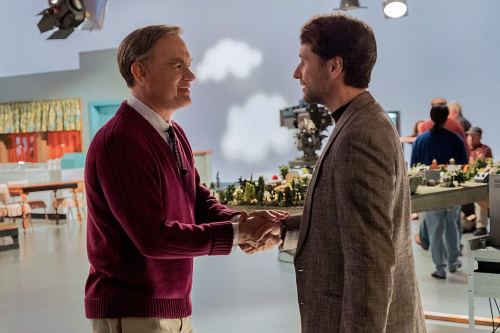
‘A Beautiful Day in the Neighborhood’ Demonstrates the Life-Changing Power of Meeting Someone Who Treats You Like the Most Important Person in the World

2 Comments

CREDIT: Lacey Terrell/Sony Pictures Entertainment

Starring: Matthew Rhys, Tom Hanks, Susan Kelechi Watson, Chris Cooper, Enrico Colantoni, Christine Lahti, Tammy Blanchard

Director: Marielle Heller

Running Time: 107 Minutes

Rating: PG for A Small Skirmish

Release Date: November 22, 2019

How can the cinema industry justify releasing a Mr. Rogers biopic just a little over a year after a documentary about the longtime PBS host came out? This isn’t the first time that two such films about the same subject have come out in such close proximity, and while at first blush it might appear to be overkill, this is actually an excellent example in which both movies are distinctly valuable. As A Beautiful Day in the Neighborhood demonstrates, people like Fred Rogers lived lives that were rich enough to have multiple stories worth telling, thanks to the other lives they touched dearly. One of those lives was that of journalist Tom Junod, whose 1998 Esquire article “Can You Say… Hero?” inspired the film. Matthew Rhys plays Junod avatar Lloyd Vogel, who believes he’s meeting just another interview subject but instead finds himself a therapist and a dear friend.

Director Marielle Heller makes a fantastic filmmaking choice to open up Beautiful Day, presenting a framing device in which Lloyd’s story is introduced as a segment on an episode of Mr. Rogers’ Neighborhood. Mr. Rogers (thoroughly inhabited by Tom Hanks) is showing his viewers a board featuring pictures of some of his friends, including his new friend Lloyd, whose photo sticks out distressingly, thanks to a nasty bruise between Lloyd’s eyes and a wild look on his face. It’s a jarring image in this context (for multiple reasons), but Mr. Rogers gently guides us through it with such spectacular empathy, informing us that Lloyd is having a hard time forgiving someone who hurt him. That someone is Lloyd’s father Jerry (Chris Cooper), who has suddenly reappeared in Lloyd’s life decades after sleeping around on his terminally ill wife and abandoning his young children. Lloyd’s default state when Jerry is around is a fiery coil of resentment, but luckily his next assignment has him meeting someone who treats whomever he is talking as the most important person in the world.

Lloyd’s life and profession have trained him to be skeptical, which is how he initially approaches Mr. Rogers. Surely and obviously, this man who speaks so gently and fastidiously must be putting on an act whenever the cameras are rolling. But what Tom learns, and what we all get to witness, is just how genuine Fred is. It takes practice to be as thoughtful and concerned as he is, but that effort makes his persona no less real. Instead, it makes it even more powerful and effective. We should all be as concerned for and interested about the people in our lives as Fred is to Lloyd. When a film is as useful an empathy how-to guide as A Beautiful Day in the Neighborhood is, it is truly something special.

A Beautiful Day in the Neighborhood is Recommended If You Like: Mr. Rogers’ Neighborhood, Wonder, Magazines

Grade: 4.5 out of 5 Special Friends

‘The Report’ Details the Long Slog Towards Exposing Torture

2 Comments

CREDIT: Atsushi Nishijima/Amazon Studios

Starring: Adam Driver, Annette Bening, Jon Hamm, Jennifer Morrison, Tim Blake Nelson, Ben McKenzie, Jake Silberman, Matthew Rhys, Ted Levine, Michael C. Hall, Maura Tierney, Dominic Fumusa, Corey Stoll

Director: Scott Z. Burns

Running Time: 118 Minutes

Rating: R for Depictions of Torture

Release Date: November 15, 2019 (Limited)

There’s a moment in The Report that might be what most viewers remember it for, in which the 2012 hunt-for-Osama bin Laden thriller Zero Dark Thirty is called out and basically scoffed at for implying that torture led to valuable intel in the war on terrorism. Despite this apparent antagonism, The Report and Zero Dark Thirty work well as companion pieces, offering somewhat parallel stories in the defining geopolitical conflict of the twenty-first century. I believe that the message of Zero Dark regarding the efficacy of torture is more complicated than any binary interpretation, and I actually think that the people behind The Report would agree, at least in terms of the existence of complications in the world. When a narrative is about a real-life group of people poring over thousands of government documents for months on end, you tend to find that the answers aren’t always quite so straightforward. But two things remain clear: torture is bad, and the people deserve to know that it happened.

The primary document sifter is Daniel Jones (Adam Driver), who was working as a Senate staffer for California Senator Dianne Feinstein (Annette Bening) while he investigated the CIA’s systematic use of torture in the wake of the 9/11 attacks. The job is thuddingly labor-intensive, but Daniel is fully devoted to the task, and besides, the real challenge for him is getting this information out to the public over the protests of the forces who would prefer it be as redacted as possible or just completely hidden. The Report serves the entertainment value of presenting someone doing his job supremely competently, but it is also a bit of a slog. It is not exactly fun to spend so much time in windowless basements with Daniel, and his co-workers let him know that it’s not so great for him either. But for the good of mankind, this information needed to get out one way or the other. And if this story needed to be jazzed up into a big-screen adventure for people to become more aware of this miscarriage of decency, then The Report ought to be considered a succcess at least on that score.

The Report is Recommended If You Like: The truth being made public

Grade: 3000 of 5000 Documents

This Is a Movie Review: The Defense of Journalism Mounted by ‘The Post’ is Admirable and Often Rousing, But Almost Quaint

Leave a comment

CREDIT: Niko Tavernise/Twentieth Century Fox

This review was originally posted on News Cult in December 2017.

Starring: Tom Hanks, Meryl Streep, Bob Odenkirk, Tracy Letts, Bruce Greenwood, Matthew Rhys, David Cross, Alison Brie, Sarah Paulson, Bradley Whitford, Jesse Plemons, Carrie Coon, Zach Woods

Director: Steven Spielberg

Running Time: 115 Minutes

Rating: PG-13 for Deadline-Related Light Profanity

Release Date: December 22, 2017 (Limited)/Expands Nationwide January 12, 2018

The First Amendment of the United States Constitution guarantees some fundamental freedoms, but certain limits on those freedoms are understood. Hate speech is not protected by free speech, for example, and human sacrifice is not protected by freedom of religion. But there is not quite the same shorthand for limits on a free press. Publishing anything demonstrably libelous is certainly unacceptable, but when is it inappropriate to print what is in fact true and has hitherto been hidden? This question is at the heart of so many present-day media matters, so in comes Steven Spielberg’s The Post, which examines a time when this conflict was a momentous occasion and not an everyday one.

In 1971, The Washington Post finds itself in possession of the Pentagon Papers, a trove of documents detailing the United States’ involvement in Vietnam over the past few decades. Executive editor Ben Bradlee (Tom Hanks) and his team of journalists think the public deserves to know this information. The federal government says it would be a felony to print it. There is no mistaking where The Post (both the paper and the film) comes down on this conflict. This is not new information and thus serves no imminent threat to American troops in Vietnam. The only harm it can cause is embarrassment for former presidents. The actual conflict that The Post grapples is the attempted reconciliation between ethical and business concerns.

The constant struggle of press outlets, even institutions as big as The Washington Post, is figuring out how to make money by delivering the truth. That struggle is writ large when making a public offering, which is what we’ve got here. Do you make a stronger case to your investors by laying low or by making a ruckus in the course of standing up for your principals? As publisher Katharine Graham, Meryl Streep is all contorted faces and knotted anxiety as she takes the lead to make the decision of printing the Papers or not. The drama is wrung in screwball fashion, with Bradlee appealing to her over the phone at the last a minute, as a gaggle of other interested parties hop on the line.

For as grand as The Post’s ambitions are, it is strange to consider that most of it takes place over the course of just one day. It all then feels almost inconsequential, but of course, certain individual moments can change the course of everything. When that is the case, there has probably been months, or even years, of work behind the scenes setting up those moments, as conveyed by an early scene of Daniel Ellsberg (Matthew Rhys) gathering and absconding with the Papers. Also delivering the dynamic agita is Bob Odenkirk as Ben Bagdikian, an old buddy of Ellsberg’s who tracks down the delivery. Odenkirk’s comedic background is an asset – he moves about with a paranoid shuffle that is somewhere between absolutely necessary and hilariously unnecessary. Also rousing is a typesetting montage following the decision to publish the Papers. This mechanical peek at how things are done is a valuable reminder of underlying structure in much the same way that Michael Mann’s Blackhat spent so much visual space on the wires that undergird the Internet.

Ultimately, while The Post’s advocacy for journalism is timeless, its story feels small-scale, a prelude to the much bigger fallout of Watergate and all the modern-day scandals that use -gate in their nomenclature. The Richard Nixon of The Post is only ever seen from behind and through a window. His fight against the press was fought in the shadows, but today his same tactics are being employed right out in the open. The Post’s lessons are ones I hope everyone takes to heart, but I wonder (despair?) how useful they are when the sorts of secrets exposed by the Pentagon Papers are now nonchalantly tweeted every day.

The Post is Recommended If You Like: All the President’s Men, Spotlight, a Free Press

Grade: 3.5 out of 5 Sealed Documents